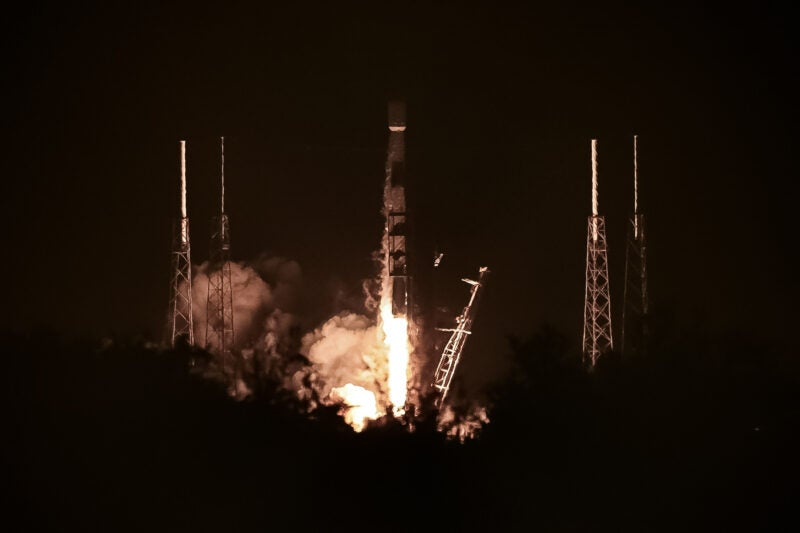
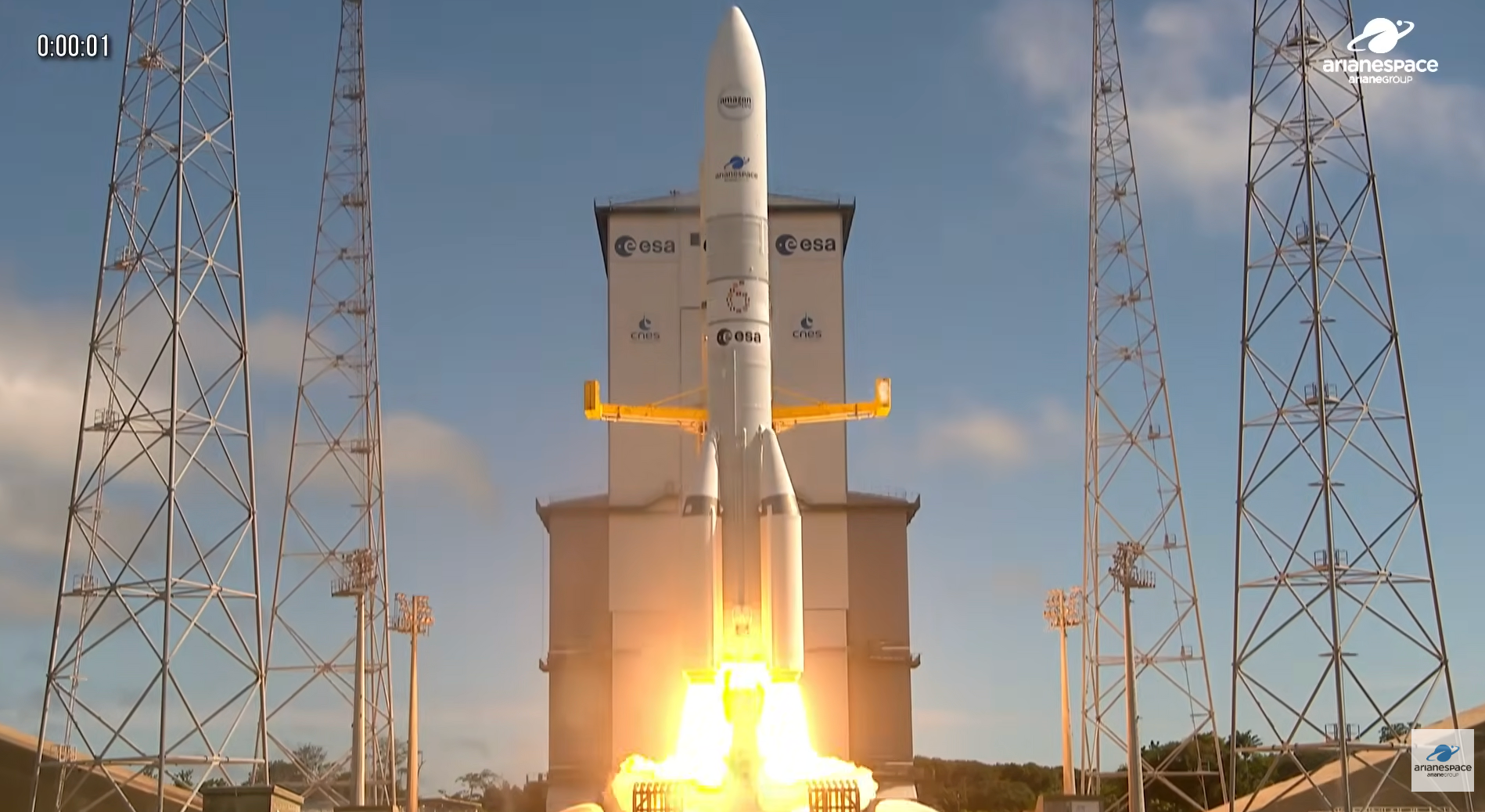
Arianespace launched a record mission for Amazon Leo on Wednesday morning, launching both the heaviest payload by an Ariane rocket, and the most Amazon Leo satellites deployed in a single mission.
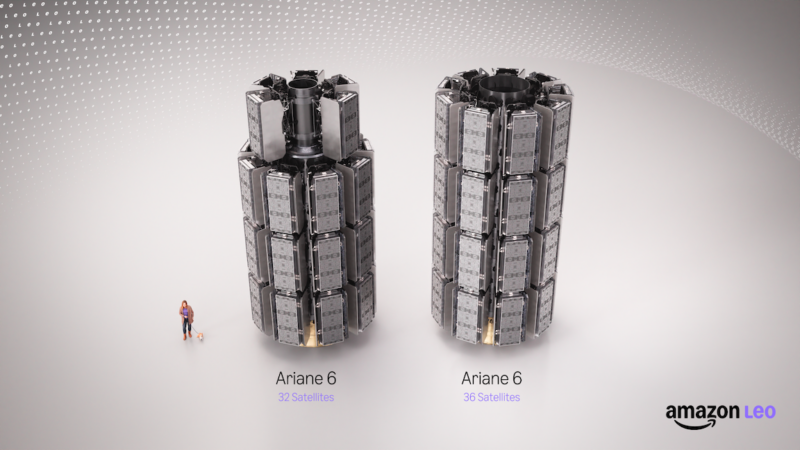
The Leo Europe 3 (LE-03) mission on an Ariane 64 rocket took off at 9:22 a.m. local time from Kourou, French Guiana (8:22 a.m. ET). This mission will deploy 36 Amazon Leo satellites, compared to 32 satellites on the previous Arianespace missions. The satellites are set to deploy 1 hour and 51 minutes into the mission.
It is the first mission in the Ariane 64 configuration to feature upgraded P160C boosters, which carry more solid propellant and are designed to increase performance by 10%. These boosters are designed to to replace the P120C version of the booster that has flown on the first flights of Ariane 6.
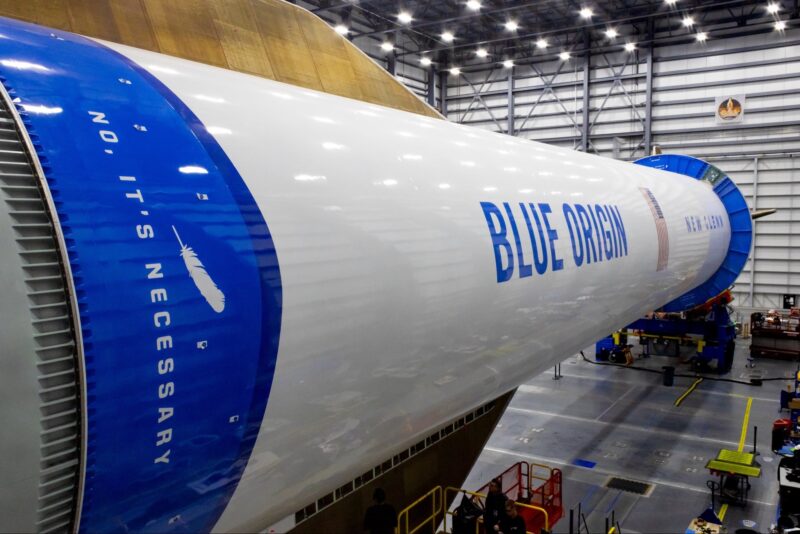
Increasing the pace is critical for Amazon Leo, which is preparing for an initial service rollout this year. Two of Amazon Leo’s launch vehicles, Blue Origin’s New Glenn, and ULA’s Vulcan Centaur, are not in service. Amazon recently received a waiver from the FCC for its deadline to launch half of its constellation by the end of July.
“We’ll take as many launches as we can get right now at this point with the satellites built,” Steve Metayer, vice president of Amazon Leo Production Operations told a media roundtable on Tuesday.
There is one more confirmed Arianespace launch for Amazon Leo this year, with potential for a fifth launch.
“They definitely have stepped up,” Metayer said of the partnership with Arianespace. “They’re very reliable on their manifest dates, they’re very reliable and safe on their insertions in orbit. We would continue to look forward to the next 16 launches with them on our existing contract, and we see them being a player long-term beyond that.”
The upgraded P160C boosters could lead to even more performance for the Ariane 64 rocket, Arianespace CEO David Cavaillolès said Tuesday.
“36 is a milestone for us, this is really important,” Cavaillolès said. “But of course, the story doesn’t stop there. The more we launch, the better we know the launcher. We already are looking at further improvement, so we’ll do our best to keep increasing the performance of the launcher, and thus the number of satellites we can carry for each launch.”
Amazon has hundreds of flight-ready satellites “on standby” awaiting launch in its Florida payload processing facility, and is manufacturing at a rate of several satellites per day, Metayer said.
“We’re comfortable right now building ahead of where we need to be to make sure we never run out of satellites. We want to keep every flight as early as we can, with as many satellites as possible,” Metayer said. “We obviously would like to have Vulcan and New Glenn earlier in the mix, but we’ve planned contingencies around that.”
This story was published Tuesday and updated after the launch