
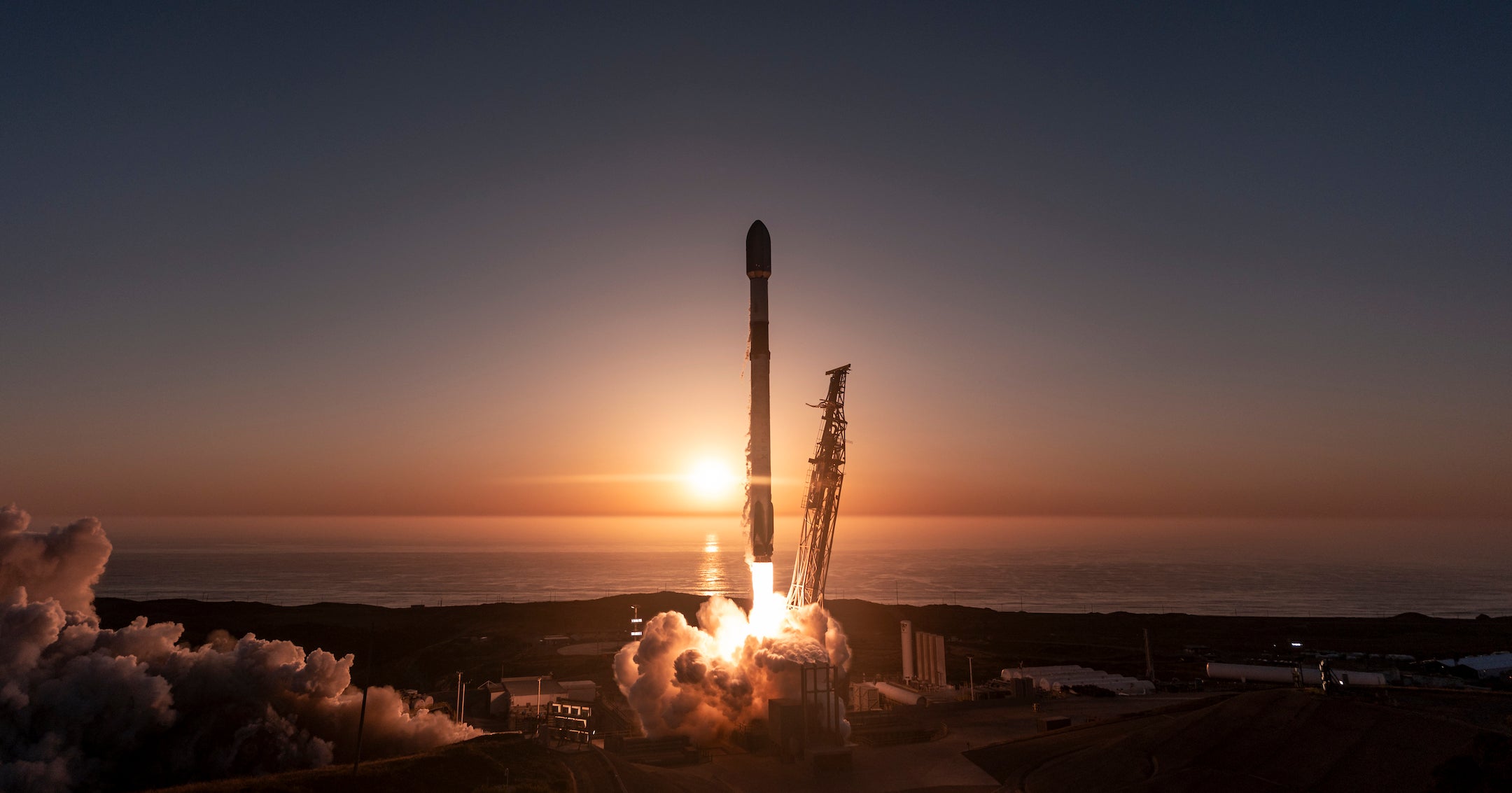
After 24 years of operation as a privately owned company, Elon Musk’s SpaceX is set to begin trading on the Nasdaq on Friday under the ticker symbol SPCX. The success of what could be the largest and most unusual IPO in history rests on whether institutional and retail investors believe in the company’s projections of a $28.5 trillion Total Addressable Market — with more than 90% of that opportunity related to xAI, the AI company tacked onto SpaceX after an acquisition in February.
SpaceX’s goal for the IPO is to raise $75 billion, based on a valuation between $1.75 trillion and $1.77 trillion. The first $20 billion it raises through the IPO is automatically committed towards paying off a bridge loan it received from Goldman Sachs in April. SpaceX opted to set a single price per share of $135, instead of a range – one of a series of unusual steps for the IPO, which has been fast tracked and given special exceptions on profitability to be included in certain index funds. SpaceX’s IPO is often compared with Saudi Aramco’s 2019 IPO, during which it raised $25.6 billion at a $1.7 trillion valuation.
SpaceX’s financials, which remained private until this IPO process, revealed in its Form S-1 filings that the company has strong revenue growth from its broadband internet service Starlink, which earned $11.4 billion in 2025, accounting for 61% of the company’s overall $18.7 billion in revenue in 2025. However, the financials also revealed rapidly increasing CapEx on SpaceX’s AI business, which earns the least amount of revenue for the company at this point. SpaceX spent $7.7 billion on AI development in the first quarter of 2026 — more than it spent on Starship development during all of 2025 ($3 billion, bringing total Starship development costs to $15 billion). AI spend increased 200% year-over-year in the first quarter of 2026. The company reported a $4.94 billion net loss last year, with total debt at the end of March 2026 at $29.1 billion.
Opinions on the SpaceX IPO valuation are greatly varied. SpaceX has, after all, pulled off technological miracles once thought impossible, such as reusable launch vehicles and stepping in to essentially replace NASA as the United States’ lead in human spaceflight. However, one point of consensus among analysts is that the company’s valuation will ultimately be decided by how much faith certain investors put in Musk, who is described in the IPO as being absolutely essential to the company’s short- and long-term future. Musk will maintain dominant control of the company even after the IPO through majority voting shares.
The IPO prospectus contained a “Risk Factors” section that spanned 38 pages, which was further extended to nearly 70 pages of operational, regulatory, and financial warnings. Musk’s political activities and erratic public behavior on social media were listed in this section as risks. Musk has spent the days leading up to the IPO clashing with U.K. government officials on X (formerly Twitter) over racial violence in Belfast. Musk’s activities in 2025 leading the Trump Administration’s Department of Government Efficiency (DOGE) could also face future scrutinization if Democrats retake control of U.S. Congress next year.
Pravin Pradeep, senior consultant and program manager at Frost & Sullivan, questioned some of the growth thesis of the IPO, but said SpaceX has “earned more benefit of the doubt than almost any other company, because they’ve repeatedly done what people said was impossible: reusable rockets, Starlink at scale, Starship.”
“The realistic view is that the Starlink roadmap is credible, the orbital data center thesis is plausible, the lunar economy is 10-plus years out, and the AI competition is genuinely uncertain. Not all of this works, but historically, even partial execution by SpaceX has created enormous value,” Pradeep said.
Novaspace Partner and Managing Director Nathan de Ruiter said the company’s revenue has shown SpaceX has reached “industrial scale,” while pointing to the massive CapEx priorities at play.
“But the loss confirms how much capital the company needs to fund several huge projects at the same time: Starship, Starlink expansion, space-based data centers, and xAI,” de Ruiter said. “The concern is that profitable or near-profitable businesses are being bundled with very large, speculative AI investments. While SpaceX has a demonstrated dominant position in space business and satellite connectivity, this is still unproven in AI.”
de Ruiter argued that SpaceX’s revenue and growth plans show the space industry has moved beyond satellites and launch into infrastructure and networks.
“Space is increasingly intersecting with adjacent industries,” he said. “Connectivity is blending into mobile networks, defense into integrated command-and-control systems, and, importantly, space is beginning to link with data and AI infrastructure. The idea that future growth could come from areas like orbital compute or globally distributed data networks shows how the industry is starting to position itself as part of the broader digital economy, rather than a niche sector.”
Another aspect of the IPO that has gained traction in news media recently is the IPO’s ability to create potentially thousands of millionaires among the ranks of SpaceX employees. Analysts have also said it could lead to more investment in the space industry as investors deploy capital into new and existing ventures. Others have also mentioned that SpaceX employees could use the influx of cash to finance their own startups. Former SpaceX employees, including Falcon 9 designer Tom Mueller, are responsible for creating nearly 150 startups with a combined value of more than $10 billion.
SpaceX itself was created thanks to a payout from a profitable startup. Founded by Elon Musk in 2002 after cashing out from his investment in PayPal, SpaceX provides space launch services and satellite broadband, and operates xAI as an AI and compute capacity leasing company. Its growth strategy spans bringing the next-generation Starship vehicle into service, growing Starlink and Starlink Mobile, and farther- out goals like deploying AI compute in orbit.
Via Satellite interviewed Musk and SpaceX President & COO Gwynne Shotwell several times during the past two decades as the company completely disrupted and rearranged the landscape of the commercial space industry. Shotwell began hinting at a potential IPO built around Starlink as early as 2019. Musk notably pushed back against the idea during an appearance at SATELLITE 2020, during which he said that there was “zero chance” the company would take Starlink public until it could prove itself profitable. SpaceX currently serves more than 12 million customers with Starlink satellite internet.
Correction: A previous version of this story misstated SpaceX’s valuation
More from Via Satellite on the SpaceX IPO:
- SpaceX’s IPO Filing Gives First Look Into Company’s Financials
- Assessing SpaceX Finances, Addressable Market, and the AI Pitch Ahead of IPO
- The Opportunities and Risks of SpaceX’s xAI Deal and Data Center in Space Ambitions
- The Key Questions for a Potential SpaceX IPO in 2026