L3Harris will build an all-glass telescope for the Laser Interferometer Space Antenna (LISA) mission expected to launch in the mid-2030s.
The European Space Agency (ESA) is leading the mission, with NASA as a collaborative partner. NASA awarded L3Harris the contract this week. NASA is contributing the telescopes and other critical hardware as well as engineering and scientific support.
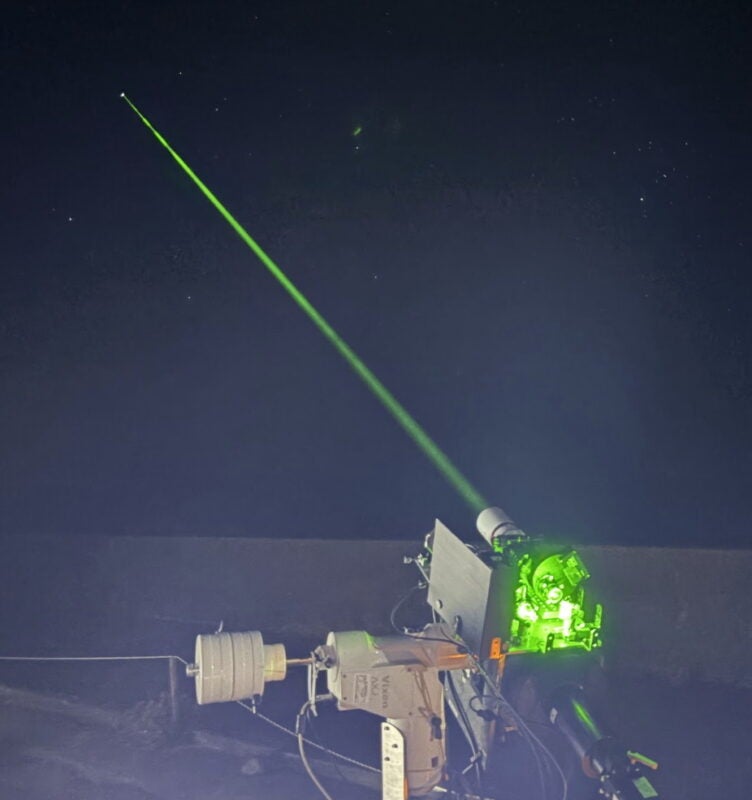
LISA will be the first gravitational wave detector in space. It is designed to detect gravitational waves in space by measuring distance changes between satellites using laser beams. This will inform the study of black holes, colliding stars, and space-time. It is designed as a constellation of three spacecraft.
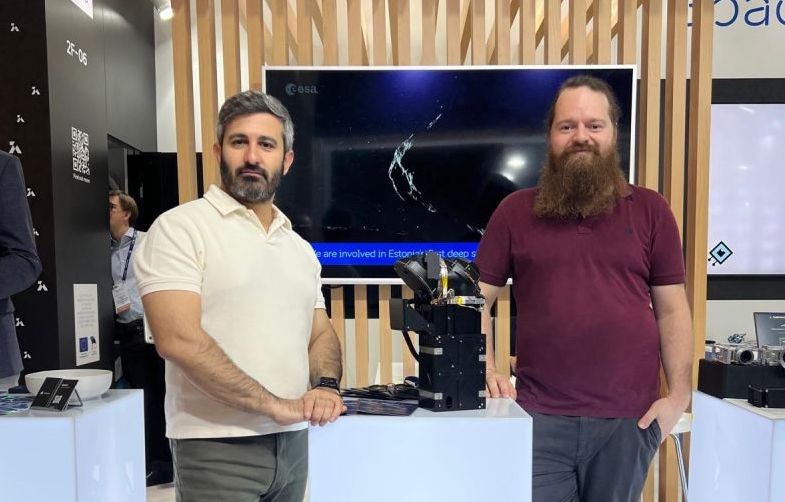
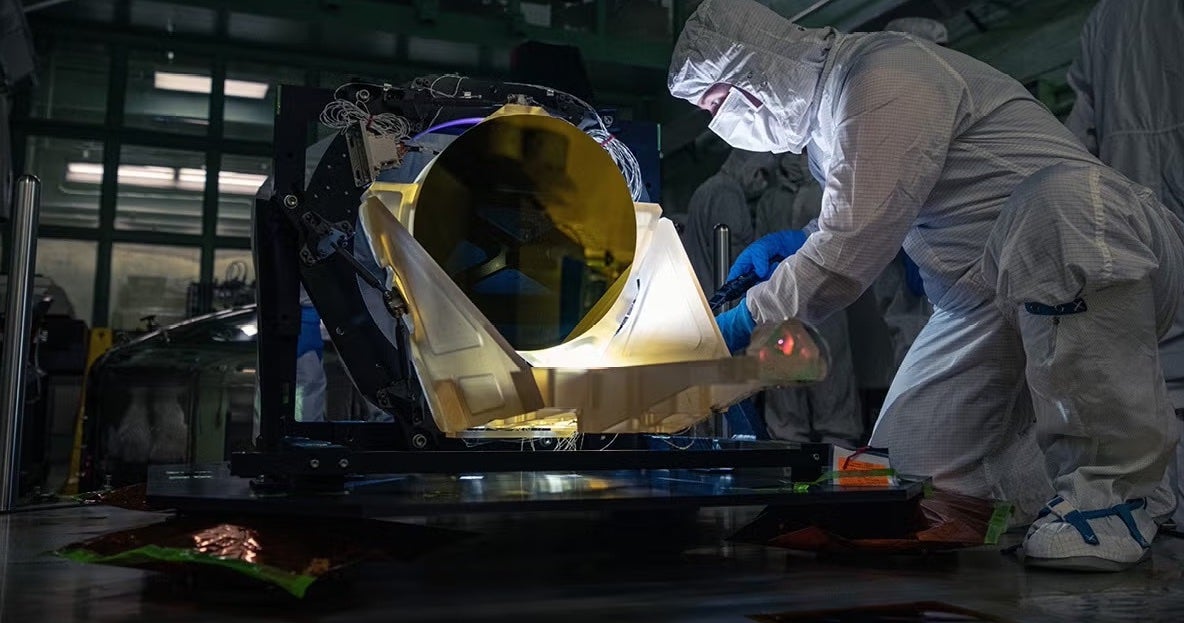
L3Harris said that each satellite will include two L3Harris telescopes capable of transmitting and receiving precision laser beams with the support of ceramic glass. The company has manufactured a full-scale prototype for the mission.
“LISA will open a new window into the universe that ground-based observatories cannot access,” said Jeff Hanke, president of Space Systems, Space & Mission Systems for L3Harris. “By listening to the low-frequency ripples in space-time across millions of kilometers, LISA allows the study of massive, distant and rare cosmic events that are otherwise invisible.”
ESA recently selected Germany’s OHB, together with Thales Alenia Space to build the three-spacecraft mission.