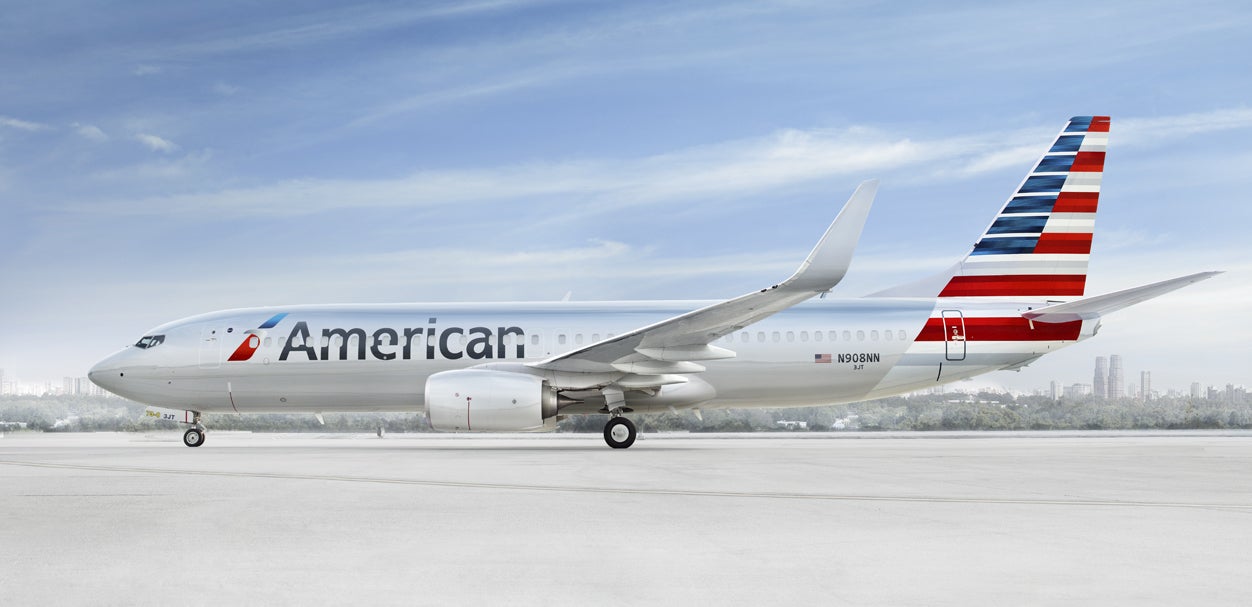
American Airlines is expanding its planned rollout with SpaceX’s Starlink for in-flight connectivity to now include its full mainline fleet of both Airbus and Boeing aircraft.
The rollout, targeted to begin in early 2027, will include more than 1,000 Airbus and Boeing narrowbody and widebody aircraft. This comes after American announced plans in May to equip more than 500 Airbus aircraft in the mainline fleet with Starlink.
The rollout will use the Starlink Performance Aero terminal, designed for up to 1 Gbps per terminal.
“Our customers have told us that dependable connectivity can make a meaningful difference in how they spend their time in the air,” American’s Chief Customer Officer Heather Garboden commented. “Starlink will give our customers countless options to make the most of their time while traveling. Just as importantly, it provides the foundation for future innovations that will further enhance the customer experience.”
American currently offers free Wi-Fi across “most mainline and regional aircraft,” according to a fleet update earlier this year. The airline has worked with Viasat and Intelsat, now SES, on in-flight connectivity. SES currently provides 2Ku service on 158 Airbus narrowbody aircraft, that are part of the transition to Starlink, SES confirmed to Via Satellite.
This agreement does not impact SES’s multi-orbit rollout on American’s Bombardier and Embraer regional fleet. SES is flying the electronically steered antenna (ESA) multi-orbit solution on more than 520 American regional jets. “American continues to add additional regional jets to that scope. These aircraft were not impacted by the recent announcement,” an SES spokesperson said.
American Airlines did not respond to a request to comment on the Starlink adoption.
Out of the “Big Three” airlines in the U.S., United has adopted Starlink across its full fleet both mainline and regional. Delta works with Viasat and Hughes and will adopt Amazon Leo on 500 aircraft beginning in 2028. Delta not working with Starlink has drawn personal jabs from SpaceX founder Elon Musk.
Editor’s note: This story was updated on Oct. 15 with more information from SES on the regional jet rollout.