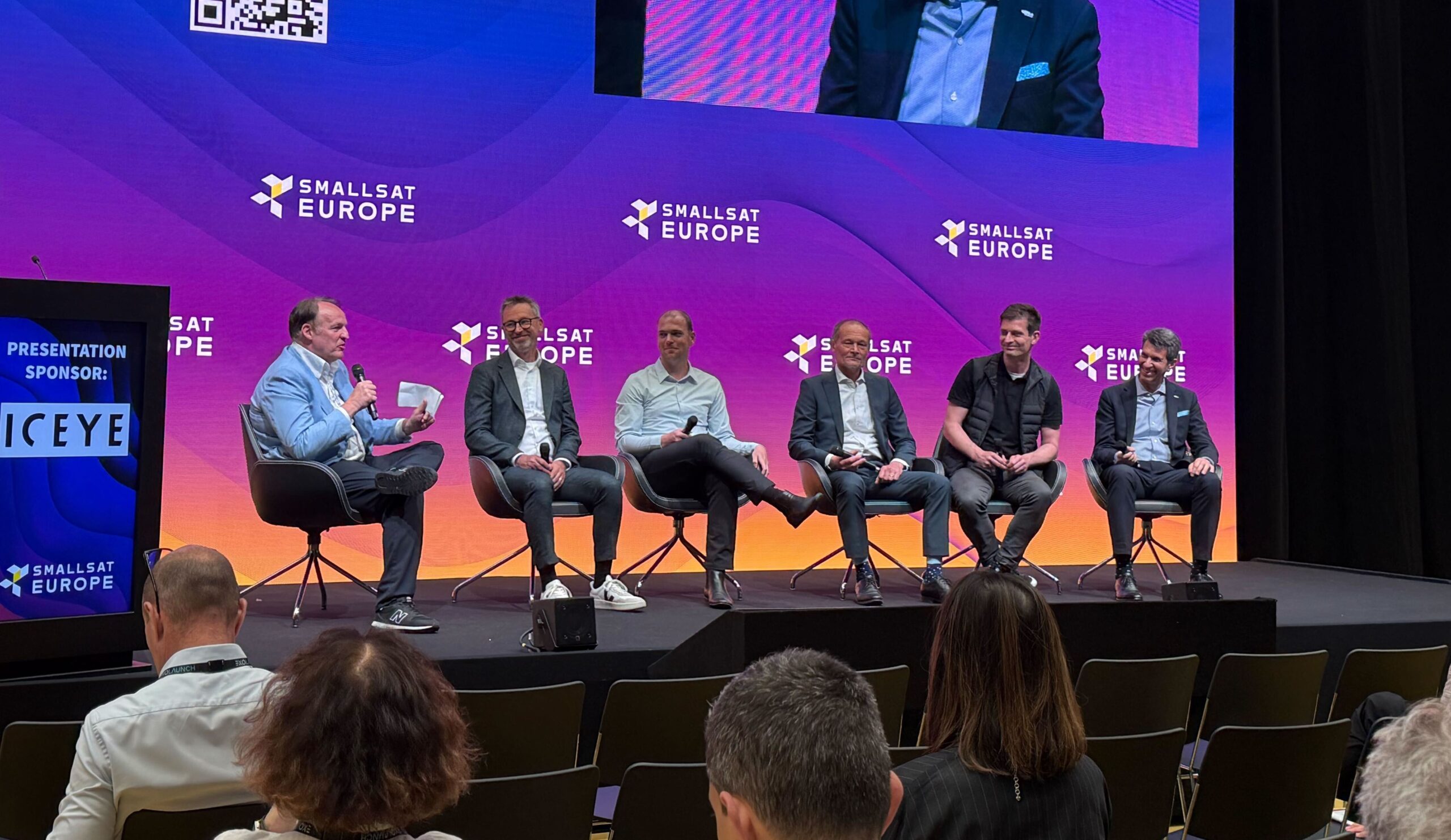
AMSTERDAM — After years of discussion, the connected market might finally be ready to realize its considerable potential, industry experts said Tuesday during SmallSat Europe.
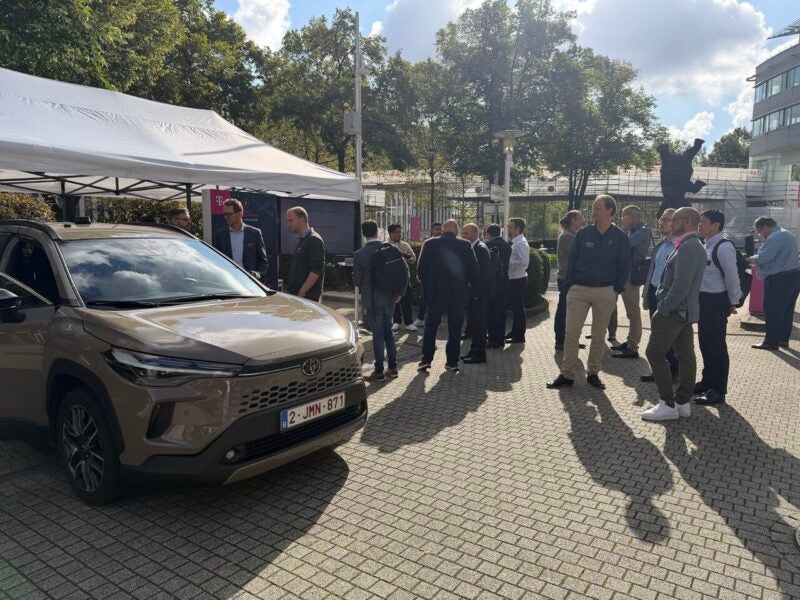
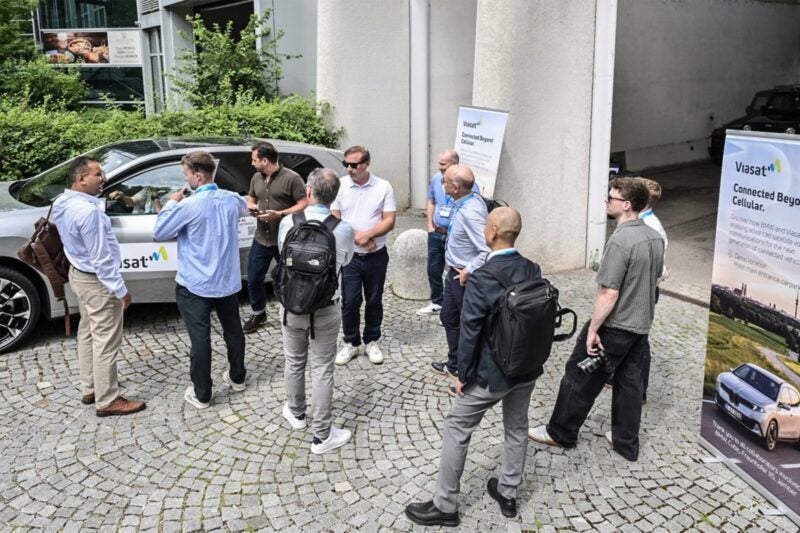
BMW Group‘s Olaf Eckart, senior expert cooperations R&D, said that the German automotive manufacturer is interested in space connectivity and started looking at the topic again in recent years. “Modern cars today are always connected today. They use all kind of digital services. We distinguish between narrowband and wideband use cases. We have more than 20 million cars that are connected, using services from the cloud. It is inevitable that they will be seamlessly connected. We have started to look again at satellite. It is a means to filling the coverage gaps, a complementary extension,” he said.
In order to bring effective satellite connectivity services to cars, and to reach this goal, Eckart said the industry needs to talk about interoperable and scalable services. He is one of the founding members of BMW Group’s non terrestrial network (NTN) team.
“We have started to use global mobile standards. We want standards-based communications. All satellite operators have shown a commitment towards standards-based solutions. We collected the use cases and put them on an NTN roadmap. We need to align the ecosystem on when this will happen. We need to act now to have space-based connectivity in a few years. In narrowband services, will come in 2027, and wideband will be 2029,” he said.
What is interesting is Eckart believes the conversation around satellite-based connectivity to cars has shifted significantly in recent times, previewing some upcoming surveys that asked customers if they are willing to pay for the service. “The discussion has shifted towards implementation challenges,” he said.
Georg Heinecke, senior manager for Aerospace, Porsche Consulting also spoke about a shift in the conversation. Porsche Consulting has also worked on a study with the European Space Agency (ESA) looking at this very topic. “The discussion has shifted to now what are the use cases. It is clear that cars will definitely be connected via satellite. It is now a given that satellite connectivity is a use case.”
Heinecke highlighted the five ‘P’s’ when it comes to challenges here – Priority, Process, Product, Partners, and People. If the industry can get things right here, this market could well succeed. He said companies need to prioritize it as a market, be better at production, and have a strong supply chain with partners. He said this is a sector where you see a lot of change requests so even though this is an engineering driven sector, working through those efficiently is a key challenge for companies and industry here.
The automakers perspective had a positive reaction from Warren Gabbett, senior manager of Future Business and Innovation for SES. “This is music to my ears when I hear the likes of Volkswagen and BMW say that we want satellite. Satcom will not be the primary source of connectivity. D2D will help unlock the market of the connected car,” he said.
ESA wants to help promote the connected car as a market for the space industry in Europe, with Antonio Franchi, head of Space for 5G and 6G Strategic Programme for ESA pointing to the importance of global standards.
“ESA has been promoting global standards. they are interoperable and meshed into the terrestrial network. Satellite is now part of these standards. The question is how do we enable commercialization? How do we achieve mass market and industrialization? We want to commercialize satellite solutions. We need even stronger partnerships between the space sector and the OEMs here,” he said.
Franchi believes the technology is now ready, and the market demand is now clear. “The ecosystem is converging. Europe has the power to deliver to the customer what they want. There is a political will to make things happen [in this market].”
Polyzois Kokkonis, business development manager for OHB said the company is doing a lot of activities in this area, and that things are beginning to speed up. Kokkonis noted that as lifecycles are moving faster, the industry needs to roll out services much faster. “We are focused on becoming part of that. We need to shape our whole ecosystems around the opportunities here,” he said.