Aircraft Interiors Expo (AIX) was another opportunity for satellite companies to make the case for in-flight connectivity (IFC) to airlines. Via Satellite rounds up some of the significant announcements involving satellite companies from AIX.
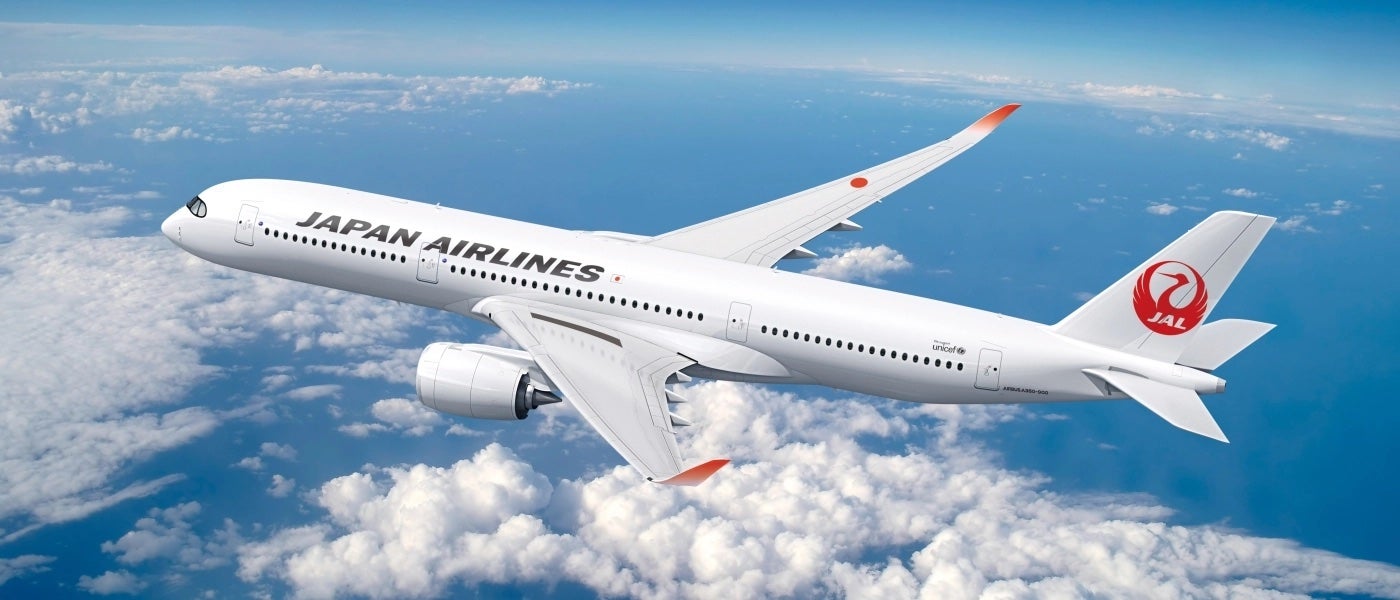
SES won a contract with Japan Airlines (JAL) to deliver new multi-orbit IFC for JAL’s Airbus and Boeing long-haul fleet. JAL will install SES’s multi-orbit electronically steered antenna (ESA) system on 20 Airbus A350-900 aircraft (linefit), 10 Boeing 787-9 aircraft (linefit) and 11 Boeing 787-9 aircraft (retrofit). Linefit deliveries are expected to begin in 2028. JAL’s in-flight connectivity evolution builds on more than a decade of continuous investment in onboard digital services.
One of Asia’s biggest airlines, Air India is to partner with Hughes Network Systems (Hughes). It has selected the Hughes In-Flight connectivity solution with the aim to deliver a consistent Wi-Fi experience using a common connectivity platform across its mixed widebody fleet. Hughes will leverage Airbus HBCplus for A350-1000 aircraft and the RAVE Aerospace solution for Boeing 787-8 and Boeing 777-300ER aircraft. The current selection applies to an initial tranche of existing and new widebody aircraft in the Air India fleet.
In addition, Airbus will equip 20 of Delta Air Lines‘ upcoming A350-1000 aircraft with a multi-orbit IFC solution co-developed by Delta and satellite operator Hughes. The solution leverages Airbus’ HBCplus, which is offered as a linefit or retrofit catalog option for airlines.
Viasat also made a couple of key announcements in this area. Viasat Aviation, Türksat, and SkyFive Arabia will establish a strategic roaming collaboration aimed at advancing next-generation IFC solutions. This initiative is designed to support the evolving connectivity needs of airlines and aviation customers across Europe, Türkiye, and the Middle East-Africa, including more flexible route coverage, stronger service continuity, and a more compelling customer proposition for connected aircraft.
Viasat also provided an update on its IFC partnership with Vueling – with more than 1 million sessions providing an upgraded, fast, and free in-flight WiFi aboard the airlines’ connected A320 fleet. Vueling, in collaboration with Viasat, started offering the complimentary service to customers in October 2025, leveraging the European Aviation Network (EAN) and Viasat’s digital platform to provide enhanced connectivity, entertainment, and 3D interactive map across more than 80 aircraft.
Neo Space Group (NSG) is launching a new IFC service in partnership with Saudia. Under this partnership, Saudia plans to provide complimentary high-speed internet services to all guests. This means it is one of the first airlines in the Middle East to offer free broadband connectivity onboard. The service is powered by NSG Skywaves and will leverage SES’s Open Orbits multi-orbit network.
Other Deals
Another of the major players in this market, Anuvu announced a strategic partnership with VidComply, for their AI-powered screening platform. Through this partnership, Anuvu will integrate VidComply’s advanced automation capabilities into its content supply chain, enabling faster, more efficient screening of media assets across its inflight entertainment offering.
One of the biggest announcements at the show came from RAVE Aerospace and Safran. The two companies unveiled their vision of the future for premium air travel – Origin. The two companies showcased something called the Immersive Display Concept, a U-shaped micro-LED screen that functions as a transformative element of the suite environment. It aims to enable passengers to enjoy a fully controllable and adaptable visual environment, creating dynamic moods and ambiances that redefine the in-suite experience.
In a separate announcement, involving RAVE Aerospace, Hainan Airlines will equip its aircraft on the new A321neo series platform with the 4K RAVE Ultra IFE system. It aims to bring premium, ultra HD in-flight entertainment to long-range narrowbody operations and to the Chinese mainland.
Thales, another big player in this arena, launched FlytEDGE Aura, a new light IFE solution. It says this solution is six times more powerful than before, and that this ultra-smart, ultra-fast performance is enabled by a Qualcomm processor embedded in each display, built for today and the future.
Along similar lines, Panasonic Avionics launched eXNeo, a next generation seatback monitor solution with the aim of providing better digital experiences. It will be available in 2027.
On the antenna side, ThinKom Solutions introduced ThinKom ThinAir Nexus, a new compact antenna, targeting this market. Nexus aims to offer flight-proven performance in a package size similar to single-orbit electronically steered antenna (ESA) solutions. Nexus supports gigabit performance for GEO, MEO, and LEO constellations today, with flexibility to add new networks in the future with a simple modem swap.