HAMBURG, Germany — As in-flight connectivity (IFC) has become a core part of the customer experience while flying, airlines are looking at IFC as one of the ways they form a connection with customers and provide content that resonates.
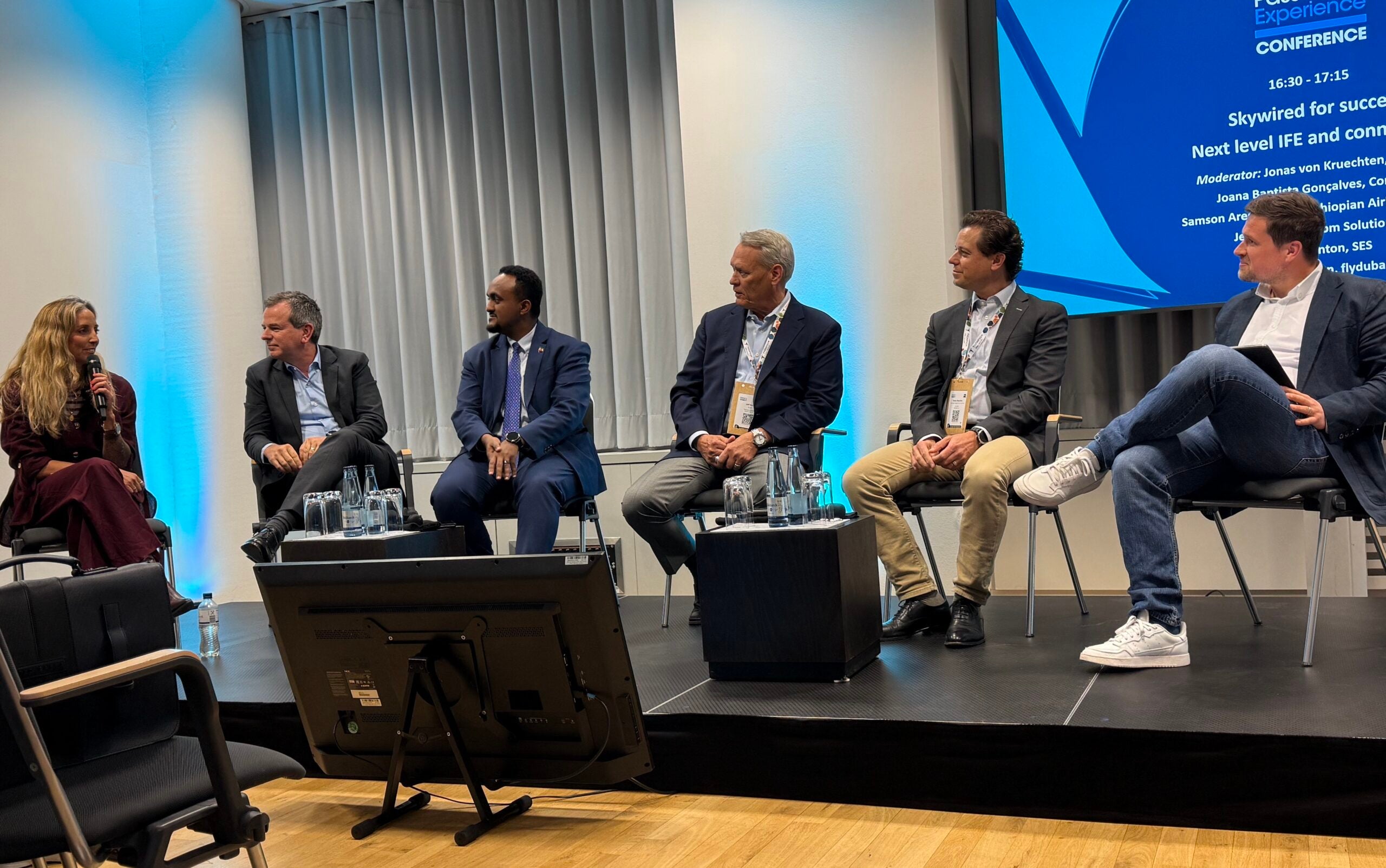
flydubai and Ethiopian Airlines gave their perspectives on the changing dynamics of this market at the Passenger Experience Conference in the run-up to Aircraft Interiors Expo (AIX) in Hamburg this week.
Dubai-based airline flydubai sees its business transforming from the transportation business to the hospitality business. Daniel Kerrison, senior vice president of In-Flight Operations for flydubai said the airline stopped referring to itself as a low-cost carrier in 2016, and is looking at opportunities to think differently about its customers’ experience.
flydubai is an interesting case study when it comes to IFC. It introduced IFC back in 2016 with a solution based on Ku-band. Kerrison admitted that at the time it “didn’t do for us what we hoped it would.” After taking a pause, the airline now has committed to installing Starlink on its in fleet.
“What we have learned is that people will fly with us, not because of the stuff we give them, but because of the way that they feel. Starlink is one piece of the puzzle about making those emotional connections with customers. People come back and fly with us, because of the way they feel when they fly with us,” Kerrison added.
IFC connectivity is part of building “emotional connections” to customers, Kerrison said, which also includes taking a close look at the content offered.
“Airlines are in a unique position to curate content that aligns with their brand and creates emotional ties with the brand. What we have is the ability offer is a curated collection of content. If we can make someone laugh, cry during a flight, that is a win for us,” he said. “We have an enormous volume of content. Some of the most unique independent content is some of the most watched content. It future-proofs us. We want to curate more and more content with our customers.”
Samson Arega Bekele, group vice president of Customer Experience for Ethiopian Airlines said with the airline growing strongly over the last two decades, IFC has become more of a consideration. While recognizing that IFC technology has advanced, Bekele also said that the industry has also been “sluggish” in this area.
“It is really important that we give the customer a similar experience to what they have at home. Customers are comparing us with Netflix, Amazon Prime, etc. You need personalization, commercialization. We believe it is a core element now. It is not just another feature. It is very important now,” he said.
The panel also featured key speakers from the satellite industry with both SES and ThinKom Solutions being represented. Jeff Sare, chief commercial officer of ThinKom Solutions said the company believes the best technology is the one that you can use. “Both LEO and GEO have strengths and weaknesses. By looking at the use case first, and working backwards, that is where we will get our most bang from the buck,” he said.
Sare talked about the benefits of the airline owning the passenger experience — even if not every airline wants to go down that route. The key going forward is to have a better understanding of the technology to fit an airline’s ambitions.
“You have to understand the technology and know where you want to go. Technology is going to change. Where I think we need to be thoughtful as an industry, is for example, move the conversation on standardization along so that it doesn’t limit your ability to change things,” said Sare.
Blane Boynton, senior vice president of Product Development for SES said the sales conversation and dialogue has shifted in IFC. The move to Non-Geostationary Orbit (NGSO) and Low-Earth Orbit (LEO) solutions has meant there is now a shift toward the quality of experience.
Providing a great connection “is the price of admission nowadays” as customers now have an expectation to smooth and regular access to the content they like. Airlines and connectivity providers need to solve the “connectivity friction” problem so customers don’t suffer when accessing content.