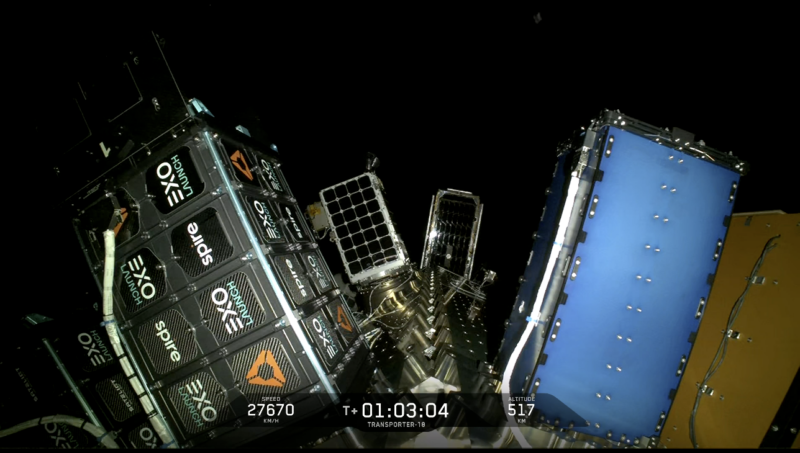
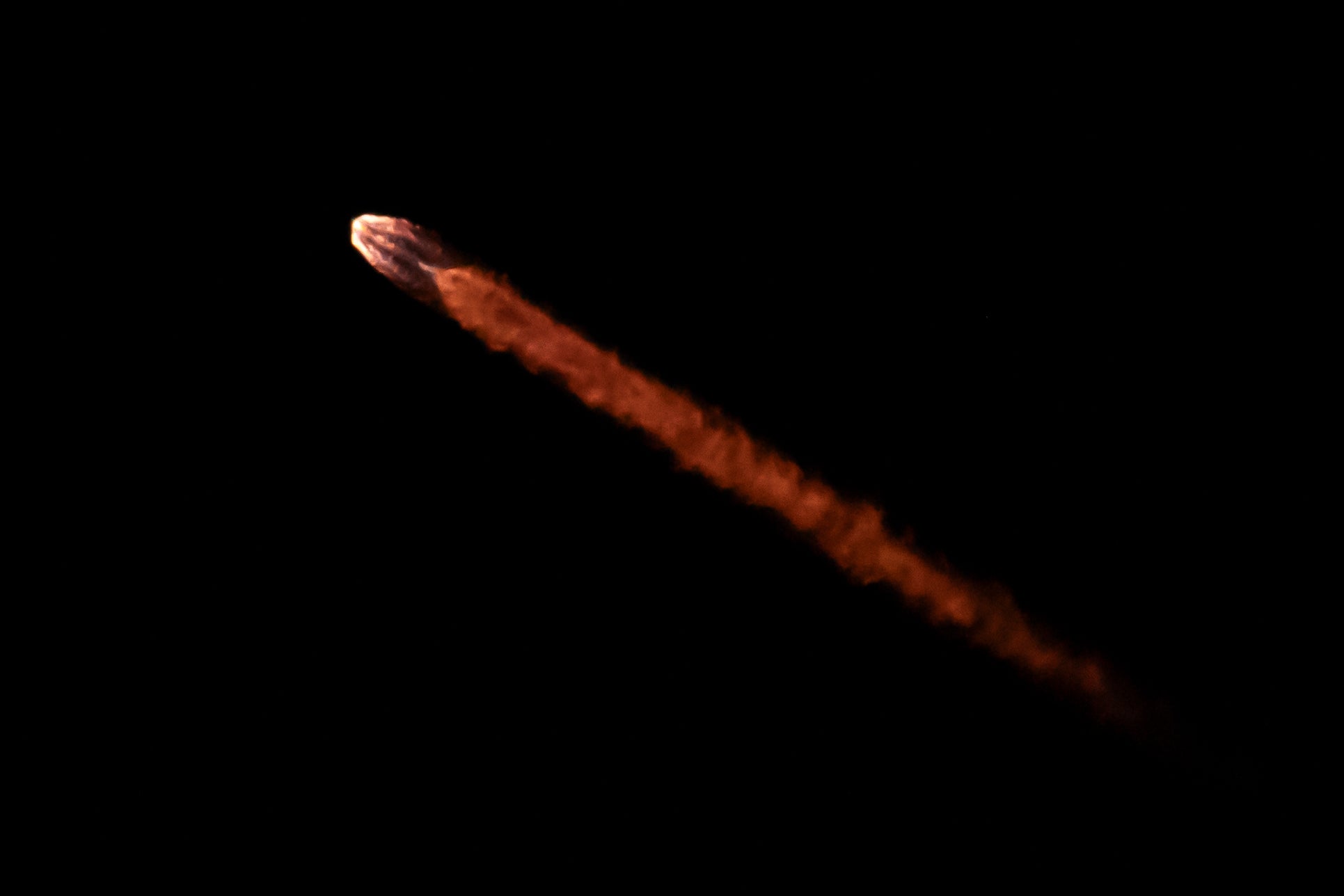
SpaceX launched 45 payloads on a mission to loft a South Korean Earth Observation (EO) satellite early Sunday morning, with a number of rideshare customers onboard as well. The primary customer was the Korea Aerospace Research Institute (KARI), which built the CAS500-2 EO satellite.
The CAS500-2 mission launched on a Falcon 9 rocket from Vandenberg Space Force Base in California, taking off at 12:00 a.m. PT on Sunday, May 3. SpaceX confirmed after the mission that all payloads were deployed.
Lynk Global deployed two direct-to-device satellites on the mission, Tower 7 and Tower 8. Lynk CEO Ramu Potarazu recently previewed upcoming launches during SATShow Week, saying the company plans to deliver connectivity to customers in mid-2027.
The mission deployed six satellites for Canadian company EarthDaily Analytics, which will set the company up to enter commercial service later this year. EarthDaily CEO Don Osborne recently spoke with Via Satellite about how the constellation is designed to provide broad area and global change detection.
True Anomaly, which just raised $650 million in new funding, launched a Jackal spacecraft, an autonomous orbital vehicle.
Argotec had seven HEO satellites on the mission, as part of its Hawk for Earth Observation constellation, which is part of Europe’s IRIDE program.
Planet had three Pelican satellites on the mission. Pelican satellites are the company’s very high-resolution satellites designed for faster tasking.
Exolaunch deployed 39 customer satellites including 18 microsatellites and 21 cubesats on the missions. Its customers included two Iceye satellites that will support sovereign intelligence for Iceye customers. Other customers included the Hellenic Space Center to support Greece’s space capabilities with the HELIOS and SELENE satellites; German wildfire-monitoring startup OroraTech with four satellites; and Polish company Eycore with the first Polish synthetic aperture radar satellite, Eycore-1.