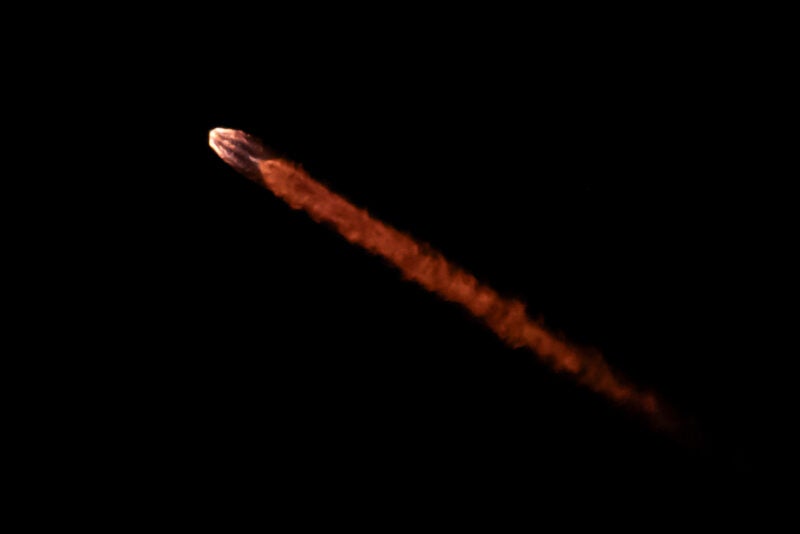
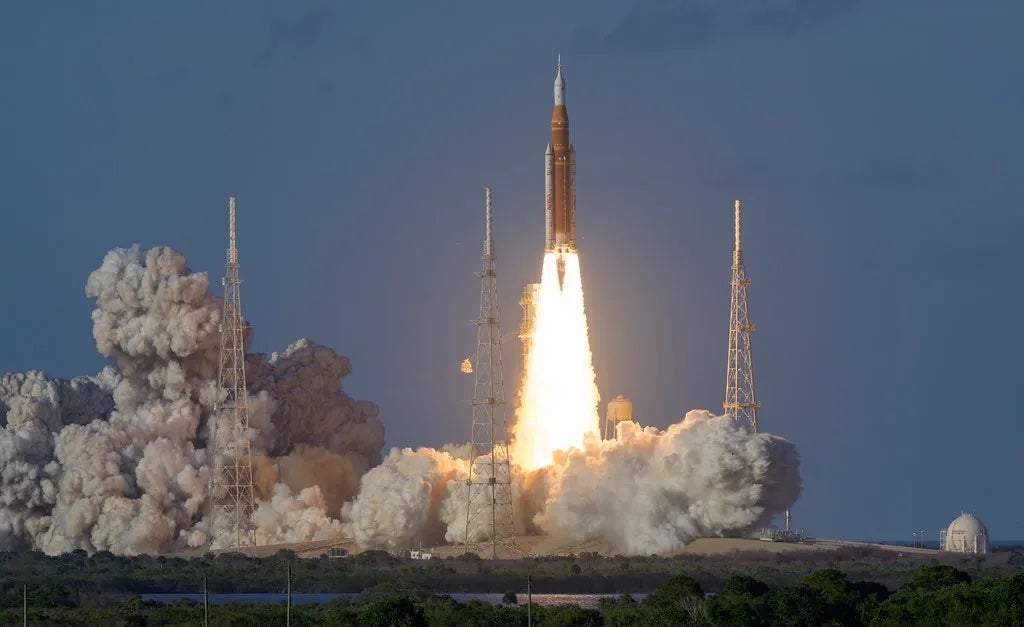
NASA launched Artemis II, its first crewed mission under the Artemis program, on Wednesday evening. The mission will test the Orion spacecraft’s life support capabilities on live astronauts for the first time as the space agency prepares for its planned crewed expeditions to the Moon.
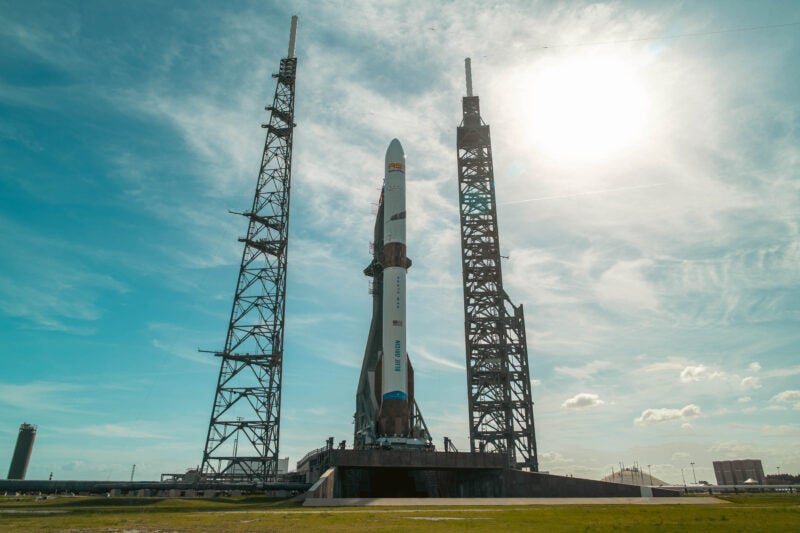
The mission launched at 6:35 p.m. EDT from NASA’s Kennedy Space Center in Cape Canaveral, Florida. It was the second successful launch for the Boeing-built Space Launch System (SLS) heavy-lift rocket after the precursor Artemis I mission in 2022.
Four astronauts are aboard for the mission: Christina Koch, Reid Wiseman, and Victor Glover of NASA and Jeremy Hansen of the Canadian Space Agency.
The spacecraft had a communications issue about 51 minutes into the flight, in which the ground support was not able to receive communications from the crew, NASA Administrator Jared Isaacman said in a post-launch press conference Wednesday evening. It was a temporary, partial loss of communications, in which the crew still recieved uplink from the ground, he said. The issue took place during a handover between NASA Tracking and Data Relay Satellite (TDRS) satellites. Communications have been restored and NASA is working the issue.
SLS carried the Orion spacecraft, built by NASA and Lockheed Martin, on its way to a 10-day-long mission in the vicinity of the Moon. The crew will evaluate Orion’s performance, test its radiation shelter, and practice emergency procedures.
Throughout the mission, Orion will fly two elliptical orbits around the Earth to test its systems before heading into a 24-hour orbit around the Moon. The crew will take control of the craft for around two hours to gather data and experience for the upcoming Artemis III mission, according to NASA’s reference guide for Artemis II.
While boomeranging around the Moon, the astronauts will produce photographs and audio recordings of their observations and experiences for historical documentation and scientific analysis. They may become the first humans to see certain areas of the Moon’s far side, depending on the time of the launch, according to NASA.
After the mission’s end, Orion will splash down in the Pacific Ocean and be retrieved.
“Artemis II is the start of something bigger than any one mission. It marks our return to the Moon, not just to visit, but to eventually stay on our Moon Base, and lays the foundation for the next giant leaps ahead,” NASA Administrator Jared Isaacman said in a statement.
Outside of the Artemis mission, SLS is also carrying cubesats developed by Argentina, Germany, South Korea, and Saudi Arabia’s space agencies. SLS will release the four cubesats in a High-Earth Orbit, where they will maneuver into their intended orbits and begin collecting data for their respective missions.
NASA is working with Amentum for ground, prelaunch, launch, and recovery operations. Northrop Grumman, the lead contractor for boosters, built the twin solid rocket boosters on SLS alongside NASA engineers. L3Harris Technologies built four RS-25 engines for the launch platform.
Telodyne Brown Engineering developed SLS’ launch vehicle stage adapter and United Launch Alliance collaborated with Boeing to create its interim cryogenic propulsion stages.
NASA will air 24/7 mission coverage on its YouTube channel.
“Today, people around the world share this generation’s Moon moment and celebrate the Artemis II crew and the extraordinary team supporting them. All of us at Space Foundation congratulate the crew, the entire Artemis team, and the remarkable people whose dedication has once again made history and brought humanity one step closer to the Moon,” Space Foundation CEO Heather Pringle said in a statement applauding the mission.