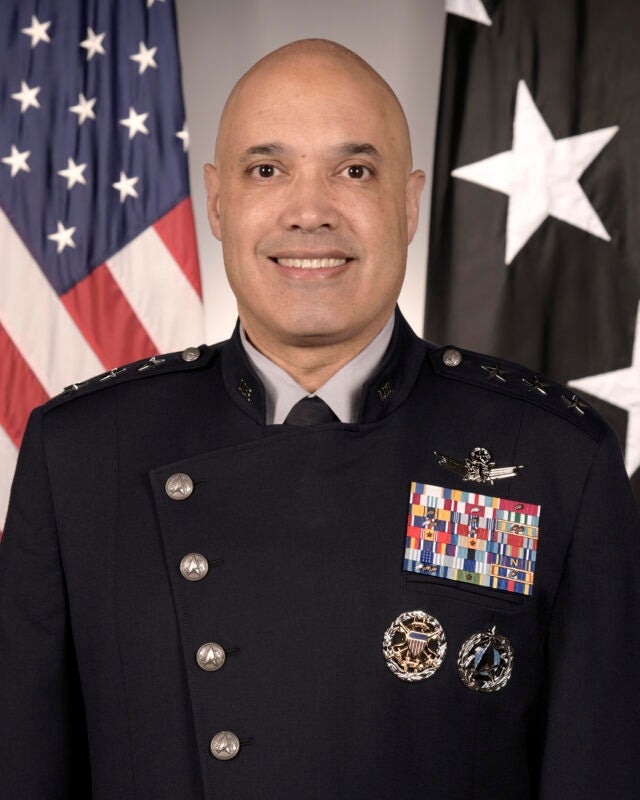
COLORADO SPRINGS, Colo.—Chinese actions in space the past year around refueling and logistics in orbit have further “intensified” the Defense Department’s need to develop a space maneuver warfare strategy, U.S. Space Command Commander Gen. Stephen Whiting said on Tuesday.
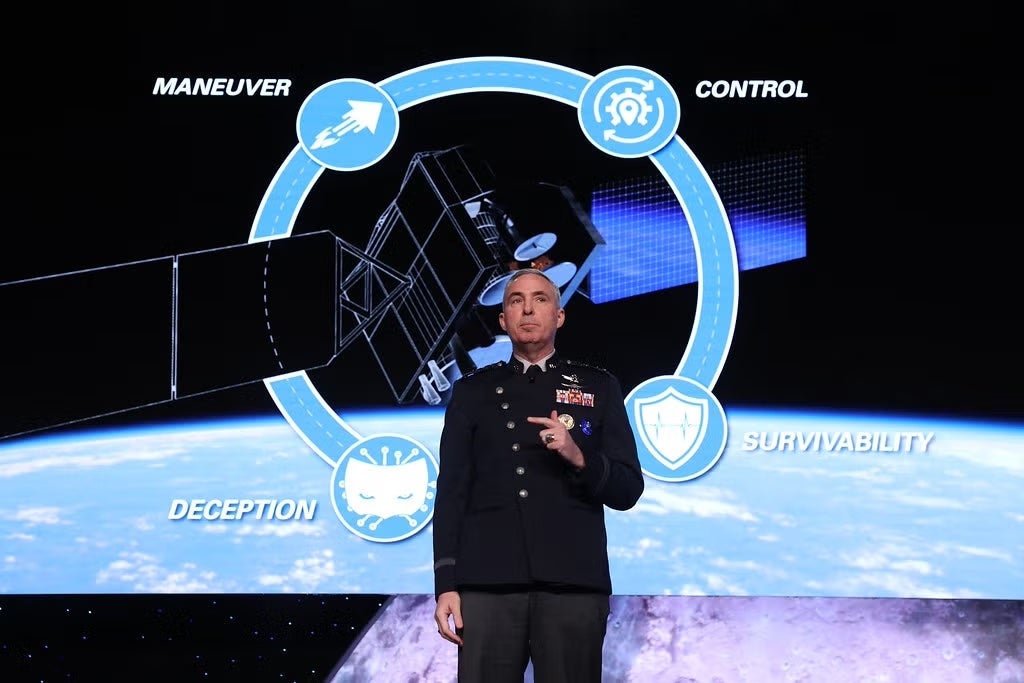
Satellites and spacecraft can’t be predictable and must be resilient and survivable, Whiting said during the opening address at the annual Space Symposium here.
To help inform a future maneuver strategy, Space Command is exploring orbital maneuvering concepts through its Capabilities Analysis and Verification Environment, called the CAVE Lab, which is doing modeling and simulation, Whiting said. The command is calling these efforts Apollo Maneuvers and they will help develop ideas of what orbital maneuvering could look like. The lab’s results will then go to the War Gaming Branch for testing and analysis, he said.
These efforts are in their early days, Whiting said later during a media roundtable.
Later this year the War Gaming Branch will begin tabletop exercises that will be followed by larger exercises, which would also include “some live fly elements of that using actual on-orbit assets,” he told reporters. Refueling demonstrations that are planned will be part of these war gaming efforts, he added.
Whiting said he has challenged the CAVE Lab and War Gaming Branch “to look at this tough problem of how we must transform to a maneuver warfare strategy for space and provide us with the analytical underpinnings and foundations and war gaming insights to show the value of maneuvering forces in space.”
Doctrine a Ways Off
An actual doctrine around space maneuver warfare is “probably a long way” off but there will be iterative milestones along the way, he said.
“As we’re doing modeling and simulation and war games, that will ultimately lead to a concept of employment and then a concept of employment you ultimately mature into a concept of operations, and then that could turn into tactics, techniques and procedures,” Whiting said. “And ultimately, as you begin operating these systems, I think doctrine emerges from that.”
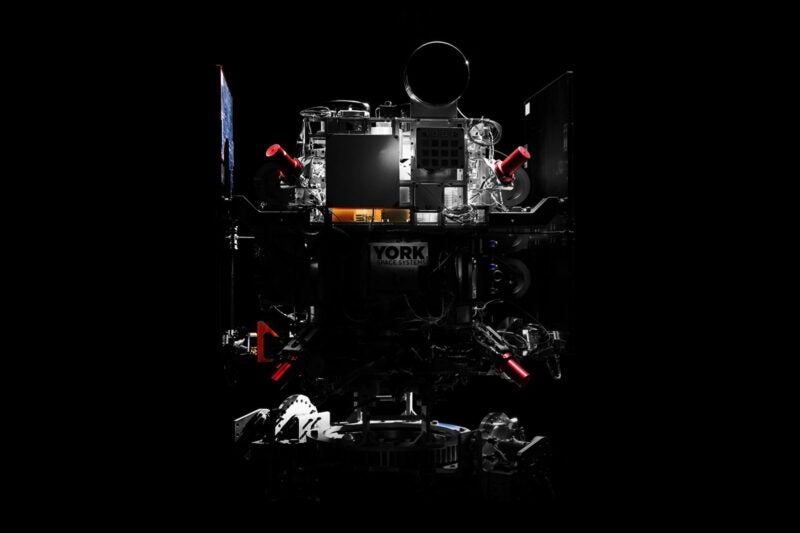
The Space Force has been signaling the need for maneuverable assets on orbit. This week, BAE Systems and Lockheed Martin introduced new satellites and initiatives for orbital warfare in line with the Space Force’s and other customers’ demands.
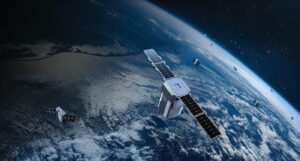
Refueling assets in space, or at least being able to move these assets as needed, is necessary for maneuver warfare and maintaining “initiative,” Whiting said in his keynote.
“In space we must perform, survive and gain positional advantage,” he said. “We want innovation that gives us maneuverability, endurability and survivability, because maneuver warfare demands rapid, focused and unexpected actions that shatter the enemy’s cohesion. A satellite which is locked in a predictable orbit is fighting from a fixed position, and it’s a target. It’s a known position on a map waiting to be bypassed or neutralized.”
Space Command is also learning lessons from the other military services, including the Army, on maneuver warfare.
Whiting said his command “must collaborate across the enterprise toward a maneuver warfare strategy.”
A strategy of maneuver warfare “seeks to shatter the enemy’s cohesion through the rapid, focused and unexpected actions spatially, temporally and psychologically,” he said.
Apollo Insight
In March, Space Command conducted its first Apollo Insight commercial integration war game, a series of tabletop exercises with private sector companies to add warfighting capability.
“In a contested environment, industrial strength increases capacity, and that integration is pivotal in ensuring commercial systems are ready to augment and enhance warfighting operations,” he said.
The initial exercise was classified and focused on the threat of weapons of mass destruction in space based on concerns that Russia might detonate a nuclear bomb in space.
Three more tabletop exercises are planned this year, with the second on maneuver warfare, followed by one on proliferated orbits and then missile defense in the Arctic region, Whiting said.