
 |
|
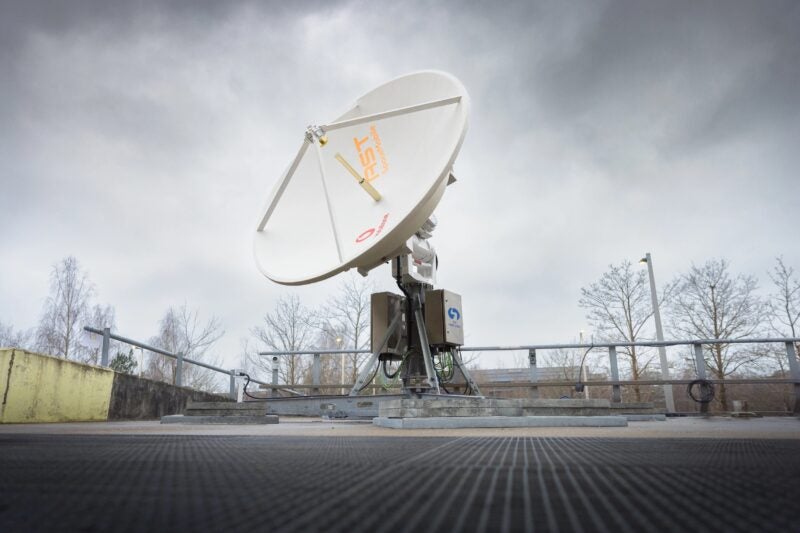
SkyStream provides voice and video services in remote, challenging and off-shore locations.
Image credit: SkyStream
|
[Satellite TODAY 08-08-13] SkyStream, a major service provider in the Middle East, has its eye set in Iraq as a key potential growth market for the company. “Oil and gas is a major growth business for us, especially in Iraq,” Riyadh Al Adely, managing director, SkyStream, told SatelliteTODAY.com. “Iraq is currently at about 2.8 million barrels a day of oil. In a few years, it will be up to 8 million barrels per day. We have opened two offices there, one in Basra where 80 percent of Iraq oil is coming from.”
Al Adely also believes the maritime and military markets offer some interesting opportunities for the company as it looks to maintain its impressive growth curve. “The maritime market, in my opinion, will continue to grow – especially the luxury yachting business. I met one of the European yacht manufacturers recently, they mentioned that they have back to back projects to build boats at 150 meters and above for the next 10 years,” he said. “You also have the military market. In the last years we were referring to U.S. Army and U.S. Army-supporting companies when we mention military in the region. Today, the picture is different. Regardless of the U.S. Army’s shrinking presence and expenditure, we still witness growth from the local military. There are government/military programs where a great deal of investment is taking place such as Yahsat, Qatar space program, etc.”
SkyStream is likely to have significant growth this year. In the last two years, its revenue growth wascoming primarily from maritime, however, the company’s revenue streams are now diversifying. SkyStream started as a service provider and while that is still a key part of its business, the company has also become a systems integrator. Recently, it has started investing to have its own flat panel terminals operating in multiple bands.
While SkyStream is a regular buyer of satellite capacity in the Middle East serving many verticals, Al Adely calls forecasting its bandwidth needs “the million dollar question.”
“There are some doubts and skepticism about the market growth in the region due to U.S. Army pullouts and the massive rollout of fiber but I believe the demand on the satellite capacity will continue to grow in the next years,” he said. “The new satellite launches, the availability of space segment in multiple bands and efficiency of hubs and terminals had created the infrastructure for the industry’s growth. SkyStream has grown almost by 50 percent every year in the last three years and we are projecting the same growth over the next 12 months.”
The company is concentrating its focus on the Middle East, although it has a limited presence in Africa. While it operates in North of African countries such as Libya, Al Adely said SkyStream considers countries it as part of the Middle East giving their macroeconomics and culture. “The same thing applies to the horn of Africa, this is why I still consider ourselves as a Middle East player,” he adds.
Al Adely is also confident that the company will benefit when High Throughput Satellites (HTS) become more prevalent in the region, and could lead to satellite becoming even more prominent in the Middle East. “I believe that HTS has bought us back to the consumer’s world. The fiber rollout in Iraq, Afghanistan and Africa has interrupted satellite growth in the consumer market. But, if we take a closer look at fiber today, we see landing stations, major backbones, but not the last mile in most cases. I believe these HTS will slow down the rollout of fiber in the last mile and bring us back into the game. This is a great opportunity for satellite in the consumer market,” he said.
Overall, Al Adely is optimistic as for the future of satellite in the region. “In the mid-term, I believe we will be amazed by the new verticals and applications that the satellite business will be part of. We are starting to see some but the message is not yet loud and clear in the market, that the satellite capacity is available and affordable,” he said. “People still think satellite capacity is too expensive and also, they still think there are certain limitations with satellite, which, in my opinion, is not 100 percent correct. When this starts to change, I think we will be amazed at the new verticals. Education programs can be a good example.”