The resurgence of Mobile Satellite Services (MSS), an industry and Wall Street pariah after the bankruptcies of Iridium, Globalstar and ICO in the late 1990s, was one of the major themes of the satellite industry in 2006.
Inmarsat’s successful initial public offering (IPO) and the launch of its promising Broadband Global Area Network (BGAN) service created enormous buzz. More excitement was generated by the reemergence of the bankrupt companies following reorganization and restructuring as well as the ambitious business plans for ancillary terrestrial component (ATC) services launched by companies such as Mobile Satellite Ventures (MSV) and Terrestar.
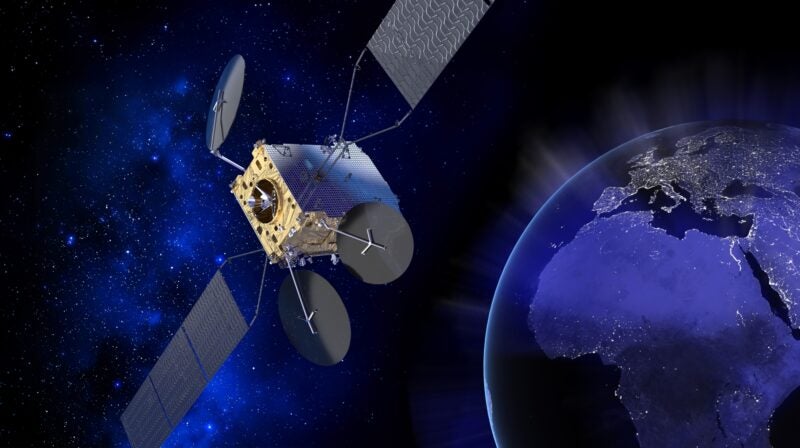
The acronym MSS is used to describe a multitude of services, but the only common trait is that they uplink and downlink to mobile terminals. Inmarsat and MSV operate geostationary satellites, while Iridium, Globalstar and ICO operate low- or mid-Earth orbit constellations. MSV and Globalstar are banking on ATC service; Inmarsat, with its maritime, aeronautic and land mobile service in addition to BGAN, is not.
Late 2006 brought three satellite company IPOs, two of them MSS operators, and a new opportunity to gauge the public market sentiment for the sector. Israel-based RRSat Global Communications Network, a content distributor for terrestrial broadcasters, went out strongly in its Nov. 1 Nasdaq debut and gained about 17 percent on its offering price of $12.50 (near the high end of the $11-to-$13 range set by its underwriters) to close at $15.03 and raise about $47.5 million.
Globalstar and Orbcomm followed. Globalstar sold 7.5 million shares (1 million more than expected) and raised $127.5 million. The price of $17 per share fell in the middle of its range, and the shares closed at $17.52 opening day, a 3 percent aftermarket gain. Orbcomm priced its offering at $11, below its estimated $12-to-$14 range and closed at $7.75.
Which was the better IPO? It depends on whom you ask and when you do the asking.
The financial press favored RRSat (that double-digit run up!), but in reality, the IPOs illustrated the vagaries and black arts of pricing and the aftermarket expectations game on which this column has commented before and which often pit underwriters against pre-IPO financiers.
During the telecom/tech bubble of the late 1990s — the same period associated with the prior MSS wave — the market became accustomed to enormous aftermarket price run ups, oblivious to the fact that underwriters often achieved this by underpricing the offering in relation to what they knew the market would bear or simply pricing the offering too conservatively. This tactic enraged venture capital and private equity investors in the issuer, who were thereby leaving large amounts of money on the table in the very exit event that was the rationale for their initial investment.
For issuers, this was a mixed bag. Since founders’ stock typically was locked up to keep management from selling out and undermining the company going forward, company management often was on the side of the underwriters, preferring the potential of an aftermarket run up that might continue past the lockup period. Issuers also benefited from the buzz that the run up generated for the company.
On the other hand, in an underpriced IPO, issuers were left presiding over a company that had raised less money than it could have, creating limitations on strategic and financial initiatives available and impacting long-term success, while IPO purchasers pocketed the run up money that the underwriters had left on the table.
It is even more important to note that none of this constitutes a direct analysis of which company’s prospects are the best and which, assuming a transparent and efficient market, should be the best growth opportunity if that is an investor’s long-term goal. This analysis is food for thought when considering market buzz.
In other news, SES Global’s European subsidiary, SES Astra, and Eutelsat formed a joint venture to market and offer S-band mobile digital video satellite broadcasting service on Eutelsat’s W2A satellite in Europe. The two companies, generally rival Fixed Satellite Services (FSS) operators, stressed that they wanted to complement, not compete with, terrestrial providers and infrastructure and would seek terrestrial telecommunications partners for the joint venture.
This may be 2007’s main theme, and we will look at new terrestrial partnering opportunities beyond ATC in our next column and at Satellite 2007.