Latest News
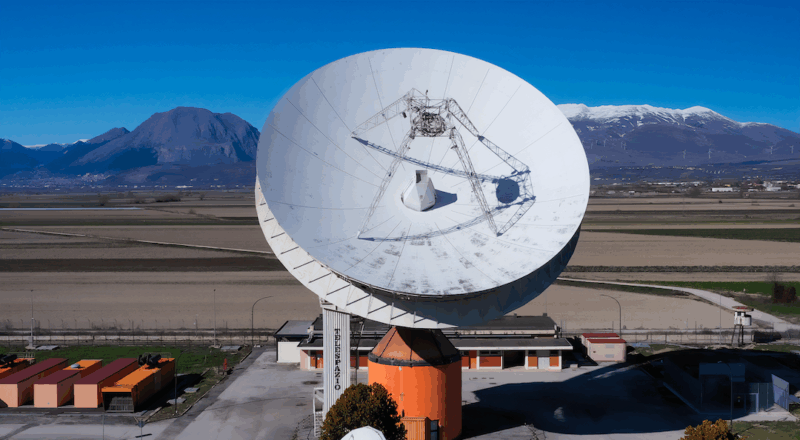
The FOC-1A antenna at the Fucino Space Centre. Photo: Telespazio
Telespazio and the Italian Space Agency (ASI) are joining forces to modernize Telespazio’s FOC-1A antenna, which has been operational at the Fucino Space Centre in Italy since 1967. The objective of the project is to make the facility, a 27-meter-diameter parabolic antenna, compatible with near-Earth and deep space communication requirements. Telespazio announced the modernization program, called Response, on Feb. 3.
This antenna is key piece of Italy’s space history. The FOC-1A antenna was the one that allowed Italians to watch the Moon landing on television in 1969. The aim now is that a more modernized version of this antenna will be able to support lunar missions and deep space exploration over the coming decades.
In addition, the antenna will be able to support, among other things, future missions related to the European Space Agency’s global tracking network for missions and satellites (ESTRACK), as well as communications with the Moon. This will be achieved both through Italy’s direct contribution to NASA’s Artemis program and through ESA’s Moonlight program for lunar communications and navigation, for which Telespazio is the prime contractor.
“With Response, Telespazio and ASI are giving new life to an infrastructure that has made the history of Italian and international satellite communications. The FOC-1A antenna, a symbol of the great space achievements of the 1960s and 1970s, is now being projected into the future to support lunar missions and deep space exploration over the coming decades. This is a concrete example of how Telespazio, together with Leonardo, is able to enhance its technological and industrial heritage, placing it at the service of Europe’s new ambitions and the global space community,” Alessandra Farese, senior vice president of Satellite Systems & Operations for Telespazio, said in a statement.
Stay connected and get ahead with the leading source of industry intel!
Subscribe Now