Latest News
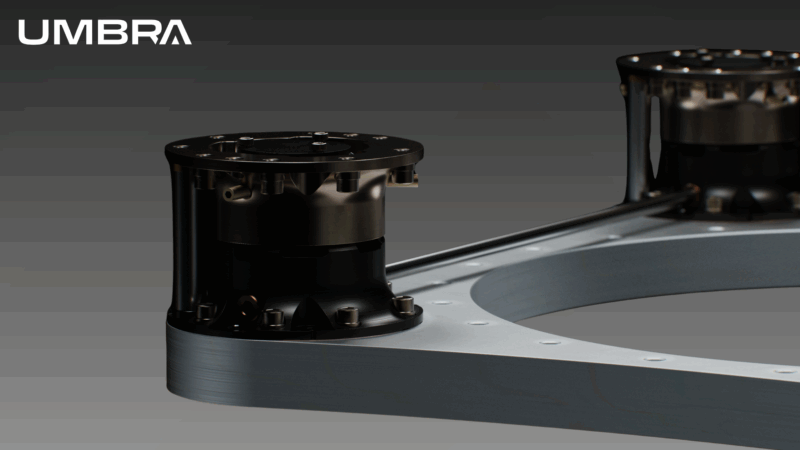
A closeup of Umbra’s four-point spacecraft separation system. Photo: Umbra
Umbra is moving into the spacecraft components business with a new Space Systems business line in a move to expand the vendor pool for space systems.
Umbra started out as a synthetic aperture radar (SAR) data company and currently operates five satellites in its SAR constellation, with two more to launch in the next few months. Then last year, Umbra expanded into also offering full satellites and missions to customers.
Now, Umbra is offering the same components that fly on its SAR constellation to customers, the company announced Aug. 11 during the Small Satellite Conference in Utah.
“We know that our components work well because we have flight experience using those components,” Todd Master, Umbra COO and general manager of Space Systems, told Via Satellite. “That goes a long way for customers to understand that this isn’t just a design or a concept — this is something that’s being used actively in [our] operational constellation.”
Umbra started out buying components for its own satellites from vendors, but as a commercial customer, the company found itself at the back of the queue behind defense orders, Master said. This pushed Umbra to pursue vertical integration to have control over its schedule, cost, and performance.
While demand for spacecraft from the commercial and government markets has increased, the vendor pool has largely stayed the same, Master added. “The need is still outstripping the number of options in the marketplace,” he said.
The new business line includes Umbra’s battery module, solar array, power package, reaction wheel, S-band radio and a four-point separation system for deployment. The components are manufactured in Southern California, where Umbra recently opened a new manufacturing facility to increase its manufacturing capacity.
This expansion takes Umbra from a remote sensing company to a full spectrum space technology company, Master said. “Once systems are a part of your offering, we become a lot more agnostic. I’m going to provide what my customer needs in any way they need it.”
Master sees the business supporting other commercial space companies, government contractors for programs like the Space Development Agency’s proliferated constellation and the Golden Dome, and international customers as well.
“We’ve spent a lot of time and energy building parts of our system to make it work effectively, affordably, and to meet performance and space. Now we’re taking those investments that we’ve made for ourselves and bringing it to the marketplace,” Master said, adding: “We believe in it because we fly it ourselves.”
Stay connected and get ahead with the leading source of industry intel!
Subscribe Now