Latest News
DARPA Program Seeks Autonomous, Maneuverable Satellites For Cislunar Domain Awareness
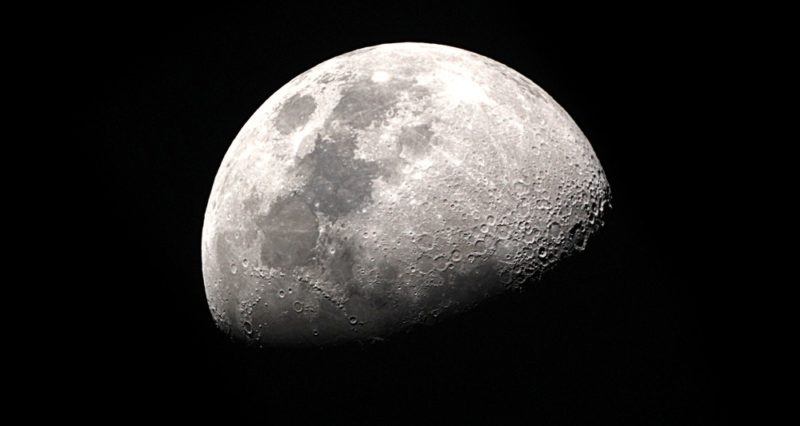
The moon. Photo: Shutterstock
The Defense Advanced Research Projects Agency (DARPA) is soliciting approaches for prototype spacecraft that can autonomously navigate and be highly maneuverable in a Low Lunar Orbit (LLO) for cislunar space situational awareness (SSA) in support of the U.S. Space Force.
Multiple Other Transaction for Prototype agreements are expected under the Lunar Assay via Small Satellite Orbiter (LASSO) effort, DARPA said on Monday. The goal is an affordable and scalable commercial capability that provides SSA for cislunar space, the agency said in the solicitation.
The usual vision for SSA for cislunar space is to outfit large spacecraft with “exquisite optics,” an approach that is expensive to build and launch, the agency said. The LASSO effort is aimed at developing more “cost-efficient” solutions that involve one or a few small satellites with propulsion capabilities to maintain LLO to enable the sensor to capture enough measurements of the moon’s surface, and to navigate autonomously at low altitudes to automatically adjust trajectories.
“SSA in cislunar space has strained current capabilities, forcing assessment of improvements in sensors, processing algorithms, and even navigation techniques required for this challenge,” DARPA said. “Sustained and advanced maneuverability for spacecraft is key to enabling further improvements of SSA in cislunar space.”
DARPA also wants sensors on the LASSO orbiter that combine data with existing “lunar data to establish a proven reserve understanding of lunar water resources,” and give high confidence that it is worth retrieving resource samples. Awardees will also conduct an economic study that compare the cost of supplying water from Earth versus the estimated costs of relying on water from the moon.
A proposer’s day is planned for May 13 and abstracts are due by May 27.
Stay connected and get ahead with the leading source of industry intel!
Subscribe Now