Optus, an Australian based telco and satellite player, has achieved a key milestone in the area of satellite life extension. It has completed the first phase of Project Aurora, with the successful undocking of the Mission Extension Vehicle (MEV) from the Optus D3 satellite. Phase two is now underway, Optus is on track to extend the life of Optus D3 by up to six years through the installation of a Mission Extension Pod (MEP) in late 2027. Optus revealed the latest details of Project Aurora, Aug. 12.
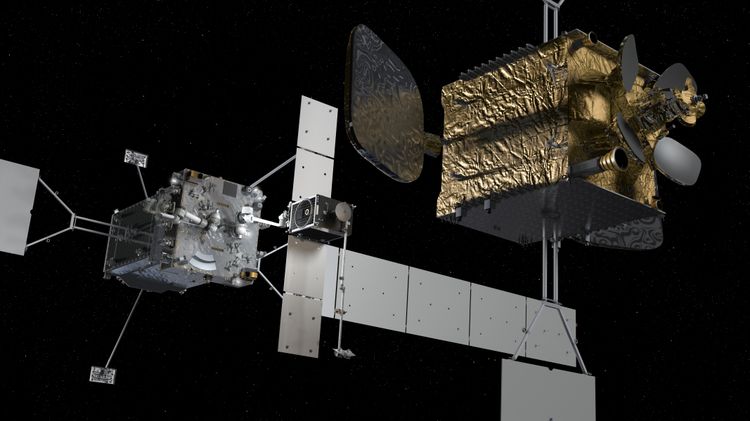
Once installed, the MEP will augment the propulsion capabilities of the D3 satellite, effectively acting as an additional fuel source and extending the satellite’s operational life by up to six years, helping to secure service continuity into the 2030s.
Optus is working with Northrop Grumman on this initiative. The Northrop Grumman operated MRV is designed to service multiple satellites in orbit using sophisticated robotics, installing MEPs that provide propulsion support and extend mission lifespans. After docking, the Optus-owned and controlled MEP will play a critical role in maintaining the long-term performance of the D3 satellite.
“The successful undocking of the MEV from Optus D3 marks the completion of the first phase of Project Aurora and is a significant achievement in our mission to increase the resilience of our sovereign satellite fleet. Combined with the recent successful launch of the MRV and Optus’ Mission Extension Pod, we are continuing to break new ground in satellite life extension in partnership with Northrop Grumman. These milestones demonstrate how innovative technologies can maximize the value of existing satellite assets while supporting long-term service continuity for customers,” Harvey Wright, Executive General Manager, Satellite, Optus, said in a statement.