Latest News
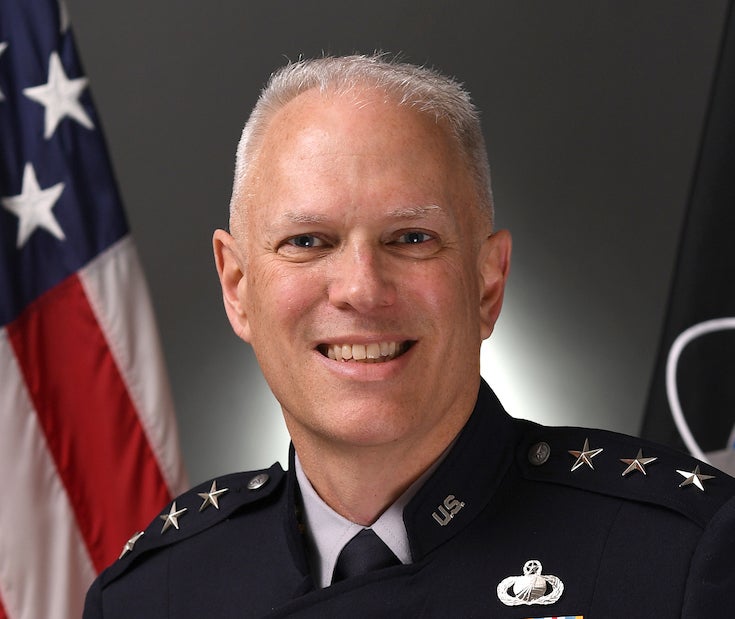
Lt. Gen. Philip Garrant, commander, Space Systems Command. U.S. Space Force photo
COLORADO SPRINGS, Colo.— The Space Force is assessing its supply chain risks and vulnerabilities more comprehensively after initially looking at the piece parts, which has put the service in a better position to deal with impacts of a potential global trade war stemming from a round of tariffs being imposed by the Trump administration on allies and potential adversaries alike, a senior service acquisition official said on Tuesday.
The Department of the Air Force, which the Space Force is part of, has a “small team” whose “full-time job” is to “really watch the supply chain, understand the risks,” Lt. Gen. Phil Garrant, commander of U.S. Space Systems Command, said during a media roundtable at the Space Symposium.
Last November, then-Air Force Secretary Frank Kendall asked Garrant where the vulnerabilities are. Garrant said the “biggest risk areas” are in the areas of microelectronics, ground entry points, sometimes software, and propulsion tanks.
“I’d say, in general, from a supply chain perspective, radiation hardened microelectronics has been and will be for the foreseeable future, the biggest risk to our supply chain,” he said.
Now the focus is “on getting ahead of it with the long-lead parts and making sure that the industrial partners are part of that team and part of that solution,” he said.
During, and for a time after, the COVID-19 pandemic, microelectronics were in short supply as supply chains globally, especially Asia, were stifled due to public health lockdowns and restrictions.
Some work is being on-shored with Garrant highlighting “a lot of domestic production of the [propulsion] tanks” and some more semiconductor manufacturing happening in the continental U.S. He also pointed to clauses that allow both parties to reopen contract negotiations around economic issues that allow the parties to “adapt to the changing market and make sure that our industrial base stays fluid and is able to deliver the capabilities we need.”
U.S. allies and partners are also important in the supply chain, he said.
Stay connected and get ahead with the leading source of industry intel!
Subscribe Now