Latest News
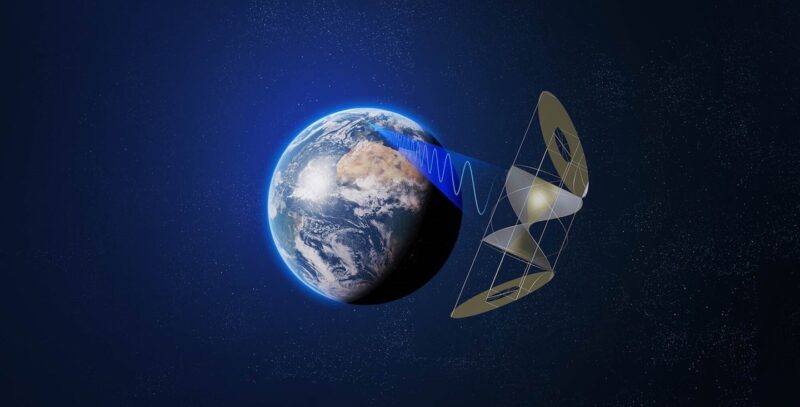
Rendering of the CASSIOPeiA satellite. Photo: Space Solar
Space Solar has completed CASSiDi, an 18-month, 1.7 million pound ($2.26 million) project designed to advance the design maturity of its CASSIOPeiA satellite. The project advanced key aspects of the design, including the wireless power beaming, in-space assembly process and the ground receiver.
Space Solar said the study confirms that solar power satellite mass targets are achievable, a key driver of the capital cost and the low levelized cost of electricity. Space Solar announced the findings, April 28. The company believes space-based solar power (SBSP) could be key for global energy needs in the future to deliver uninterrupted power in all weather, overcoming the intermittency challenges of traditional wind and solar.
The CASSIOPeiA satellite design uses reflectors and a helical array to continuously collect solar energy and beam it to ground-based receivers via high-frequency radio waves. The study was funded by the UK Space Agency and the Department for Energy Security and Net Zero as Phase 2 of the Space Based Solar Power Innovation Program.
Space Solar is now accelerating towards deployment, with plans to deliver a megawatt-scale commercial system within five years and expand to a full product range from 30 MW to GigaWatt-scale within 12 years.
“In just 18 months and 1.7 million pounds of engineering work, CASSiDi has accelerated space-based solar power to a new level of maturity, confirming its potential to become a commercially viable clean energy source within the next few years. We now have the most advanced and capable SBSP design in the world—and a clear, achievable roadmap to commercial reality. This is a game-changer for clean energy,” Martin Soltau, Co-CEO at Space Solar, said in a statement.
Stay connected and get ahead with the leading source of industry intel!
Subscribe Now