
When Mark asked me to contribute to Via Satellite’s 40th anniversary edition, I was honored. I also had an uncomfortable realization: I’ve been working in wireless communications for roughly as long as this magazine has existed.
The first half of that career was in terrestrial wireless, beginning in the late 1980s, when we were building some of the first cellular systems around the world. The last 20 years have been in satellite communications, leading Iridium. Twenty years once sounded like a very long time. Looking back, it feels more like the blink of an eye.
Explore the September 2026 Issue
Check out more from this issue and find your next story to read.
Watching two telecoms industries move through periods of enormous change may not have made me perfect at predicting the future, but it has made me better at recognizing patterns.
People in wireless used to joke that the industry innovated during the odd-numbered “G’s” (1G, 3G, 5G) and made money during the even-numbered ones (2G and 4G). There is more truth in that than there probably should be. Third-generation wireless brought data to mobile phones, but it took 4G and LTE to make the experience scalable, useful, and economically compelling.
Today, 5G is bringing satellite into the broader wireless ecosystem through non-terrestrial network (NTN) standards and direct-to-device (D2D) capabilities. It may be 6G before we fully understand what that convergence means and who will make money doing it. A lot is being invested today.
That is one way I process the amount of change taking place around us. I try not to assume that the first version of an idea will be the one that succeeds, or that the first companies associated with a new market will become the eventual winners, a lesson history repeatedly teaches us. Transformative technologies usually take longer, cost more and create value differently than people expect.
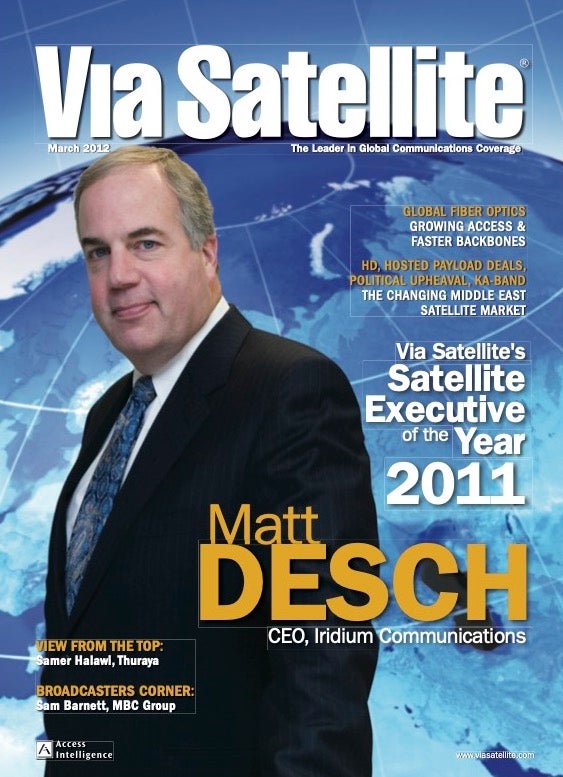
While I had a front row seat to the early days of cell phones, I certainly did not have the satellite industry completely figured out when I joined Iridium in 2006.
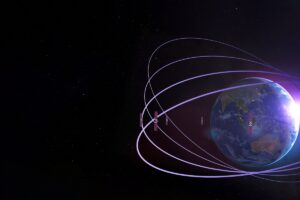
The commercial space industry was in a very different place then. We were living through what felt like the quiet aftermath of the first wave of ambitious Low-Earth Orbit (LEO) constellations. A number of people told me that joining Iridium was a questionable career decision. They were not being unreasonable. The company had an extraordinary network, but it also had a famous history, a difficult financial model, and a constellation that eventually had to be replaced.
What I believed was a lesson from the early days of cellular, that “coverage was king.” I believed that a truly global satellite network connecting people and things on the move, beyond the reach of terrestrial networks, would both increase in importance and value over time.
That turned out to be right. Almost everything surrounding that belief surprised me.
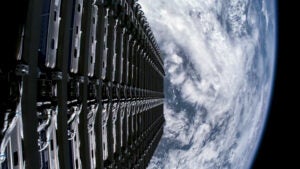
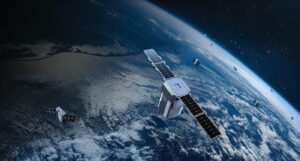
I did not imagine companies in this sector being valued in the trillions. I did not foresee billionaires competing to build space businesses, hundreds of venture firms searching for opportunities or the public becoming so enthusiastic about space. I did not envision plans for tens or hundreds of thousands of satellites in constellations, data centers in orbit, or renewed plans for the Moon and Mars. However, these important programs are inspiring a new generation.
Even when you spend your career thinking about strategy, the future has a way of giving your imagination a run for its money.
Some of the moments I remember most in my time at Iridium were not the dramatic industry announcements. They were the seeming “miracles” (at least to others) when we managed to thread another needle.
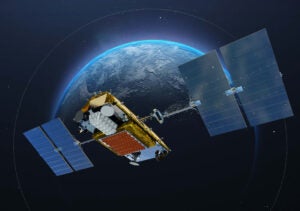
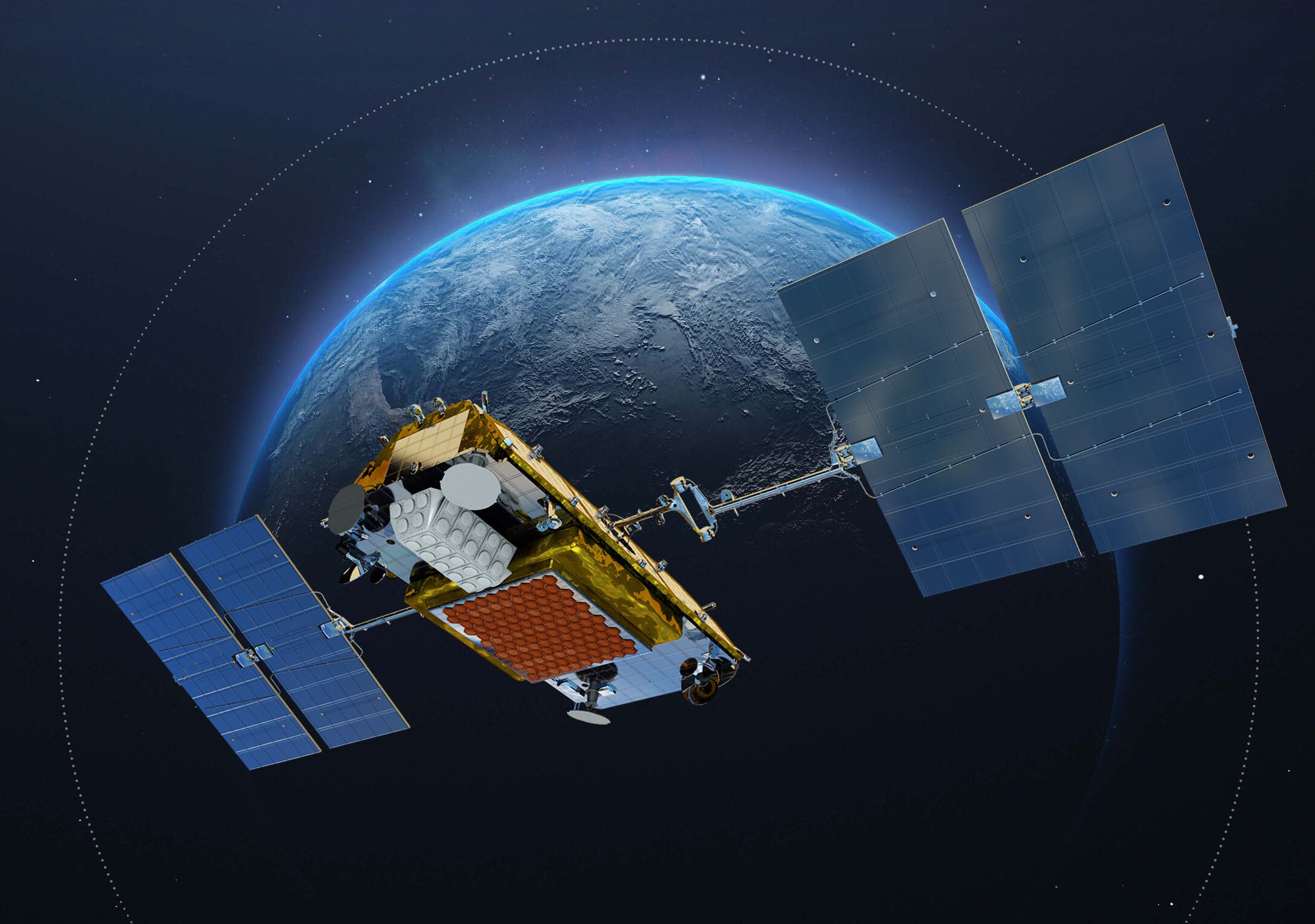
We had to turn a technically remarkable system into a durable business capable of generating profit and free cash flow. We had to raise the financing for Iridium NEXT during the worst economic crisis of the previous 30 years. We had to replace an entire global constellation without interrupting service. We also had to find ways to create new revenue sources and missions, including the hosted payloads that became the foundation of a global aircraft-surveillance business.
None of that came from one brilliant decision. It came from continual planning, with disciplined execution, patient investors, committed partners, and the industry’s gold standard team, all understanding that space remains unforgiving no matter how much excitement and enthusiasm surrounds it.
The availability of capital may be the biggest difference between the industry I entered 20 years ago and the one we see today. Ideas that might not have received a meeting in 2008 can now attract multiple rounds of financing. That is a good thing. It allows talented people to test technologies and business models that otherwise might never have had a chance.
But economic cycles do not disappear. Eventually, customers have to pay, business cases must close, free cash flow has to be generated, and investors need to earn a return. Space may be more accessible than it once was, but it is still hard and unforgiving.
Watching the terrestrial wireless industry mature, I expect competition and standards will eventually echo that transformation for satellite companies. Given the higher costs and constraints of space while managing increasing competition, the lowest cost networks will have the best chances to succeed. The winners will likely make their own satellites and launch their own rockets to drive down their long-term costs and make marginal business cases close.
That does not mean every company needs to be vertically integrated, but if investors ever start prioritizing the ability to generate cashflow and sustain growth again over long term big ideas, having closer control of costs and innovation will be very important. It’s true of other maturing industries and likely will be true again in ours. Big ideas must eventually sustain themselves.
I am sometimes described as a pragmatist. That is probably fair. When I hear a new idea, I tend to ask who the customer is, what problem it solves, how much that customer is willing to pay, how long it will take and how the business will sustain itself. Experience teaches you to be skeptical of perfect assumptions and lofty straight-line projections.
But pragmatism should not be confused with a lack of enthusiasm.
The excitement around space today may cool at some point, just as the so-called “irrational exuberance” around wireless and the internet did in the early 2000s. Some of today’s companies will not be the ones that ultimately deliver the future everyone is envisioning. That does not make the transformation any less real. The internet fulfilled its promise. Mobile communications fulfilled its promise.
Space will as well, although probably not on the schedule, or through exactly the companies that many expect today. Like the terrestrial industry before, the companies who can best manage their costs and can execute the best will be the ultimate winners. Consolidation is likely for the rest.
The convergence of terrestrial and satellite networks, combined with advances in artificial intelligence, autonomy, positioning and timing, will create opportunities that are difficult to fully see from where we stand. More important work will be performed in, through, and because of space.
I am closer to the end of my career than the beginning, but I understand why someone entering this industry today would see almost unlimited opportunity. My hope is that when Via Satellite celebrates its 80th anniversary, the industry will be as unrecognizable to us as today’s industry would have been to its founders 40 years ago.
Most of our predictions will probably have been wrong. And the future will probably have been even more interesting than we imagined. VS
Matt Desch is the CEO of Iridium