It’s no secret that Europe is trailing behind in the new ‘space race.’ We’ve often depended on our friends in the United States for systems and infrastructure. That worked for a while. But the geopolitical climate has shifted. What once seemed pragmatic now looks reckless. Today’s space story is about sovereignty as much as rockets and satellites. Europe is waking up to that fact and planning its next move.
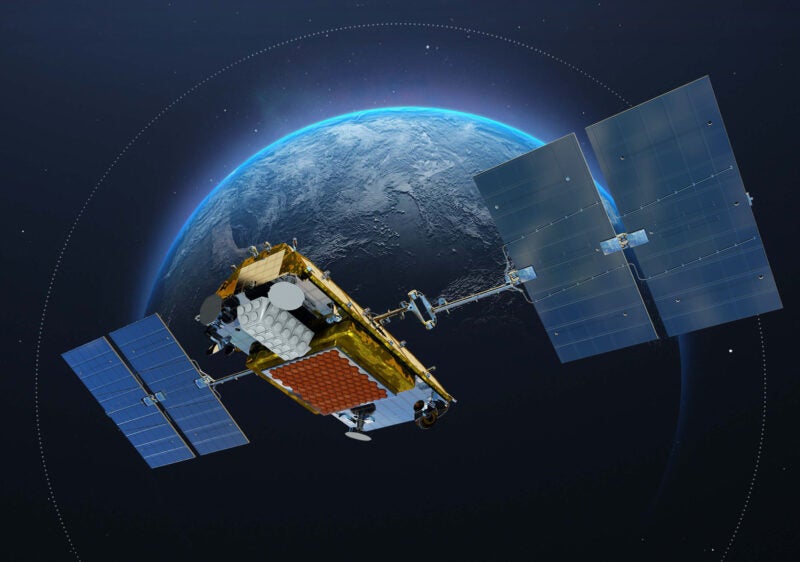
In proof of this, it was reported recently that the U.K. is investing 163 million euros into Eutelsat, the French satellite operator. To the uninitiated, this might seem like another dry headline from the technology or business pages, but for those of us working in space innovation in Europe, it’s significant. Indeed, it’s music to our ears, because it signals a real change of approach. That investment reflects a recognition that if, as a continent, we want to chart our own course in space, we need to start investing like it.
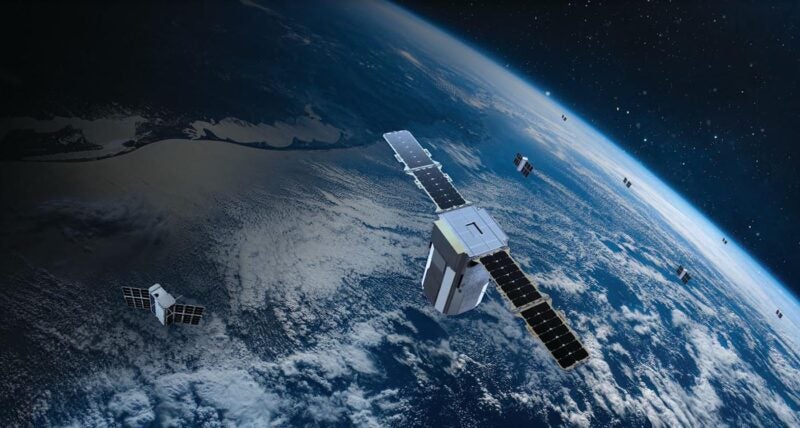
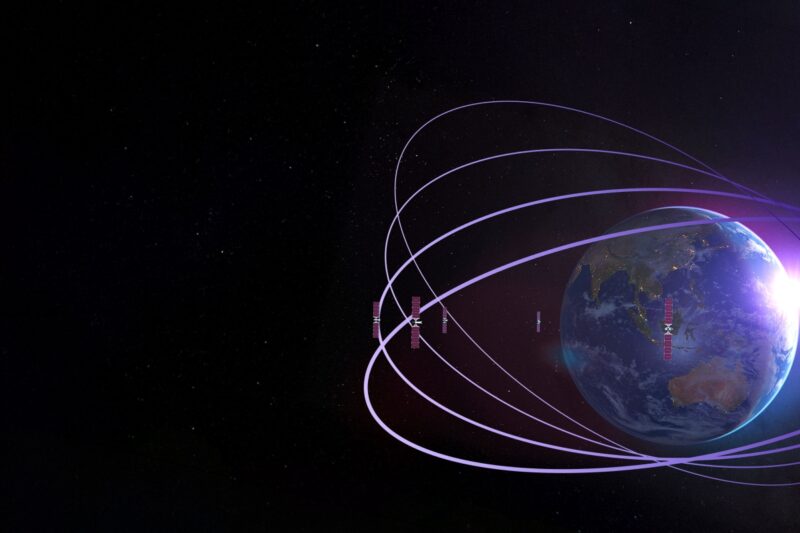
This comes as part of a Eutelsat capital raise led by the French government, which is investing 526 million euros to become Eutelsat’s largest shareholder. Between now and 2029, Eutelsat plans to direct between 2 billion euros and 2.2 billion euros in funds towards its low-Earth orbit constellation. That is a bold commitment from a European space company. The British contribution points to what’s possible when European countries talk and align their ambitions.
Why does this matter? Because at this moment, Europe is in a difficult position. Elon Musk’s Starlink has made deep inroads into the U.K.’s broadband network, in particular in rural areas where the other providers have failed to provide reliable, high-speed internet. The same pattern can be seen elsewhere across the continent. And though Starlink is a great technological accomplishment, it’s a strategic vulnerability from the European point of view. Starlink is an American company that is subject to American laws, policies and priorities. It is important that we have the necessary autonomy to navigate any change in circumstances.
It’s important to recognize that space, once seen as bound up almost exclusively with space exploration, pertains for the most part to infrastructure. Space undergirds communications, finance, logistics, and defense. Given this, depending on systems beyond our sovereign control as Europeans to accept a kind of reliance or interdependence that could have negative implications further down the line.
If we can’t outspend the Americans, and we can’t, then we must out-collaborate with them. We do not have billionaires in the same league as, for example, Elon Musk or Jeff Bezos. If no one person, company or country can build a credible Starlink rival alone, then we must pool resources, talent and political will. The sums are too vast and the risks too high to do otherwise.
The U.K.’s recent engagement with Eutelsat is the perfect example of this approach in action. European countries have diverging interests and petty rivalries that go back hundreds of years, but despite past and present frictions, we’re seeing collaboration prevail in the field of space.
Mindset, as vague as it might sound, is important here. The European approach to space has typically been scientific rather than strategic. These two things can’t be separated neatly; they overlap. But the point is that money has flowed more towards research than infrastructure, so while we’ve nurtured excellence in astronomy, we’ve neglected broadband and constellation deployment.
This is about thinking as a region. By working together, we can draw on the deep pool of talent we have across Europe, and build, launch and control our own systems. We must think like a bloc, act like a bloc, and invest like a bloc. This is a distinctively European approach to the imperative that’s being addressed in different ways elsewhere. The United States has its own approach. China has its own approach. We need a European approach, and this is how it might look.
The U.K. investment might seem like a drop in the ocean in the grand scheme of things. But it’s a signal – a signal that Europe’s great project in space isn’t a dream, and is starting to take shape. With more countries involved, and more capital committed, we can achieve incredible things. We can wean ourselves off the money and technology our friends in the United States have supported us with in the past. If we do that, then we will emerge as a stronger bloc able to speak up and act for ourselves on the world stage, and able to take advantage of the incredible opportunities that space represents.
 Jean-François Morizur is the co-founder and CEO of Cailabs. Cailabs designs, manufactures, and develops photonics solutions for the space, industrial, telecommunications, and defense sectors. He holds a PhD in Quantum Optics from the Australian National University and the Université Pierre et Marie Curie. Before founding Cailabs in 2013, he was a Senior Associate at the Boston Consulting Group. He is also the co-inventor of Cailabs’s Multi-Plane Light Conversion technology.‘