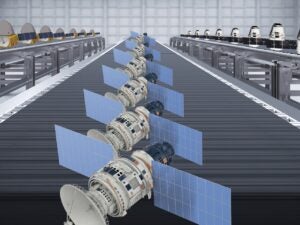

There’s no escaping the three-body problem—not in physics, but in project management. The classic constraints always apply: good, fast, cheap. Except in space, where there’s a fourth variable: flexibility.
Today, smallsat manufacturing is experiencing an industrial revolution. Manufacturers across the globe are investing billions in state-of-the-art facilities and advanced production techniques to accelerate speed to orbit. Yet, the more they adopt mass-production principles, the more delicate the balance between speed and multi-mission capabilities.

Explore the August 2026 Issue
Check out more from this issue and find your next story to read.
It’s “not speed for its own sake,” Millennium Space Systems CEO Tony Gingiss tells Via Satellite. “The challenge is to maximize repeatability while still meeting specific customer requirements. The broader industry is learning the same lesson: the more you can standardize the underlying architecture and production approach, the better positioned you are to move quickly without sacrificing quality.”
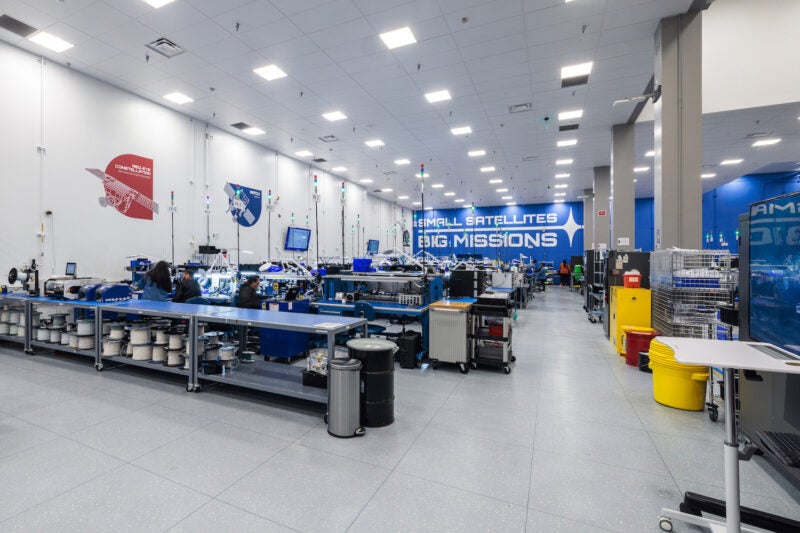
Millennium, a subsidiary of Boeing, expanded its production space to nearly 42,000 square feet in 2025. The buildout will support billions of dollars in active defense contracts, including for the Space Force’s next-generation maneuverable RG-XX program and the eight-satellite FOO Fighter demonstration constellation. Combined, Boeing and Millennium have a production target of 26 satellites for this year.
Accelerating the speed of smallsat delivery is not about adjusting a single variable or a single part of the production line, says Raycho Raychev, CEO of EnduroSat, one of Europe’s fastest-growing space infrastructure companies. “Most people really still believe there is one ‘aha moment’ innovation that will be game changing,” he tells Via Satellite. “We believe in incrementally solving multiple different problems in the engineering, in the operations, in the supply chain. And by tackling all of them, the net effect on the customer is just staggering.”
The Bulgaria-based company has produced more than 200 satellites over the last two years, averaging one satellite every three days in its 188,340-square-foot facility. EnduroSat uses a fixed satellite platform and mass-manufactured subsystem modules, with flexible configurations and cableless assembly. It acknowledges this approach compromises mission flexibility but says the system is optimized for six-to-nine-month deliveries and predictable costs per bit of data.
“You’re really left with two options,” says EnduroSat CTO Victor Danchev. “Get 100 percent of what you want, which is your perfect ideal mission — which is usually over budget and is going to come in a few years. Or get 80 percent of what you want tomorrow morning and start delivering data immediately.”
Cumulative global satellite manufacturing revenues are projected to reach $132 billion between 2026 and 2034, according to Analysys Mason. At the same time the smallsat sector is growing, it’s also seeing increasingly diverse customer demands.
“Flexibility is the most important, both in what you can do and how you can offer it,” says Dallas Kasaboski, principal analyst and head of the Satellite Manufacturing and Launch program at Analysys Mason. “You have a greater demand from the established market, and you have a growing, diversified demand from a diversified market.”
Virtual Factories, Real Capacity
Assembly-line satellite manufacturing has been used for nearly three decades, since Iridium and Globalstar’s first attempts to build megaconstellations. Since then, the sector has largely converged on modern manufacturing principles — stable designs, modular parts, repeatable processes, and a growing software-based production infrastructure.
As a prime integrator that is independent of a payload provider, Sierra Space uses repeatable processes and standardized parts in subassemblies and production lines. This configuration supports speed but leaves a margin to tailor missions during integration.
“We focus all that customization on the final integration, which really is the mission solution set,” says Amish Patel, chief operations officer at Sierra Space. “We’ve looked at everything below the mission set and standardized it, and where we can’t standardize the product itself, we standardize the process. That gives a highly customized mission capability optimized for cost and schedule.”
Sierra has more than $1.5 billion in national security contracts, including satellites for Tranche 2 of the Space Development Agency’s (SDA) Tracking Layer. Earlier this year, the company completed the first nine of 18 SDA satellite structures three months ahead of schedule, beginning work on the satellites while the company was still building its 60,000 square-foot facility outside Denver, Colorado.
“The speed really comes from good design in the beginning,” says Patel. By loading digital models onto augmented reality/virtual reality (AR/VR) headsets, technicians could “design the production workspace and the cells before we even finished the factory,” Patel explained. “That actually sped up the manufacturing process, as well as the design feedback loop.”
Across the sector, there is a growing reliance on digital environments. Hardware-in-the-loop (HIL) and software-in-the-loop (SIL) simulations and digital twins are used extensively to accelerate payload integration and coordinate across the industrial base. Despite the hype around artificial intelligence, few companies are using it on the factory floor. ReOrbit, a Finnish manufacturer with a software-first approach, is an exception. The company is currently working on a demonstration using AI to generate part of its flight software, with human-in-the-loop oversight.
“We need to be looking at various options on how we can use AI in our day-to-day world,” ReOrbit CEO Sethu Saveda Suvanam tells Via Satellite. “If companies cannot adapt and imagine how they can transform what they’re doing manually to AI in flight-critical areas, I think they will be lost.”
Companies with significant defense and intelligence contracts note that they are restricted from using AI based on large language models (LLMs) in critical processes and tend to use AI for efficiencies like optimizing workflows, planning, and back office operations.
The Fastest Way to Orbit: Vertical or Horizontal?
Despite more diverse opportunities, the smallsat market continues to be dominated by a handful of highly vertically integrated players. Of the more than 36,500 satellites planned to be built and launched as a part of constellations over the next decade, more than half will be produced by SpaceX, Amazon Leo, or as part of China’s megaconstellations. This leaves independent manufacturers with a smaller, more competitive playing field and bids typically in the ones, tens and hundreds of smallsats.
“If you’re a full satellite manufacturer or an integrator, then you are greatly challenged by this in-house, vertical integration market,” says Kasaboski. “If you’re anything below a satellite manufacturer, the market actually opens up a little bit. If you’re a component supplier, you can be more agnostic, where you’re not as locked in.”
Vertical integration has largely become the default over recent years, as companies either build in-house capabilities or acquire existing companies. The trend in vertical integration is largely driven by advantages in production speed, volume and greater control over supply chains. Kasaboski notes, “The more of the market you control, the more control you have of the market.”
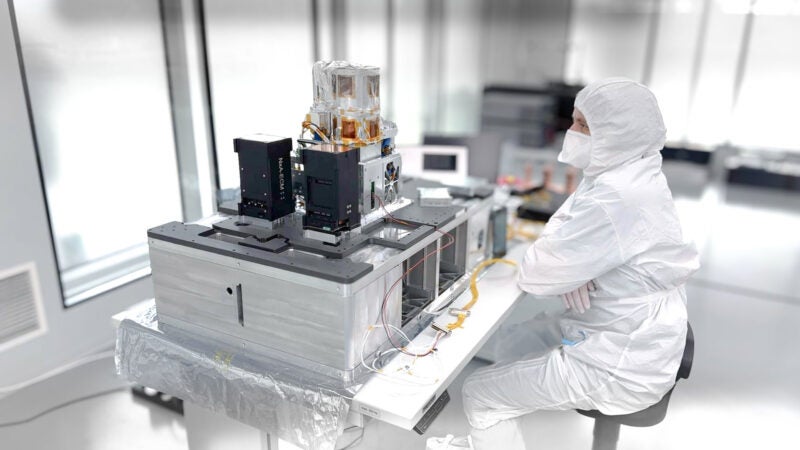
Swissto12, which secured nearly 100 million euros ($117 million) in public-private funding this year, has invested significantly in in-house production for its 3D-printed payload units and antenna systems, as well as a standardized smallsat platform for Geostationary Orbit (GEO).
“We have our 3D printing in-house. We have our CNC [computer numerical control] machining facility in-house,” Swissto12 Chief Product Officer Dr. Frank Schreckenbach tells Via Satellite, citing the March addition of 10,764 square feet of cleanroom space. “That’s enabled us in our Swiss office to have engineering, manufacturing and test facilities under one roof, and that enables fast iterations and fast conversions towards a robust product.”
While most companies are internalizing production lines, others are skeptical that existing opportunities do not justify the cost of in-house manufacturing. Rather than CapEx-intensive vertical integration, some producers are looking externally to leverage a diverse, maturing supplier ecosystem.
“Everyone today is looking at the so-called Henry Ford moment. Let’s vertically integrate everything without having the necessary volumes to do so. Let’s bring everything in-house,” says Suvanam. “We believe this is a myth.”
As one of a small handful of horizontally integrated companies, ReOrbit has adopted the approach of the PC and consumer electronics sector, utilizing commercially available hardware with a proprietary software stack. “We are not married to one particular supplier or supply chain,” Suvanam says. “We can basically choose and mix what is available in the market. Then, our speed is basically determined by our ability to integrate. And the integration of established systems can be done in a day or two days.”
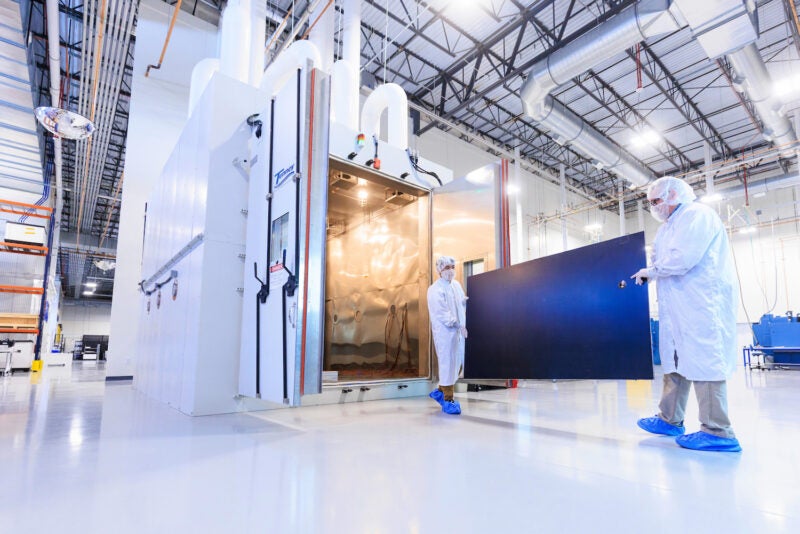
Surface Mount Technology (SMT) solar arrays. Photo: Sierra Space
Demand Forecasts
Companies are reporting stacked order sheets and large sales pipelines. According to Gingiss, Millennium’s space vehicle backlog is “approaching triple digits” over the next three years. EnduroSat says its space service business is on track to reach 72 times growth this year, just three years after it launched. ReOrbit, which reports a 149 million euro ($170.3 million) backlog, has yet to launch its software-defined satellites, but recently sold two small GEO communication satellites to SLI and is working toward a launch date for its UKKO mission with ESA.
The smallsat sector is being bolstered by growing defense budgets. Europe is expected to invest more than $109 billion in space by the end of the decade and U.S. lawmakers are weighing a $71.1 billion FY2027 Space Force budget, more than twice the size of the FY2026 allocation. At the same time, manufacturers are reporting continuous, strong demand from sovereign governments for security and economic resilience, as well as from commercial and civil end users, driven by satellite broadband, direct-to-device constellations, Earth Observation (EO) and experimental sensors.
Swissto12 is tracking growing interest in sovereign communications, with a backlog of smallsat opportunities across orbits, frequencies, and missions. “It’s all about multi-mission capabilities,” says Schreckenbach. “The market is diversifying in terms of missions and orbits. It’s also diversifying in terms of operators — from very traditional to newcomers.”
Supply Chain Fragility
The growing demand in the smallsat sector has also exposed the fragility of supply chains. Earlier this year, the Aerospace Industries Association (AIA) released a report warning that industry growth is outpacing space industrial base capacity. Semiconductors, carbon fiber composites, electronics and avionics components, and other parts are experiencing competitive demand across industries and long lead times. Source materials and rare earth elements are subject to price volatility, geopolitical conflicts, tariffs, and security concerns related to sole-country sourcing.
“It’s about five times more complicated and less intuitive to construct a supply chain that can contend with problems and component shortages versus inventing a technology,” says
Raychev, noting that supply chain management is often overlooked in the space sector. This leads to impressive engineering that is ultimately “unproduceable” at scale.
Because manufacturing speed is inseparable from supply chains, manufacturers are prioritizing the investment of resources, time and technology into intelligently managed supply chains. This includes identifying and securing long-lead materials, warehousing and strategic stockpiling, diversifying suppliers and implementing planning tools to mitigate bottlenecks.
Amid a solar panel supply crunch and Chinese export bans on critical materials, more companies are bringing power generation in-house. Sierra Space opened a 70,000-square-foot power station facility in 2025, using surface mounted technology (SMT) automation to produce roughly 150 kilowatts of solar generation per year to power spacecraft.
“Our competitors have to design and build and grow solar cells that are custom to each application. Ours are standardized,” says Patel. “That means we can stock it in inventory, reducing that lead time significantly and reducing the volatility of delivery.”
Trends in technological sovereignty and reduced reliance on global suppliers are even further complicating supply chain dynamics. The European Union, Japan, the United Kingdom, and the United States have protections to ensure high levels of domestic production for defense and secure communications constellations, such as content requirements for Europe’s IRIS² or U.S. “Buy American” provisions.
“The definition of sovereignty is evolving very rapidly,” says Suvanam. “The natural evolution of ‘sovereignty 2.0’ is not just about owning the satellite constellation, but [owning] every subsystem that’s going into the system, because I want to have complete control of my supply chain.”
Even as companies tackle known bottlenecks, the supplier ecosystem remains vulnerable. Some of the most vertically integrated companies may rely on a single supplier for payloads or specific components, which is “not sustainable,”
Kasaboski warns. Supply chains remain a problem, he says, “because with more volume of demand and a diversified demand, more people are coming to this market than before.”
Finding Balance
Getting to space has always been about tradeoffs and there is no escaping the iron constraints of quality, cost, speed, and mission flexibility. Manufacturers are simultaneously optimizing and compromising points of the production process to meet increasingly varied customer requirements and tight delivery timelines.
“There’s a huge potential for the industry when we’re really focusing on the customer, understanding their needs, understanding what is mission critical,” says Schreckenbach. “Because that will impact development. That will impact the assembly, integration, and test plans. That will impact, also, some supply chain decisions. And here you can gain a lot.” VS
Correction: A previous version of this story misspelled Frank Schreckenbach’s name
This story has also been updated to clarify Boeing’s production and demand forecasts