Latest News
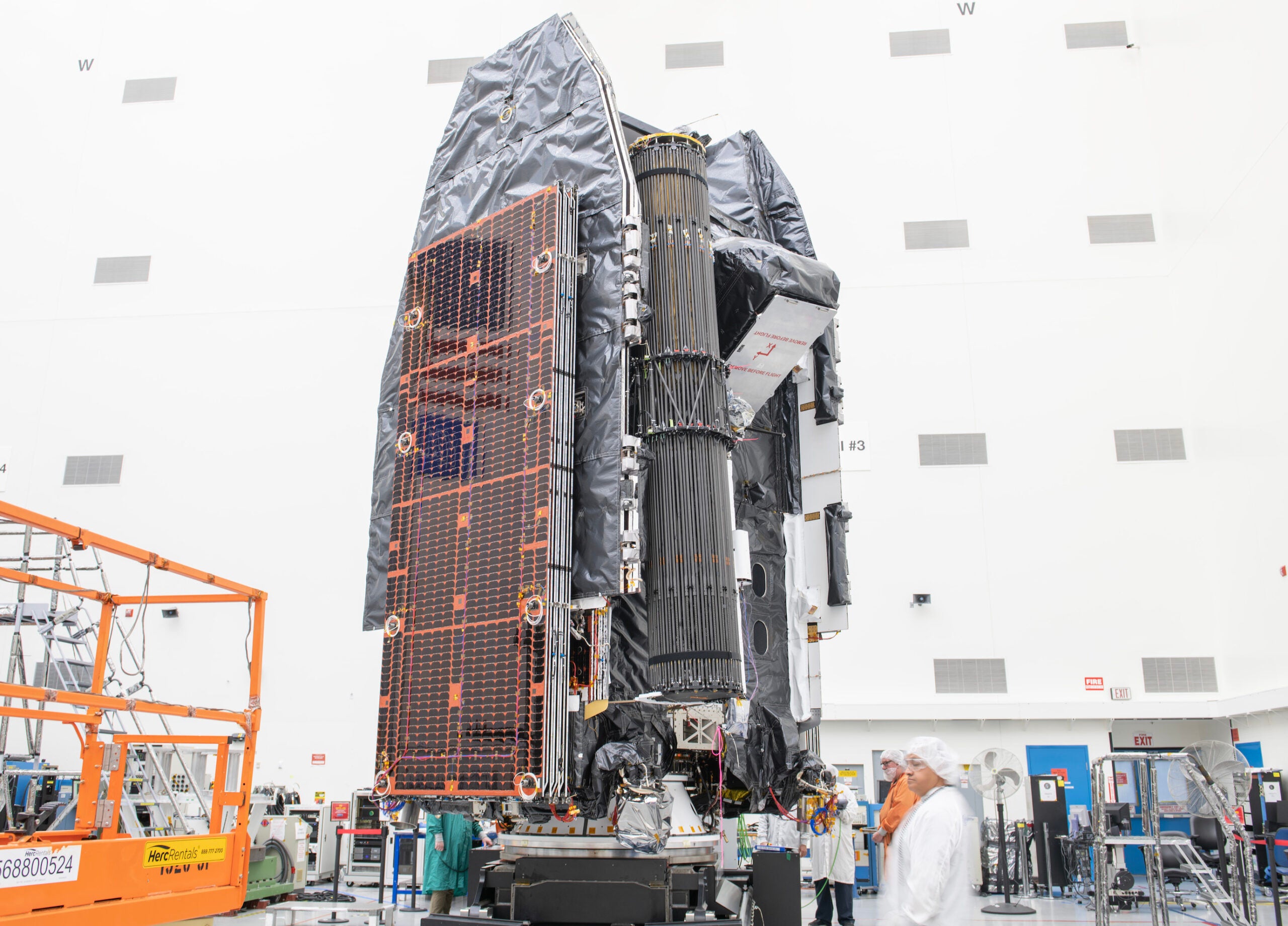
The ViaSat-3 F2 satellite before shipment to Cape Canaveral. Photo: Boeing
Boeing completed delivery of the second ViaSat-3 satellite to Viasat, and the satellite has arrived in Cape Canaveral ahead of launch. The satellite, VS-3 F2, was shipped from Boeing’s facility in El Segundo, California, to Florida on an Antonov cargo aircraft, one of the largest cargo planes. It arrived Tuesday morning.
Launch is planned for launch in late October, and it will launch on a United Launch Alliance (ULA) Atlas V 551 rocket.
This is the second satellite in the trio of ViaSat-3 satellites. Its launch will give the operator critical capacity after the first ViaSat-3 satellite suffered an anomaly with its reflector deployment after it launched in 2023. That satellite is in service but is delivering only a fraction of the capacity that was expected.
Viasat has said the second satellite implemented corrective actions and testing for the reflectors. After launch, VS-3 F2 is expected to enter service by early 2026.
The third satellite has a different reflector manufacturer. VS-3 F3 is in the assembly, integration, and test (AIT) phase, and is expected to enter service by early to mid-2026.
VS-3 F2 is expected to add more than 1Tbps capacity to Viasat’s network over the Americas — more bandwidth capacity than the company’s entire existing fleet.
“Being just a few weeks out from launch is incredibly exciting – this achievement represents the dedication and innovative spirit of hundreds of talented professionals who’ve lent their expertise to this mission,” shares David Abrahamian, VP of Space Systems at Viasat.
The ViaSat-3 satellite weighs 6 metric tons (13,228 pounds). Viasat designed the payload, and Boeing built the satellite bus based on its 702MP+ platform, with all electric propulsion.
“Our goal is to enable missions with reliability and timely delivery,” said Michelle Parker, vice president of Boeing Space Mission Systems. “With ViaSat‑3 F2, we leveraged proven 702 heritage, advanced power systems and all‑electric propulsion to enable high-speed connectivity for users who rely on it.”
Stay connected and get ahead with the leading source of industry intel!
Subscribe Now