Latest News
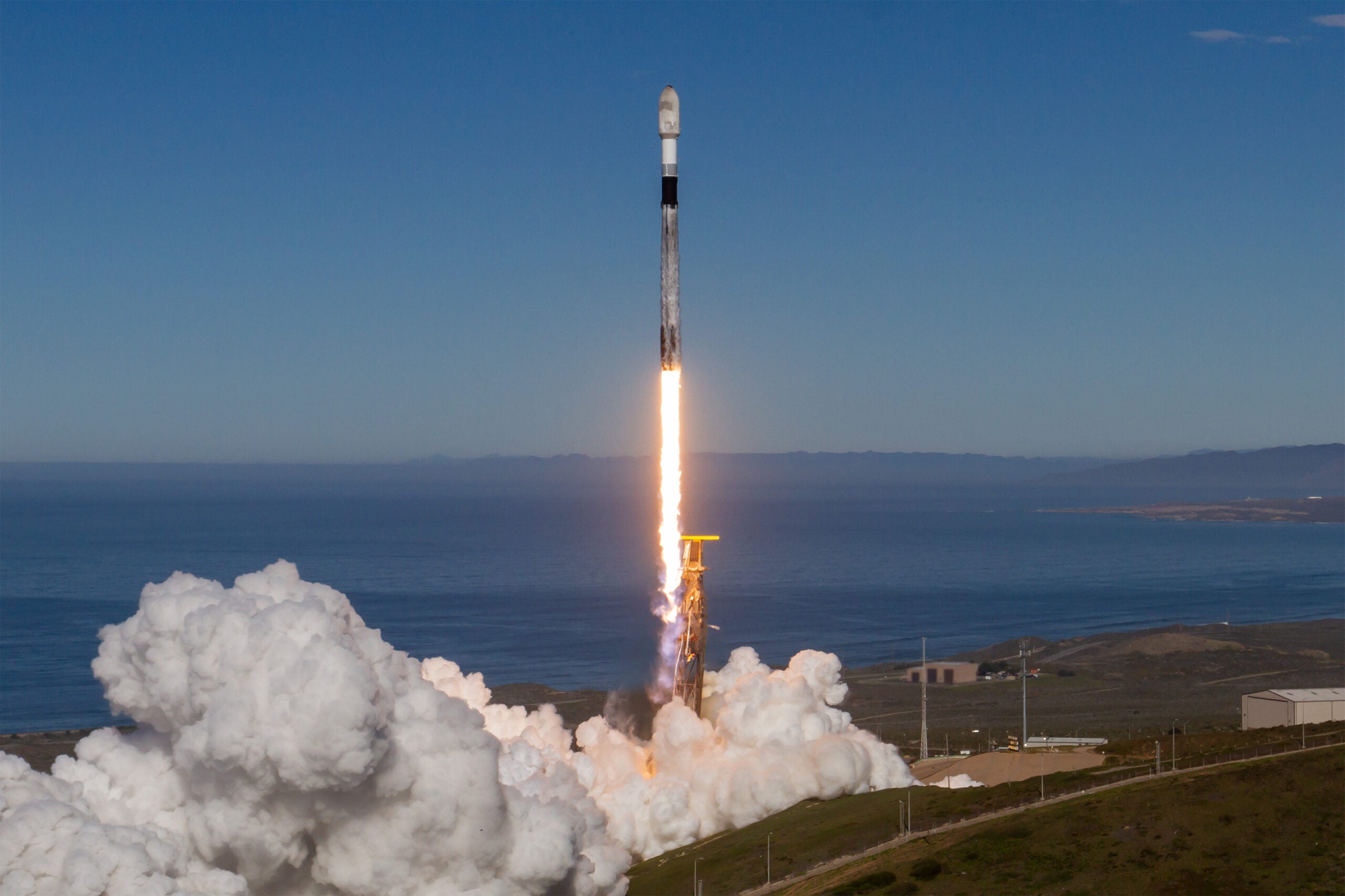
SpaceX’s Transporter 15 rideshare mission launched 140 payloads on Nov. 28. Photo: SpaceX
After SpaceX’s Transporter-15 rideshare mission launched 140 payloads to space last week, a number of customers have announced their spot on the launch and confirmed successful signal acquisition.
The mission took off on Friday, Nov. 28 after being pushed back multiple times. It had been expected to launch earlier in November, then was scrubbed due to a ground systems issue on Nov. 26. The mission launched from Vandenberg Space Force Base.
The mission included an impressive list of customers from all around the world with many satellites onboard supporting their own customers through payload hosting. However, 140 payloads onboard didn’t break the record set by SpaceX’s first rideshare mission, Transporter-1, which deployed 143 satellites in 2021.
Exolaunch served as the rideshare integrator for 58 customers satellites including 36 SuperDoves and two Pelican satellites for Planet; the NAHLA satellite for Aerospacelab; three three NewSat Mark V satellites for Satellogic; and two AIS detection satellites for Unseenlabs.
Other Exolaunch customers included Methane-monitoring company GHGSat, which confirmed success for its two satellites on the mission, Teodor (C-14) and Laila (C-15). These satellites will allow for more frequent coverage of industrial facilities worldwide.
Kongsberg NanoAvionics has established communication with IHI-SAT2, a 6U cubesat built for Japan’s IHI Corporation and IHI Aerospace Co. to take high-resolution hyperspectral images for forest management.
Exolaunch deployed five satellites for Iceye. The new satellites will serve both Iceye’s commercial constellation and dedicated national missions, including the Greek National Space Program, the Polish Armed Forces’ MikroSAR program, as well as BAE Systems’ Azalea constellation.
Other Exolauch customers on the launch included BAE Systems Digital Intelligence; Care Weather; Creotech Instruments; EnduroSat, the European Space Agency; Fergani Space; Germany Orbital Systems; Libre Space Foundation; Loft Orbital; Mohammed Bin Rashid Space Centre; Nara Space; OHB Italia; Open Cosmos; OroraTech; Prisma Electronics; Proteus Space; Pyras; Rapidtek Technologies; SATORO Space; SPiN; Spire; Surrey Satellite Technology; Tron Future Tech; and Turksat.
Impulse Space confirmed communications and solar array deployment for LEO Express 3, its third Mira flight. It deployed three cubesats for FOSSA Systems and will host payloads for HEO; Samara Aerospace; and Zenno Astronautics. FOSSA Systems also supported WISeSat.Space, to demonstrate its SEALCOIN.AI machine-to-machine crypto payments
Space logistics company D-Orbit had two orbital transfer ION vehicles on the mission – its 20th 21st ION vehicles.
D-Orbits customers included Spire with Spire replenishment satellites and four new IoT satellites for Spire customer Lacuna Space; a Pale Blue electric propulsion system, the Foresail-1 3U cubesat developed by Aalto University; a cloud ecosystem platform called AI-eXpress 1 Plus, led by Planetek Italia; and Spaceium’s first in-orbit demonstration mission which will test a high-precision robotic actuator for in-orbit fuel transfer
D-Orbit supported the LaserCube Compact mission, the first Italian optical inter-satellite link mission. Each ION carrier was equipped with a laser terminal built by Stellar Project, to test data transmission between the two spacecraft.
Rideshare provider SEOPS integrated four PocketQube spacecraft for Alba Orbital which support a number of customers including the Saudi Space Agency. It also integrated NASA’s 3UCubed-A satellite and two payloads for the TRYAD mission.
SEOPS integrated two Hungarian-industry developed satellites: The WISDOM satellite, developed by C3S and Blue Skies Space‘s first scientific satellite, the 16U-sized Mauve, which will collect data on stellar flares.
SEOPS customer Polish company SatRev established the first connection with the PW6U satellite, which will collect multispectral observational data
Japanese company ArkEdge Space confirmed communications with three new 6U micro-satellites on the mission — AE5Ra, AE5Rb and AE5Rc.
Space Telecommunications Inc. (STI), which operates Spacecoin, launched three CTC-1 satellites using a blockchain protocol designed for decentralized internet infrastructure.
Stay connected and get ahead with the leading source of industry intel!
Subscribe Now