Latest News
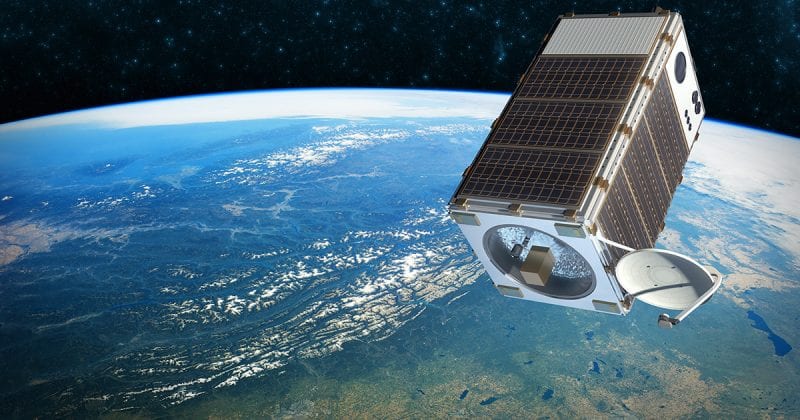
MethaneSAT concept image by the Environmental Defense Fund (EDF).
Methane-monitoring satellite MethaneSAT has lost power and communications, the team behind the mission said in an update on Tuesday.
The MethaneSAT mission operations team lost contact with MethaneSAT on June 20, and the team learned on July 1 that the satellite lost power and is likely not recoverable. The team is investigating the loss of communication.
A representative for MethaneSAT told Via Satellite at this point there isn’t enough information to determine why communication was lost. The satellite was functioning properly when it passed over a downlink station in Svalbard, Norway, at 01:44 UTC on June 20, but the team was unable to establish contact for the next pass over Antarctica at 2:40 UTC later that day.
“We are still very much in the early stages of sorting out what happened with the satellite. As of now we simply don’t have enough information to determine why we lost communications,” the representative said. “What took place in between is unclear. Our engineering team worked hard to restore the connection, to no avail.”
The satellite, which launched in March of 2024, was built with the Blue Canyon Technologies’ Saturn-class bus with infrared spectrometers. MethaneSAT made its data on emissions from the oil and gas sector publicly available in a web platform. The satellite was designed to collect smaller concentrations of methane emissions than captured by other satellites.
MethaneSAT is a nonprofit and a subsidiary of the Environmental Defense Fund, supported by a number of donors including the government of New Zealand and the Bezos Earth Fund.
While the satellite is no longer functional, MethaneSAT said it will work to make use of the data the satellite collected to continue the work to cut methane emissions. MethaneSAT plans to release additional scenes of global oil and gas production region-scale emissions.
“We will be working with partners around the world to leverage the algorithms and associated software as well as the now-proven high precision technology that was developed as part of the MethaneSAT mission so the world has access to high quality actionable greenhouse gas emissions data on a global basis,” the update said.
The MethaneSAT representative told Via Satellite that “everything remains on the table,” in terms how EDF and MethaneSAT continue the work on methane sensing and solutions, which could include an additional satellite.
Stay connected and get ahead with the leading source of industry intel!
Subscribe Now