COLORADO SPRINGS, Colo. — To meet the Defense Department’s appetite for orbital warfare capabilities, Lockheed Martin is self-funding two next-generation space dominance efforts for rendezvous and proximity operations (RPO) and command and control, a company official said on Monday.
The Space Force wants to be able to move faster and wants “kit in orbit now,” Tim Lynch, vice president for Mission Strategy at Lockheed Martin’s Space segment, said during a media briefing alongside Space Symposium.
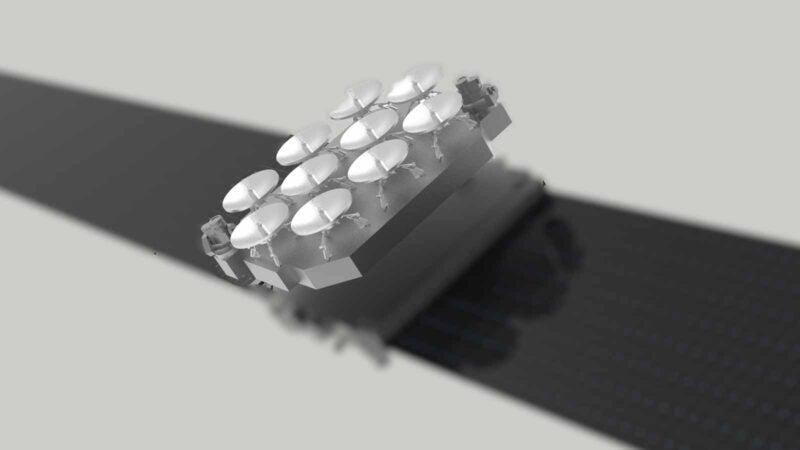
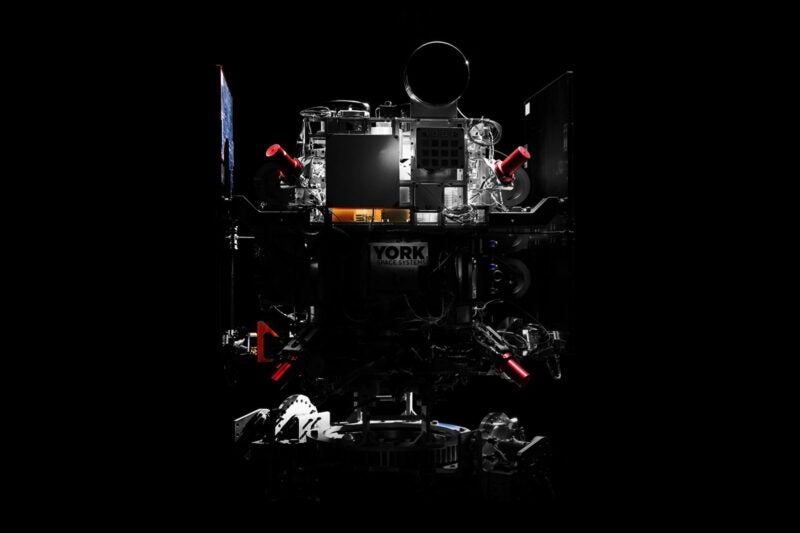
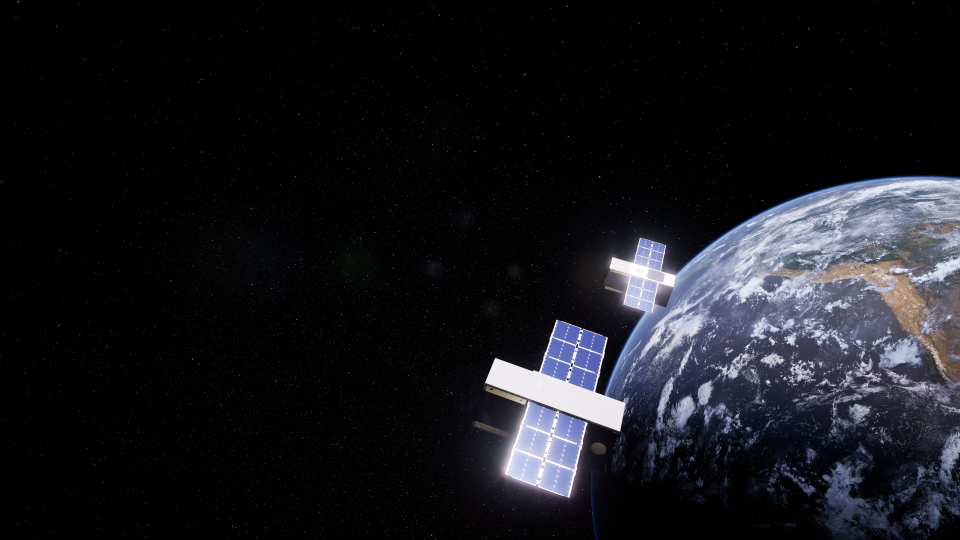
The upcoming demonstrations will be of a smaller satellite platform, called Vanguard, and a medium-class system, Sentinel, that will leverage the spacecraft products of the company’s Terran Orbital subsidiary, Lynch said.
Lockheed Martin is targeting the demonstrations for late 2028 and early 2029 to prove certain concepts, Lynch said. The plan is to launch an “asset into Geosynchronous orbit” to do some RPO maneuvers, and command, control and mission management, he said.
The company has a “tentative roadmap” for its next-generation space dominance demonstrations, with the Vanguard flight slated in the first year of the plan followed by the Sentinel demonstration the next year, a company spokesperson said, adding that timing is subject to customer needs, launch availability and “our broader platform validation schedules.”
Lynch said the “main goal” of the space dominance effort “is to build common subsystems so that they’re plug-and-play, so that we have frameworks that are [able] to adapt to our customers’ needs. Some of the subsystems include attitude control subsystems, power subsystems, propulsion, rendezvous, proximity and operations, RPO.”
Between Terran Orbital’s and Lockheed Martin’s legacy research and development know-how, “we can build a very good subset, or a very good capability space, for our customers,” he said.
For the Vanguard and Sentinel efforts, the company has “early adopters” that are giving input and describing “what they’re willing to buy and establishing a demand signal,” Lynch said.
Lockheed Martin was one of 14 “Andromeda” awardees last week for a $1.8 billion Space Force space domain awareness program called Geosynchronous Reconnaissance & Surveillance Constellation, or RG-XX. With the eventual RG-XX satellites the service plans to conduct RPO missions.
Lynch’s presentation included a slide describing Vanguard as “compact, high-throughput, ideal for constellations, and Sentinel as “larger power and propulsion, optional on-orbit refueling for enduring missions.” The two systems will share about 70 percent of the module subsystems such as guidance, navigation, control and star trackers, he said.
The smaller and lower-cost Vanguard will be less exquisite and not as advanced in RPO missions as Sentinel, which will have more Delta V and maneuverability, Lynch said. The higher the Delta V, or “change in velocity,” the more complex maneuvers a spacecraft is able to perform and the farther it can travel.
Sentinel is Lockheed Martin’s baseline spacecraft for RG-XX, which has “some large Delta V requirements,” Lynch said.
Space situational awareness, and protect and defend are “two of the major threats we’re seeing right now,” Lynch said.