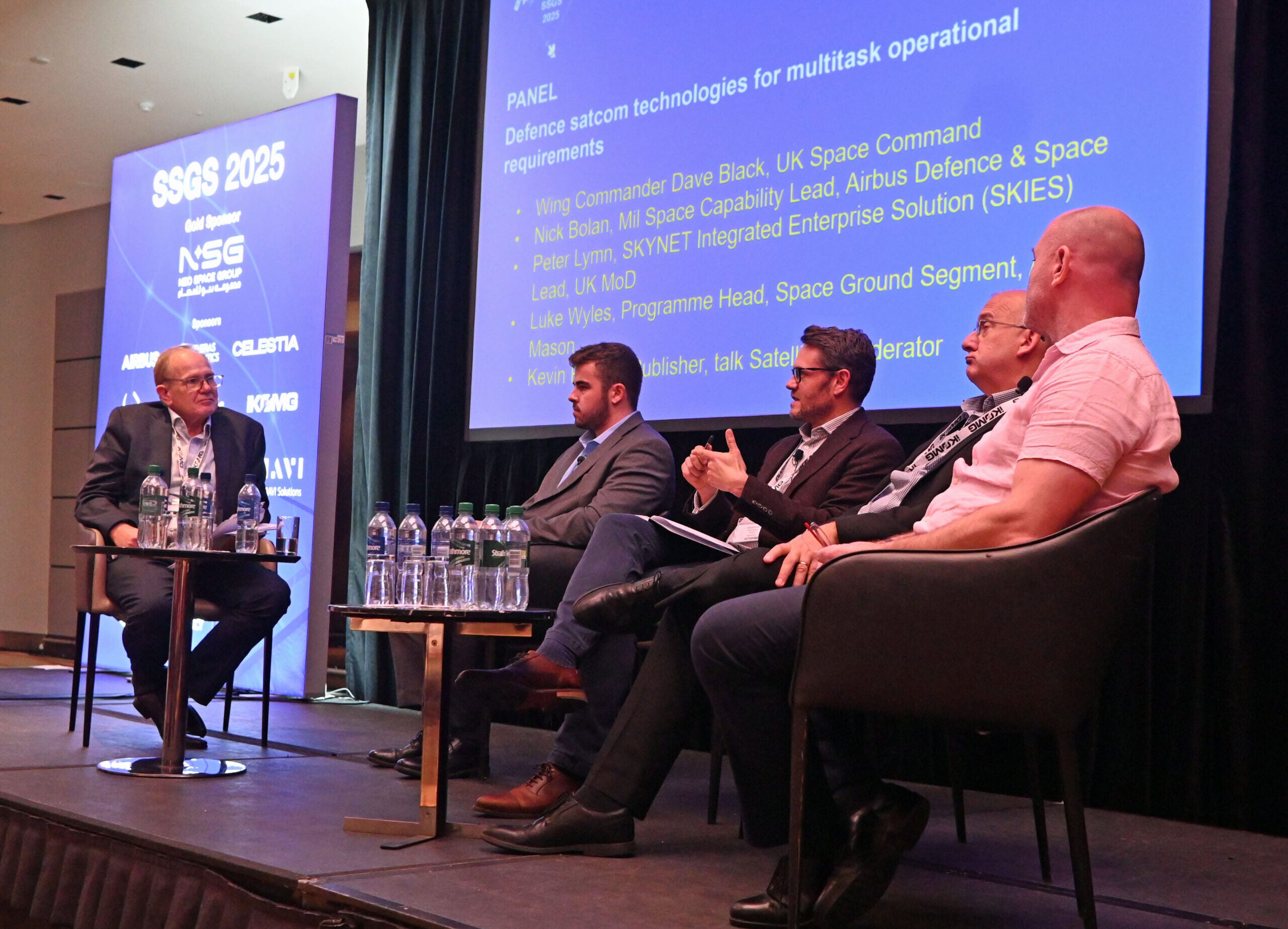
Military satcom leaders in the United Kingdom and industry partners are working through the risk and reward of using commercial solutions, along with issues of maintaining sovereign communications.
At the Strategies in Satellite Ground Segment event in London last week, Barry Austin, who serves as the satcom head for Defence Digital within the UK Ministry of Defense, said the changes that the UK MoD is seeing in the satellite industry are “quite significant.”
He spoke about working with the commercial satellite industry to develop capability. He spoke of a risk and reward element with the prospects of buying one solution attractive to the “bean counters” in the U.K. government. However, going with one solution can also have pitfalls.
“It can be very attractive to buy a load of LEO terminals from just one supplier. But, there is the potential for a vulnerability,” Austin said. “With Starlink, you have political interventions, unknown vulnerabilities. Do we then go for a split economy of Starlink and OneWeb? You then have multiple terminals. The question is can we afford diversity?”
This is a key question facing the likes of the UK MoD as it looks to figure out its needs for the future. “Can anybody stop me from using our capability? And can I use it the way I want too to give the warfighter the advantage. If I buy into OneWeb, is there someone who can deny me access? In the early days, SpaceX turned off access in Ukraine for things they didn’t like. Sovereignty, to us, is about operational advantage,” Austin said.
Operational freedom is a key focus, and the U.K. is looking at what are the critical technologies the nation needs to own, he said. “We need to look at the sub-systems, and we want them top to bottom from the U.K.,” he said.
Austin made some interesting comments about the importance of ultra high frequency (UHF) bands, calling it a “hot topic” but cautioned that it is a technology with vulnerabilities and can easily be jammed. “UHF is very important. It saves lives. If it is not there, people die easily. Getting the right technology for tactical communications capability is something we are looking at. We probably need to continue with heritage UHF until we find a new approach with new partners. The shift of war is information and digital centric. The reliance of space as an operational domain is now increasing. An admiral I knew said ‘If I lose space, I lose the war.’”
Wing Commander Dave Black, UK Space Command, said as a military actor, he was concerned about the different threats the U.K. is now experiencing. Black pointed to the amount of range in satcom in recent years with new technologies.
“You have autonomous vehicles, drones, AI. The challenge we have from the military is how do we retain that level of assurance, as we mesh those different networks together? Times are changing. You plan ahead. We are moving towards a more dynamic, transitory warfare environment,” Black said. “My particular interest is how we manage the spectrum to do all this, particularly in the ground segment.”
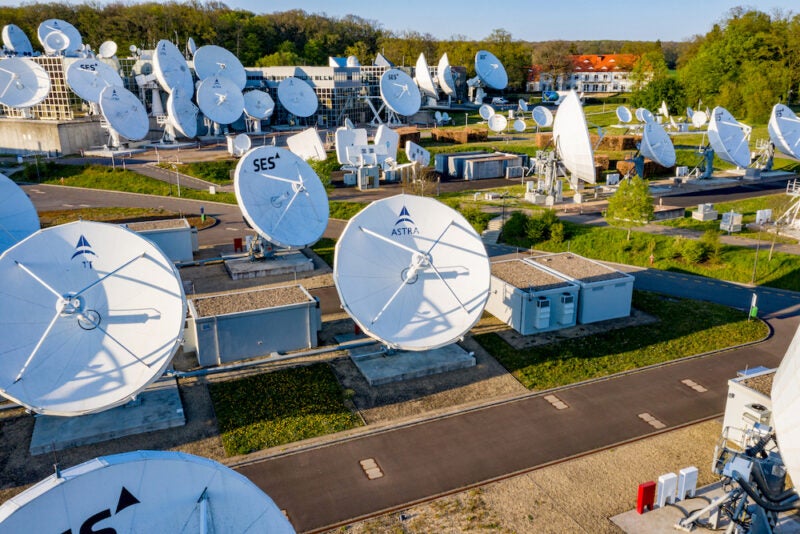
Black posed the question, what is the differentiator between milsatcom and satcom? Answering his own question he said, “We could do everything we do today with commercial services. But there is a value from having control of our own ground segment. That high level of assurance, managing cyber threats, the ability to reconfigure it to meet our own needs. If you have things connected to your system, you can control bandwidth allocation. The ‘mil’ in milsatcom is key.”
One of the key challenges for the U.K. government and the likes of the MoD and Space Command is figuring out its vision for the future in a more dynamic environment. Black said, “If we knew what this vision looked like long-term, it would help us. If we don’t have this, we are always constantly going to look at what the market is doing. We are not informing industry well enough in terms of the direction we want to go. We are like a rabbit in headlights looking at the next shiny thing. We need to have more cohesive approach between government and commercial and buying things when we need them and buying into a vision.”
Nick Bolan, Mil Space Capability lead, for Airbus Defence & Space, said it is important to make the U.K. supply chain work more coherently.
“When we get into the technology, it is about bringing capabilities together, the ability to get capability in the hands of the end user. Getting the technology right is key. You need to get that synchronization in place,” he said.
Luke Wyles, program head, Space Ground Segment, for Analysys Mason, believes a number of commercial players, not just SpaceX and Amazon’s Project Kuiper will have a strong influence here.
He said, “To keep up with commercial trends, militaries will look to tap into them. The market thanks to the likes of Starlink and Kuiper will move fast. There is a move to zero trust frameworks. We definitely see an increased interest in the commercial side. In the Earth Observation (EO) world, Iceye and Planet have looked to develop service solutions. More and more, both defense and their prime partners and getting into the headspace that they need to launch things much quicker and use the tech much quicker.”