Latest News
GOP’s $150B Defense Bill for Reconciliation Funds Golden Dome, ‘Historic’ Tech Investments
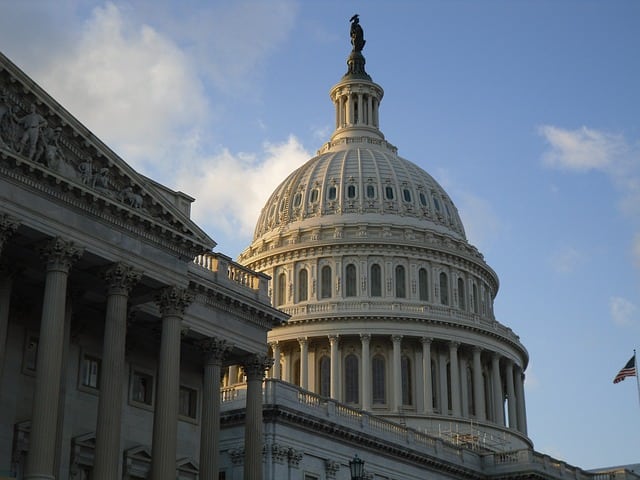
U.S. Congress
The Republicans leaders of the House and Senate Armed Services Committee have rolled out their $150 billion defense spending plan for the forthcoming reconciliation bill, which includes $25 billion for the Golden Dome missile defense system.
Mike Rogers (R-Ala.) and Sen. Roger Wicker, the HASC and SASC chairs, respectively, both cited the bill’s “historic investments” in new technology, which includes funding spaced-based intercept capabilities, with the House panel set to consider the legislation on Tuesday.
The $24.7 billion Golden Dome and missile defense section of the bill compromises the second largest bucket of funding, behind the $34 billion for shipbuilding, with HASC noting it “supports President Trump’s vision for a layered missile defense shield for America” and “develops the space-based assets needed to support the system and rapidly accelerates defense against hypersonic threats to the homeland.”
The bill specifically includes $5.6 billion for development of space-based and boost phase intercept capabilities and $7.2 billion to develop and build military space-based sensors as well as $2.2 billion for acceleration of hypersonic defense systems and nearly $2 billion for improved ground-based missile defense radars.
Lawmakers also included $14 billion to “expedite innovation to the warfighter,” which covers $1.1 billion to grow the capacity of the small UAS industrial base, scaling the developing of low cost, attritable weapon systems and $2 billion funds “for the expansion of Defense Innovation Unit scaling of commercial technology for military use.”
Congressional Republicans are still facing negotiations on a range of high-ticket items for the eventual reconciliation bill, to include potentially finding up to $1.5 trillion in spending cuts, finalizing details on raising the debt ceiling and extending the 2017 Trump tax cuts.
After HASC’s markup of the defense portion of the bill, it’ll be sent to the House Budget Committee that will compile it with the other committee’s portions of the legislation to form the full reconciliation bill. When the Senate then takes up the measure, SASC may conduct its own markup prior to the upper chamber’s consideration of the legislation.
Stay connected and get ahead with the leading source of industry intel!
Subscribe Now