
As the five step North American Treaty Organization (NATO) Defence Planning Process (NDPP) wends its way over the next year to assigning quantitative space system targets to the alliance’s 32 countries, policymakers may consider having dedicated NATO satellites.
The five steps in the four-year NDPP are the establishment of political guidance; requirements determination; the assignment by NATO’s Allied Command Transformation (ACT) of requirements’ targets for each country; continuous aid from NATO to meet those targets; and NATO’s survey analysis of the achievement of them every two years.
“We are in the middle of Step 3, which is assigning capability targets to all the nations, and then the nations approving what we’ve delivered to them,” U.S. Space Force Maj. Gen. Devin Pepper, the ACT deputy chief of staff for strategic plans and policy at NATO’s Strategic Warfare Development Command, told a Mitchell Institute for Aerospace Studies’ virtual forum on Thursday.
“First of all, we have to know exactly what the nations have to provide so we can do a quantitative target direction to the nations,” he said. “Our space branch and capability development sent out a survey to all the nations. We’re waiting for their feedback to come back, hopefully by the end of this month to tell us exactly what it is they have. We may have to send it out again because I heard some feedback that not every nation received it.”
Pepper said that he hopes that the NATO assignment of such quantitative space system targets for each nation happens by next October, as planned.
On July 9, 17 NATO countries signed a Memorandum of Understanding (MoU) to advance the Alliance Persistent Surveillance from Space (APSS) initiative, begun in February last year: Belgium, Canada, Denmark, Finland, France, Germany, Greece, Hungary, Italy, Luxembourg, Netherlands, Norway, Poland, Romania, Sweden, Türkiye, and the United States.
The United Kingdom and Spain agreed to participate in APSS in February last year, but they did not sign the MoU in July.
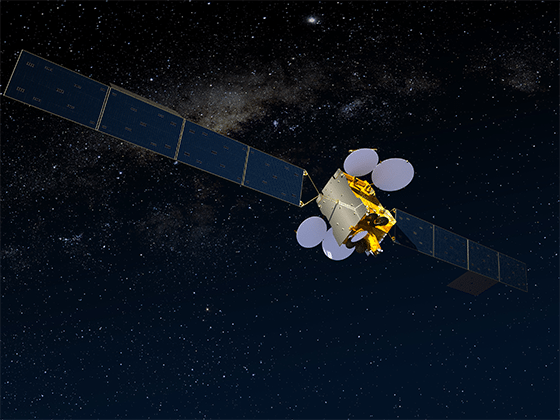
“Policy right now is that NATO will not operate any systems, any [satellite] constellations,” Pepper said on Thursday. “That’s not to say that will be the policy in the next 5 to 10 years. There could be an opportunity down the road where NATO would say we do need some organic space capability.”
APSS is to develop “Aquila”– a net of commercial and national satellites – that could be a significant source of intelligence, surveillance, and reconnaissance and space domain awareness data for NATO.
Luxembourg was a prime mover for APSS and invested 16.5 million euros for the effort and another 6.7 million euros in NATO’s envisioned Strategic Space Situational Awareness System.
APSS “a couple of weeks ago, received one of the first electro-optical products that was made available to the nations from that effort,” Pepper said.
Ukraine has seen significant jamming of GPS signals by Russia, and NATO countries are mindful, he said.
“One of the things that we’ve put into the NDPP is to be able to leverage the GPS augmentation that the U.S. is developing,” Pepper said on Thursday. “Certainly, we need to be able to leverage that in case the signal goes down, but there will be a demand signal to the nations that we have got to be able to ensure we have access to that GPS signal. That’s where other nations can help NATO, by giving us capability that can be used in NATO for positioning, navigation, and timing.”