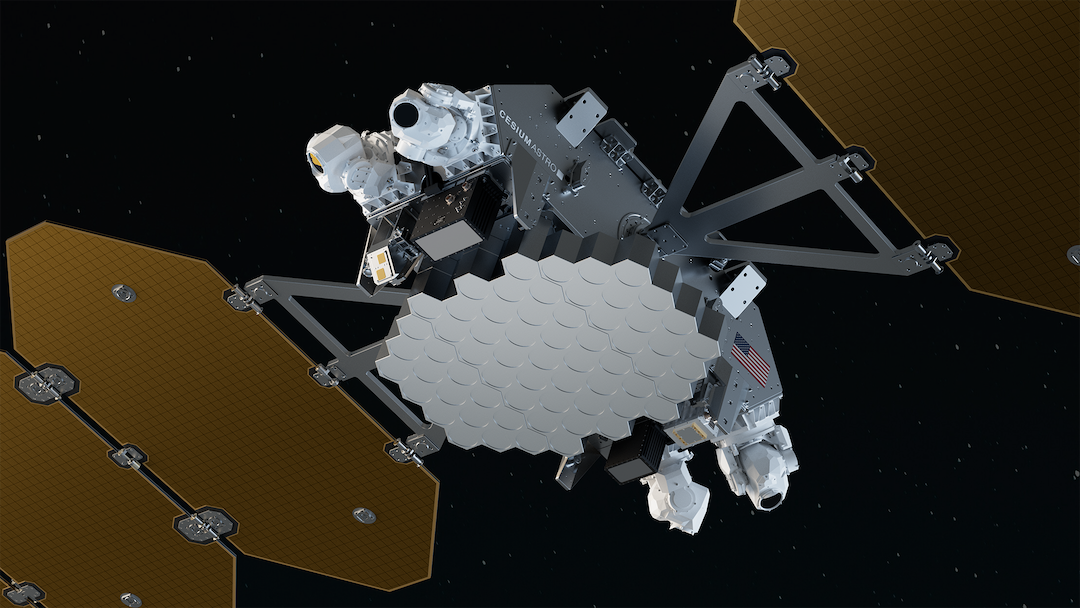
CesiumAstro has secured $470 million in growth capital, with CEO Shey Sabripour calling it a “scale moment” for the company.
The Series C funding includes $270 million in equity, led by Trousdale Ventures. Other investors include the Toyota VC firm Woven Capital, Janus Henderson Investors, Airbus Ventures, the Development Bank of Japan Inc., MESH, NewSpace Capital, and other global investors. This is in addition to $200 million in recent financing from the Export-Import Bank of the United States (EXIM) to expand its manufacturing capability in Texas.
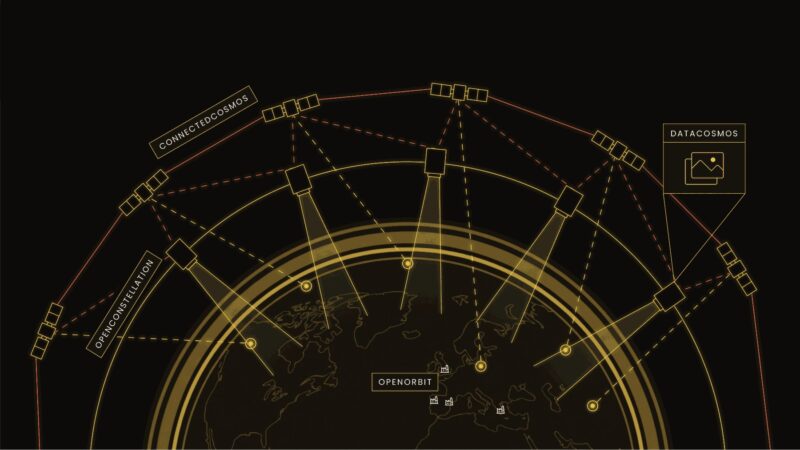
In recent years, CesiumAstro has expanded from a phased array technology provider to ground antennas and full satellites. The company now builds a full technology stack from hardware, software, and firmware.
“We’re going from software-defined radios and phased arrays and processor systems, to full end-to-end missions from ground all the way to space,” Sabripour tells Via Satellite. “[From] the equipment on the ground, on drones and aircraft, all the way to the spacecraft. Full mission delivery to our customers — that’s what this round means.”
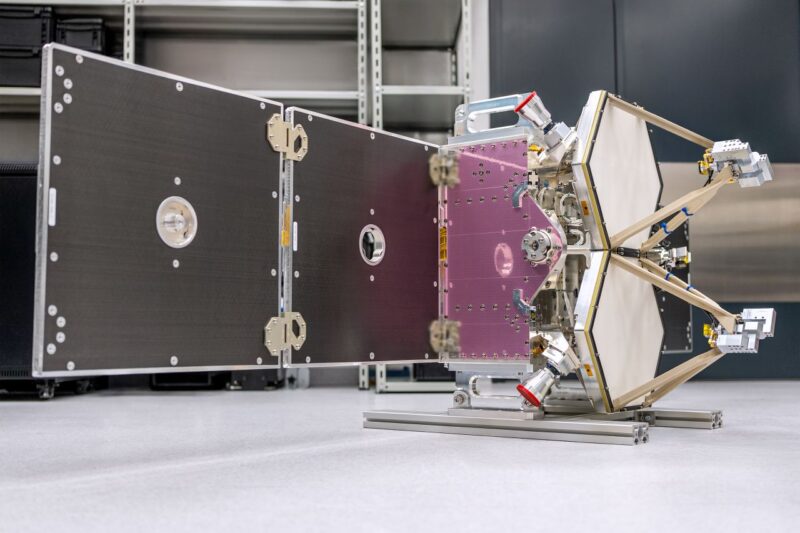
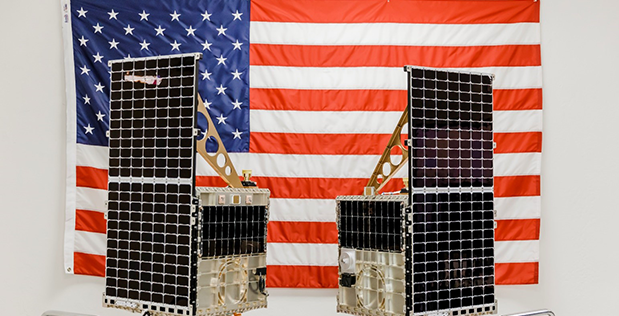
Last year, CesiumAstro introduced the Element software-defined satellite design. Sabripour said the first Element satellite is set to launch later this year. The satellite is funded partially by the company and partially through a U.S. Space Force Strategic Funding Increase (STRATFI).
With the move to end-to-end missions, CesiumAstro wants to position itself as an emerging prime for ISR and telecommunications missions. Sabripour says the company is focusing on missions that benefit from phased array technology, which could range from specific frequencies, beam configurations, to anti-jam capabilities.
The company will still serve as a supplier to customers, like its contract to support Rocket Lab’s work for the Space Development Agency.
“This allows CesiumAstro to get closer to the end customer — the Department of War, national space agencies, commercial customers — and capture 10 times more value than they would have if they were just a payload company. And their payloads are still available for key partners and customers,” Phillip Sarofim, founder of Trousdale Ventures,” told Via Satellite.
With this funding and the EXIM financing, Cesium is building out a new 270,000 square foot campus near Austin, Texas, to consolidate engineering, electronics manufacturing and satellite and critical technology manufacturing. The company has a global presence with seven locations including London, Munich, and Tokyo.
“We need an industrial base at all levels — large, medium, and small, that creates and brings back our industrial base to America. That’s what this round means to me — we’re building things from the ground up again in America and selling it to the world,” Sabripour said of the planned expansion.
“Engineering is hard. Mass manufacturing is way harder. With this round, CesiumAstro goes from a low-rate innovator to a high-capacity industrial powerhouse,” Sarofim of Trousdale Ventures added.
Sabripour said around 75% of the company’s business is in defense and government. CesiumAstro has a presence in civil missions like a recent NASA contract for LunaNet technology and an award last year from the Taiwan Space Agency for a national experimental LEO program.
Sabripour expects commercial applications to increase to 50% of the company’s business by 2030, and notes there are pending announcements on commercial applications.
On the commercial side, connected car applications have been a longtime target for the company, and this funding round brings in Woven Capital — the venture capital arm of Toyota.