Latest News
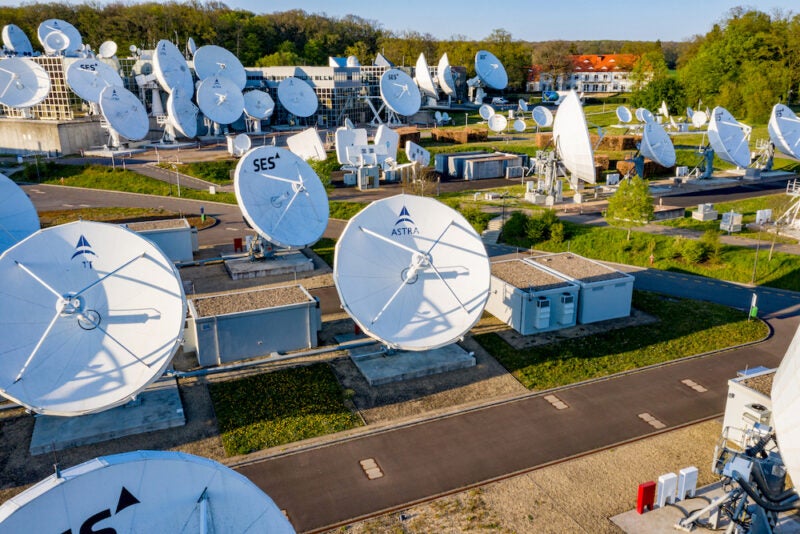
Photo: SES
The FCC approved SES’s acquisition of Intelsat on Friday, determining that the combination will create “a more vigorous satellite competitor.”
With this approval, the deal is set to close this week. SES announced Monday it plans to close the transaction around July 17.
The FCC’s review of the competitive satellite landscape around the acquisition encompassed broadcasting, in-flight connectivity, maritime services, fixed data, and government services.
“Today’s approval of the SES Intelsat transaction builds on the Commission’s efforts to promote the provision of robust and competitive satellite services to the public. It has the potential to lower costs, improve quality, and increase investment. It also will create a more vigorous multi-orbit competitor in the satellite communications marketplace,” the FCC said in a statement.
This comes after the acquisition received approval from a group of officials from the Departments of Defense, Justice, and Homeland Security, plus other agencies. As part of that approval, SES reached a National Security Agreement with the DoJ.
The acquisition has also received approval from European regulators with the European Commission and United Kingdom’s Competition and Markets Authority (CMA).
Competitive Analysis
The FCC’s analysis allowed commenters to weigh in on competitive concerns and the FCC noted that media services was the only area where commenters raised competitive concern about the combined company.
The FCC cited publicly available data that indicates together, SES and Intelsat distribute over 95% of all video programming that is distributed over C-band satellites to the U.S.
The FCC received input from competitor Eutelsat and broadcast organizations, with Eutelsat submitting a comment that the combined entity would control almost all satellite media distribution in the U.S.
Cable industry trade association NCTA and the National Association of Broadcasters (NAB) asked the FCC to ensure that a combined SES and Intelsat would maintain the same quality of C-band service to cable providers, noting that on average, the largest cable operators receive more than 80% of their cable programming signals via the C-band.
SES and Intelsat told the FCC their media businesses face decline in revenue with lower demand for C-band capacity in North America, competition from terrestrial distribution, and the consumer shift to over-the-top (OTT) video platforms.
The FCC’s analysis found that the merger is “unlikely to cause competitive harm in the media segment due to the competition … from both Eutelsat and Telesat and from the numerous terrestrial media distribution options that have recently entered and are quickly gaining share as existing satellite capacity contracts expire.”
The FCC also looked at the companies’ in-flight connectivity (IFC) businesses. It cites that Intelsat provides IFC directly to around 20 airlines and earned $384.4 million in this area in 2024. SES primarily supplies capacity to other IFC service providers — including Intelsat — and Panasonic, Thales, and Anuvu, with $165 million in IFC revenues in 2024.
The FCC determined that Intelsat has “robust” competition from Geostationary and Non-Geostationary competitors in IFC and will likely face increased competition. Some of business financials were redacted, but the FCC said in the order that “neither firm has substantial market power in this segment, either in the downstream supply of aviation services to customers or the upstream supply of capacity to aviation providers.”
In the maritime market, two companies pointed to Speedcast, Marlink, KVH, and Viasat-Inmarsat as the largest providers, with a growing competitive threat from Starlink in maritime.
Competition from Low-Earth Orbit (LEO), particularly Starlink, was a recurring theme in the competitive analysis. Interestingly, SES and Intelsat submitted to the FCC that LEO providers are “projected to capture approximately 80% of cellular backhaul and trunking service revenues by 2032.”
In the government segment, the FCC’s analysis found SES and Intelsat have rarely competed head-to-head for the same government contracts. SES often serves as a prime contractor for managed services, and Intelsat is primarily a supplier of capacity for government services.
The companies argued that the combination will improve their ability to compete to serve the U.S. government. The FCC’s analysis found the merger is unlikely to result in competitive harms in the U.S. government segment, and cited increased competition from NGSOs.
This story was published on July 11 and updated on July 14 with more information from the FCC’s decision
Stay connected and get ahead with the leading source of industry intel!
Subscribe Now