Latest News
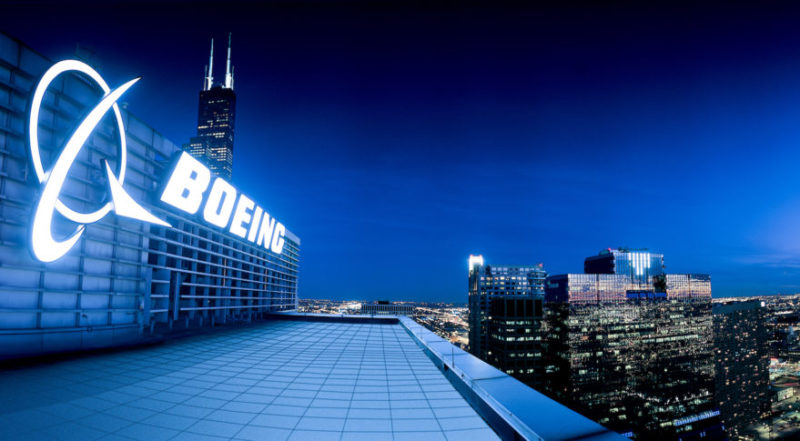
Boeing’s headquarters. Photo: Boeing
Revenue in the Boeing Defense, Space & Security (BDS) segment was down 9% in the first quarter of 2025, but the segment’s operating margin improved year-over-year.
BDS reported revenue of $6.3 billion on Wednesday during Boeing’s first quarter results, in which leadership outlined the impact of tariffs on the company’s aviation business.
CFO Brian West said there were lower deliveries in BDS during the quarter because of restarting production after the machinists strike, which ended in November.
BDS reported a Q1 operating margin of 2.5%, which Boeing said reflects stabilizing operational performance. Operating margin improved 30 basis points compared to last year.
West said the segment made “important progress” on margins in Q1, as it works to return to high, single-digit margins over time. West said operational performance on satellite programs improved during the quarter.
Backlog at Defense, Space & Security was $62 billion at the end of the quarter. Orders from customers outside of the U.S. make up 29% of the company’s backlog.
Boeing also highlighted the contract win to design and deliver the next-generation F-47 fighter aircraft to the U.S. Air Force, which will fall under this segment but has not yet been added to the backlog.
Impact of Tariffs on Aviation Business
Boeing CEO Kelly Ortberg talked about the impact of tariffs on the company, with much of the focus was on the company’s airplane business and supply chain.
Company-wide, Boeing increased revenue 18% year-over-year in the first quarter. Revenue of $19.5 billion primarily reflecting 130 commercial deliveries. Net loss was $31 million, compared to $355 million in the same time period last year.
Ortberg said import tariffs were immaterial in the first quarter, and did not impact first quarter deliveries either.
One area where Boeing will be impacted is reciprocal tariffs from China. Boeing has about 50 airplane deliveries planned for China this year and Ortberg said many Chinese customers have indicated they will not take delivery of the planes. Boeing will look at remarketing planes that were headed to China to other customers and will not continue to build planes for Chinese customers who won’t accept them. 41 airplanes are already built or currently in production for Chinese customers.
Ortberg said 80% of the company’s commercial supply chain spend is to U.S.-based suppliers, many imports from Canada and Mexico are exempt under the U.S.-Mexico-Canada Agreement (USMCA) trade agreement.
He said the company is working through the impacts to its suppliers who may have price increases. “We’re focused on making sure that an argument over a 10% tariff[of] who’s going to pay doesn’t turn into a continuity of supply issues. We really need to make sure that people are buying and bringing in the parts that we’re going to need, and then we’ll work through the financial implications,” Ortberg said.
He later said that if other markets beyond China close off as markets for Boeing, that could be a “big, a big challenge.”
“The one thing that we have to watch is to make sure we don’t see more countries in a similar boat as where we are with China,” Ortberg said, adding that he is sure that both Boeing and leadership of its EU-based competitor Airbus “would welcome a non-tariff environment for both of us. This isn’t good for either company to be in this situation or the industry. We’re working through it. … We’re going to take proactive action and manage our way through it.”
Stay connected and get ahead with the leading source of industry intel!
Subscribe Now