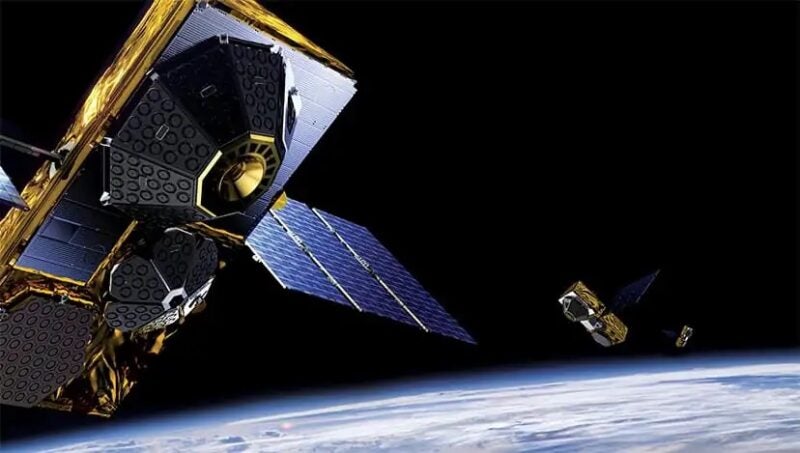
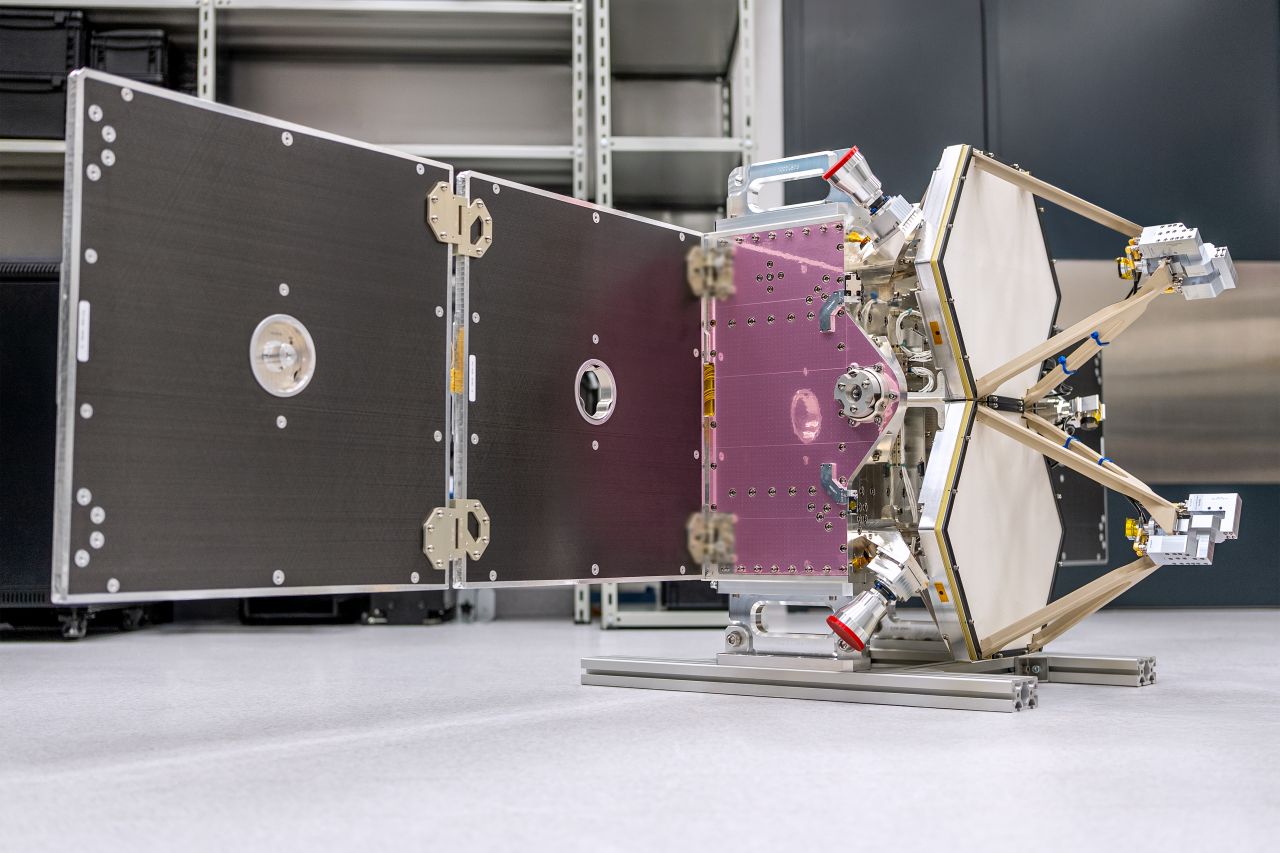
Meridian Space has validated its reflectarray antenna technology on the operator’s demonstration satellite, which launched early October.
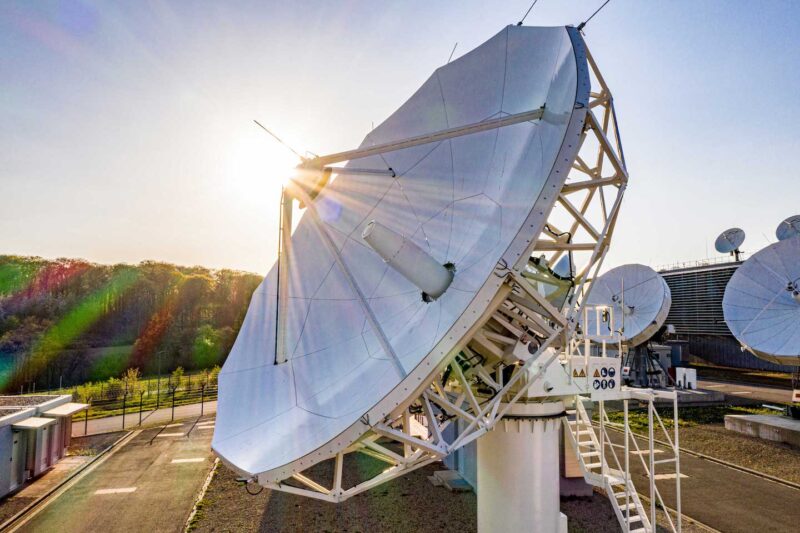
The First Customer Link (FCL) satellite demonstrated high bandwidth communications, communicating with a ground segment deployed in Toulouse, France, Meridian CEO Massimiliano Ladovaz told Via Satellite.
For Meridian Space, it validated five years of development on the proprietary reflectarray antenna technology, as the company hopes to make Low-Earth Orbit (LEO) constellations economically feasible for governments and regional operators.
“You need this antenna to deliver a constellation at an order of magnitude cheaper than every other system; without this antenna, you couldn’t get there,” Ladovaz said. “We have demonstrated it on the ground. Now we have demonstrated on in orbit. There is no doubt that we can deliver on that, and we can claim very clearly that the antenna is here and now.”
Ladovaz explained that what sets this demonstration apart is that previous reconfigurable reflect arrays are in fixed systems, which are not as useful for telecommunications use cases. And compared to other software-defined communications satellites, the Meridian payload is designed to be much lower power, and support operations on a smaller platform.
Meridian built the communications payload, and Kongsberg NanoAvionics provided the satellite bus.
Now, Meridian will go through a testing and demonstration phase with early customers, particularly governments, regional satellite operators, and telcos.
“We will test everything from fixed applications to mobility applications, maybe some special waveforms for defense applications,” he said. “There are not that many satellites in orbit with those frequencies as well. We have a lot of demand from people that want to test.”
Ladovaz also mentioned that Meridian stuck to the timeline it originally stated when the constellation was announced in April of 2025, to launch the first satellite in 2026.
Meridian Space is a “spin out” of kinetic launch startup SpinLaunch, which is now being separated into an independent company. Ladovaz, who has deep experience in the satellite industry from OneWeb, Eutelsat, SES, and Inmarsat, joined the company in July last year.
Ladovaz said Meridian is focused on scaling up production in Long Beach, California, as well as expanding its presence in Europe. The company is working on the “flat satellite design,” which uses the same payload technology in a compact design to deploy more satellites in a single launch.