
Forty years is a long time in any industry. In the satellite sector, it is almost a lifetime.
When Via Satellite began chronicling this industry four decades ago, satellite was often viewed as an engineering marvel: highly specialized, capital intensive, and essential to a relatively defined set of applications. SES was also founded 40 years ago and today carries forward a combined heritage that includes Intelsat’s pioneering role since 1964, connecting broadcasters, governments, remote communities, ships at sea, and enterprises operating far from terrestrial infrastructure.
Explore the September 2026 Issue
Check out more from this issue and find your next story to read.
That work mattered then, it still matters today, and it will matter even more in the future.
But the industry Via Satellite has covered for 40 years is now entering a very different era.
After nearly two and half years leading SES, I can say with confidence: the satellite industry is more disrupted, more competitive, and more exciting than at any point in its history. The pace of change is not incremental. It is structural. New architectures, new entrants, new business models, new geopolitical realities, and new customer expectations are reshaping the market at the same time.
That disruption can be uncomfortable. But it is also exactly what makes this moment so full of opportunity.
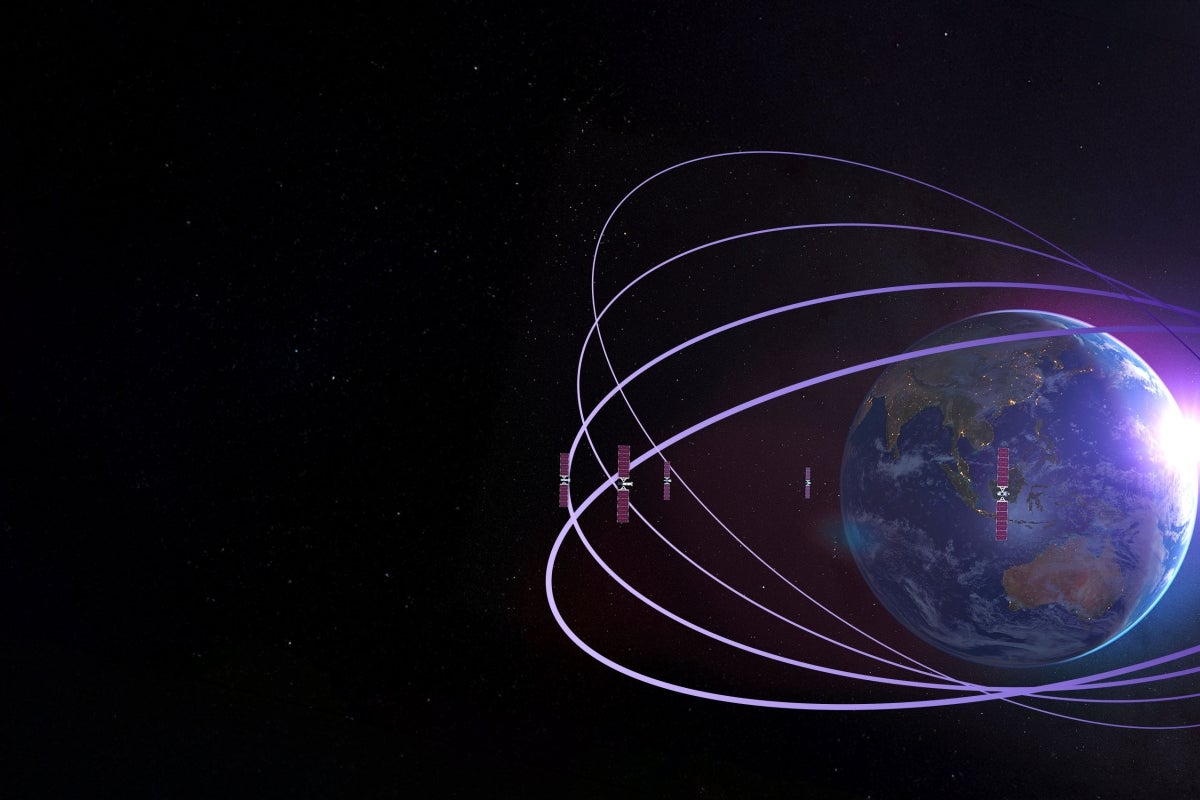
Satellites are no longer simply “gap fillers.” They are becoming a critical layer of global digital infrastructure. They support enterprise resilience, government sovereignty, cloud connectivity, aviation, maritime, energy, media, and defense. They are enabling industries that need reliable connectivity everywhere, not just where fiber or mobile networks happen to exist.
The customer does not think in terms of orbital mechanics. They ask: Will it work? Will it be secure? Will it be resilient? Will it scale? Can I depend on it when my business, mission, passengers, citizens, or crew need it?
That is the standard we must now meet.
To do that, our industry must transform. We have to move from selling capacity to delivering solutions. We have to make satellite services easier to buy, easier to integrate, and easier to consume. We have to design networks that behave less like isolated assets and more like adaptive, intelligent platforms and ubiquitous networks.
This is a lesson I have seen before in IT and telecommunications. In both industries, technology cycles accelerated, competition intensified, and customer expectations rose dramatically. Companies that survived and grew embraced continuous innovation. Satellite is now facing a similar test.
Historically, satellite innovation cycles could take five to seven years. That is no longer good enough. Customers, threats, and demand all move in real time. Our industry must learn to innovate, launch, test, iterate, and improve at a much faster cadence. Software-defined satellites, multi-orbit networks, cloud-based orchestration, AI, and more flexible ground infrastructure are not just technical improvements. They are the foundation for a more dynamic service model.
At SES, our ambition is to be a leading space solutions company, helping customers solve critical business and mission challenges. We see the future as multi-orbit, software-defined, and service-led. There is no single orbit that will “win” everything. The future is not about one architecture replacing another. It is about orchestrating the right capabilities into one seamless experience for customers.
That shift requires scale, but scale alone will not be enough.
There is a natural question many people are asking: Is there room for many players in the satellite industry, or will a handful of mega-players dominate everything?
My answer is that there is room for both. Yes, there will be a small number of global players with the scale, capital, infrastructure, and reach to serve the most demanding customers. But that does not mean innovation becomes the exclusive domain of the largest companies. Quite the opposite.
There will be many opportunities for focused players that understand a market deeply, solve a specific problem brilliantly, or complement the capabilities of larger networks. The space solutions ecosystem needs manufacturers, launch providers, antenna innovators, software companies, managed service providers, cybersecurity specialists, analytics firms, and application developers. It needs regional expertise and vertical specialization. It needs bold startups and experienced players.
The opportunity is large enough for many to win, but not for those who resist change and keep doing the same thing.
Focus matters. Execution matters. Strategy matters. In a market moving this quickly, companies need to be clear about where they can lead, where they should partner, and where they should not compete. They need to be disciplined about investment. They need to stay close to customers and anticipate what those customers will need next, not just what they bought yesterday.
The satellite industry has sometimes been too technology-led and not customer-led enough. That must change. The winners in the next decade will be those who combine engineering excellence with commercial clarity. They will understand that innovation only matters if it creates real value for customers — better performance, lower complexity, stronger resilience, improved security, or new capabilities that were not possible before.
This transformation will also be shaped by geopolitics. Governments increasingly see space as a strategic domain. Enterprises increasingly see connectivity as a resilience issue. Supply chains are being rethought. Sovereign capability, security, and interoperability are all being reconsidered. These forces will create demand, but they will also increase complexity. Our industry must be able to operate across borders, support trusted communications, and help maintain a global framework for space and satellite services.
That is a significant responsibility.
But if there is one thing I have learned across IT, telecom, and now space, it is that technology does not transform industries by itself. People do.
Satellites may be our most visible assets, but people are the true engine of this industry: the engineers designing payloads, the operators managing networks around the clock, the manufacturing teams building spacecraft and ground systems, the field teams installing equipment in difficult environments, the sales and service teams listening to customers, and the leaders creating cultures where innovation can thrive.
At SES, as we build the next chapter of our company, this people dimension is at the center. We are bringing together deep heritage, technical excellence, and a renewed ambition to move faster. But integration, transformation, and innovation do not happen because they are written on a strategy slide. They happen because teams align around a purpose and execute with discipline.
Culture is not soft. Culture is execution at scale.
As Via Satellite celebrates 40 years, it is worth recognizing not only how far this industry has come, but how much more it can become. The next era will not be defined only by more capacity in space. It will be defined by the value we create on Earth for governments, enterprises, communities, passengers, crews, and citizens who depend on connectivity everywhere. New economic opportunities will also emerge in space that we have not seen yet.
The opportunity ahead is enormous. But it will reward those who are bold enough to change, focused enough to execute, and humble enough to remember that no transformation happens without people.
Because in the end, satellites connect the world, but people make it happen. VS
Adel Al-Saleh is the CEO of SES