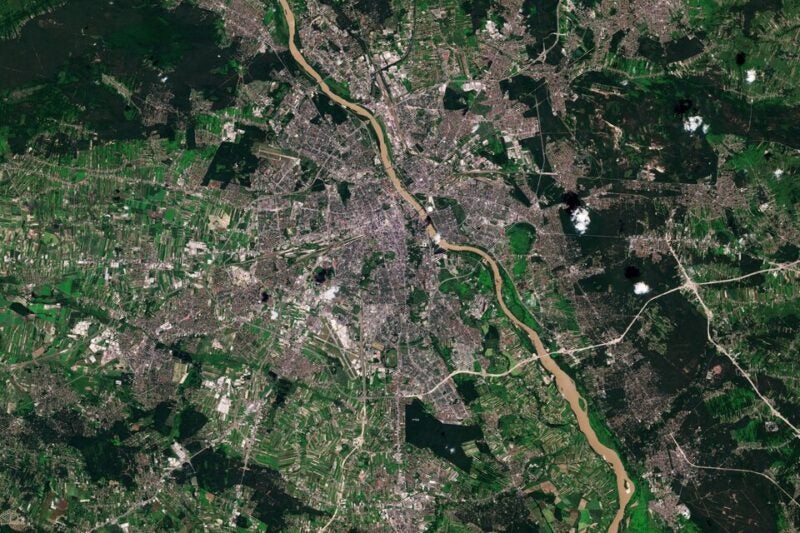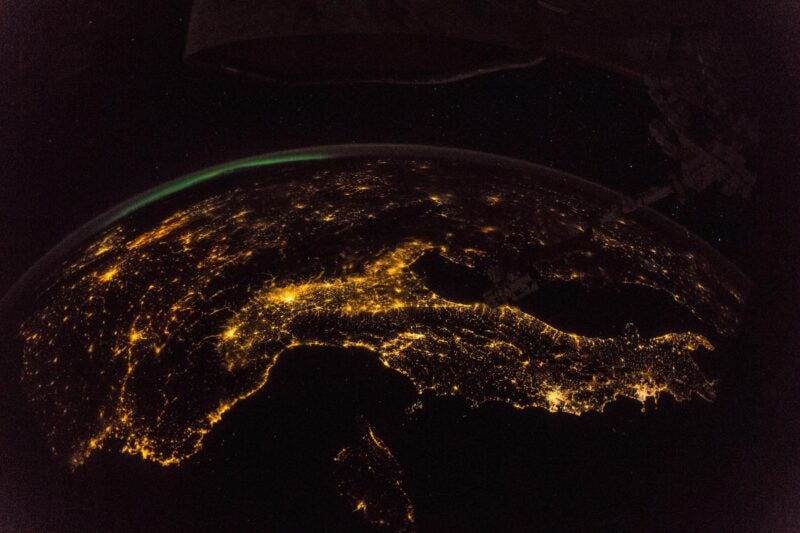

For decades, satellite data has played a critical role in helping governments, emergency responders, and infrastructure operators understand the impact of disasters. Whether assessing the damage caused by a wildfire, tracking the aftermath of a flood, or surveying infrastructure following a major outage, space-based data has traditionally been used to answer a single question: what happened?
But as climate risks intensify, critical infrastructure becomes increasingly interconnected, and governments face growing pressure to build resilience against these disruptions. Gaining insight after the event is no longer enough.
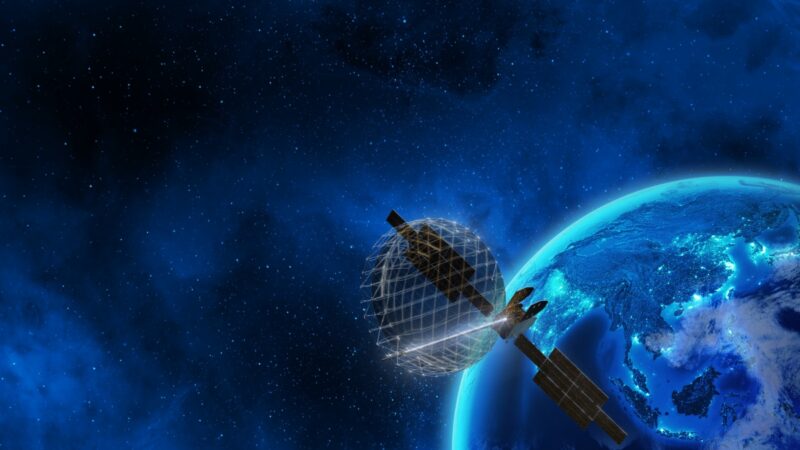
The emergence of the Internet of Space, a connected orbital network enabling the relay of information across space, creates a foundation that will no longer define its value in how much data satellites can collect or how quickly that data can be relayed. It will be defined by their ability to turn data into timely, trusted intelligence that helps governments and enterprises make faster, more informed decisions in real time.
The Internet of Space enables the convergence of Earth Observation (EO), IoT and satellite communications, into a single, unified architecture. Rather than relying on a single source of information, it has transformed the future of space systems to draw intelligence from multiple sources simultaneously, offering faster and more accurate insight to see, understand, and act on emerging threats.
The End of Space Data Siloes
Traditionally EO, IoT, and broadband connectivity have been treated as separate, siloed segments of the satellite industry. But this perception is starting to change.
In the past, EO satellites have functioned primarily as observation platforms, collecting data which is transported to Earth for analysis before a response or action can be determined. Depending on the application, the process from tracking and tasking through to delivery can take a number of hours or even days.
Yet when a crisis occurs, a satellite image of a wildfire or infrastructure failure has limited value if there is no reliable way to deliver that information to responders in the field when they need it most. The same way an IoT alert is of limited value without the context needed to understand what is happening on the ground.
Historically, obtaining that additional context required significant investment in hardware, software or highly manual processes involving personnel physically travelling to inspect a site which costs time, money and, in some cases, puts people at risk, and in some cases lives. For example, a heat sensor triggered in a forest alerts the local fire response team and lets them know that the threat of a wildfire could exist, but they don’t truly know until they see it for themselves. But combine the heat sensor with the rapid delivery of satellite imagery, suddenly they have an additional layer of contextual insight they need to act with informed confidence which also will keep themselves safe.
Raw space data only offers enterprises and governments so much, and without access to a combined offering of EO, connectivity, and IoT, their ability to respond to emerging threats effectively is significantly restricted.
However, enterprise and government users do not want raw data, they want fast, relied upon outcomes. While Earth Observation, connectivity and sensor data have their value individually, the true ability to combine them into a coordinated operational picture, enabling quick and decisive action that is extremely powerful.
From Data to Active Resilience
Today, advances in onboard processing, edge computing and inter-satellite networking are beginning to transform the Internet of Space.
Rather than acting solely as data collection tools, satellites can increasingly support the process of detecting anomalies, validating events and prioritising critical information before the information even reaches Earth. Instead of overwhelming operators with unprocessed data, modern space systems can identify the most relevant intelligence to allow decision makers on the ground to work faster and more efficiently.
This kind of autonomous intelligence is defining the transition from observation to active resilience. Where before space infrastructure was simply a source of situational awareness, it can now be deployed as an active participant in helping organisations understand events as they unfold and drive coordinated, real-time interventions.
Sovereignty also plays a growing role in this equation. As geopolitical tensions rise and cyber threats evolve, reliance on fragmented networks or infrastructure outside an organisation’s control leave them exposed to a dangerous array of risks, from communications blackouts to ransomware attacks.
In response, governments and critical infrastructure operators increasingly want assurance that their data, services and operational workflows remain under their control as reliance on space-based infrastructure grows.
In these environments, organisations need confidence not only in the intelligence they receive, but also in how that information is collected, processed, shared and controlled.
This raises a fundamental question: why should users trust the data coming from space?
Trust in satellite data does not come from a single source, it is built from converging multiple sources through verification and transparency. Satellite systems for instance generate vast amounts of information, but raw data alone is not inherently reliable as a single sensor alert could be misleading, and a satellite image captured in isolation may lack operational context.
When EO imagery, IoT, and communications are fused together, anomalies can be cross-checked and emerging threats can be properly understood. In this way, it is through multi-layered validation that raw data can be transformed into trusted intelligence.
Equally important is how that data is handled, secured and delivered to avoid data being manipulated or misconstrued. Multi-satellite data platforms are designed to address this challenge by providing a controlled environment where data can be collected, processed and distributed.
Rather than relying on fragmented systems, governments and critical infrastructure operators can access a unified platform that ensures data integrity through encryption, access controls and traceability. For instance, data points can be tracked from source to decision, allowing users to have greater visibility into data provenance, its origin and who has interacted with it. This level of transparency is important for building confidence, particularly in high-stakes environments where decisions must be made quickly and accurately.
The Internet of Space offers an opportunity to create more trusted and resilient architectures through the convergence of satellite systems. The objective is not simply to move data faster, but to ensure that trusted intelligence reaches the right decision-makers securely and reliably via trusted platforms and sources.
The Next Chapter
The first era of the commercial space industry was defined by access to data. The next will be defined by the ability to turn that data into immediate action.
As climate pressures increase, infrastructure networks become more interconnected and resilience rises on boardroom and government agendas, the demand for trusted, real-time intelligence will continue to grow and become a necessity.
In the emergence of the Internet of Space, competitive advantage will not belong to those who simply collect more data, but to those who can transform data to actionable intelligence the fastest. Because as the saying goes, prevention is better than cure.
Danielle Edwards is Vice President of IoT and Broadband at Open Cosmos