The space sector was historically dominated by states and state actors for defense and research. But recent private investment in the sector has changed that notion. As of July 2024, commercial revenues account for almost 80% of industry activity, and this has been driven by advances in satellite and propulsion technology and reduced launch costs.
A new set of market participants has emerged including rocket and spacecraft manufacturers/launchers, satellite manufacturers, satellite technology services, and specialist insurers. The rapid proliferation of these market players and related procurement, launch and service agreements has led to disputes around: satellites for manufacturing defects, capacity sharing issues, financing issues, launch issues and export controls; space collisions or collision avoidance maneuvers; frequency interference and allocation of spectrum; and insurance issues.
While disputes relating to satellite collisions and frequency interference where parties do not have contractual relationships may be settled by the non-binding rulings of the Claims Commission (constituted under the 1972 Convention on International Liability for Damage Caused by Space Objects ) and the International Telecommunications Union’s Radio Regulations Board, given space constraints, this article focuses primarily on commercial disputes relating to satellites where parties have a contractual relationship.
Satellite Disputes and Arbitration
The dispute resolution regime relating to satellites is still evolving because the historically small pool of market actors led to an interdependence among them such that they naturally gravitated towards informal resolution mechanisms such as cross-waivers of liability and insurance, over formal dispute resolution mechanisms (Laura Yvonne Zielinski, The Risk of Satellite Arbitrations, Global Arbitration Review).
However, the increase in the number of market participants and volume of commercial activity has created more complex contractual relationships. These contracts are governed by the law chosen by the relevant parties (e.g., English or Singapore law) and frequently contain more sophisticated dispute resolution mechanisms like arbitration. The two broad categories of arbitrations relating to satellite disputes are discussed below.
International commercial arbitration: The majority of satellite disputes are between commercial parties and have been resolved by international arbitration, including by arbitral institutions like the London Court of International Arbitration (LCIA), International Chamber of Commerce (ICC) and International Centre for Dispute Resolution (ICDR). These disputes involve a range of issues including late delivery of satellites, launch related problems, lease of satellite capacity, sale and purchase of satellite equipment. However, there has been a growing trend of disputes between satellite manufacturers and their customers who typically rely on the data transmitted from satellites.
For example, in Insurers of Thuraya Satellite Telecommunications v. Boeing Satellite Systems International, the dispute concerned Boeing’s liability for its 702 satellite model, which lost power in orbit because of allegedly defective solar panels. The ICC tribunal rejected the insurers’ claim that Boeing knew about the problems in its early satellite models.
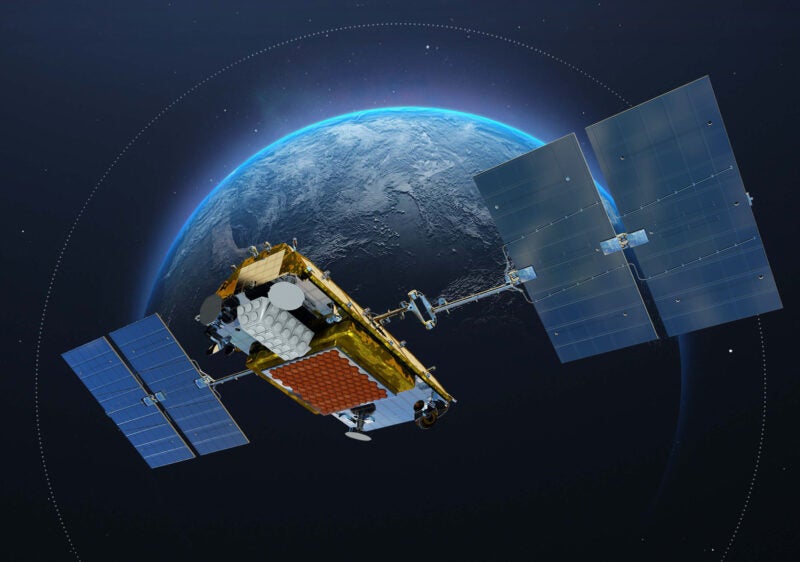
More recently, in NorthStar Earth & Space Inc. v. Spire Global Subsidiary Inc., the key issue was whether the contract required Spire to keep the satellites operational in circumstances where the data transmitted would, apparently, not meet the required contractual service levels due to defects. NorthStar successfully applied for an interim order to keep satellites launched by its contractual counterparty, Spire, operational such that NorthStar could continue receiving data from the defective satellites. The agreement between the parties stated that disputes would be resolved through ICC arbitration but NorthStar approached the Ontario court for the interim order given the urgency of case before Spire deactivated the satellites.
While the arbitration proceedings on the substantive issues in the NorthStar dispute are ongoing at the time of writing, this case demonstrates that it is important to draft constellation services contracts carefully such that they envisage all scenarios from launch to orbital placement and everything in between — including partial performance in orbit.
Investor state arbitrations: Investor state arbitrations involve claims against governments for interference with investments and pursuant to an investment treaty signed between the host state of the investment and the investor’s home state. The most prominent examples are the two investment arbitrations initiated by Devas Multimedia Private Limited’s investors against India under the Mauritius-India bilateral investment treaty (BIT) and Germany-India BIT alleging, among other things, that India did not accord Devas fair and equitable treatment and expropriated its investment.
Devas’ contract with Antrix (the India government’s then commercial space entity) involved Antrix building, launching, and operating two satellites and leasing S-band spectrum capacity on those satellites to Devas such that Devas could offer digital multimedia broadcasting services. Antrix invoked force majeure and terminated the contract on the basis that India’s military needed to use the spectrum that had been leased to Devas. The tribunals found that India had breached its obligations under the relevant BITs and awarded Devas’ investors around $200 million. Devas also initiated a commercial arbitration under ICC rules against Antrix Corporation under the contract between Devas and Antrix.
Is the Current Arbitration Framework Adequate?
Arbitration has proved a natural forum for satellite related disputes for several reasons: they involve nascent technologies requiring heightened confidentiality that is best preserved by arbitration; the parties can choose arbitrators in the field with appropriate expertise; and neutral venues for arbitrations are ideal for the cross-border nature of these disputes.
Specialized rules for such disputes were adopted by the Permanent Court of Arbitration (PCA) — the Optional Rules for Arbitration of Disputes Relating to Outer Space Activities (2011). However, there are no publicly reported arbitrations using these rules, likely because the PCA is more popular with states and international organizations than with the private parties who have been involved in most satellite disputes.
One potential concern for parties seeking to resolve satellite disputes by arbitration is the availability of urgent interim relief. While all major arbitral rules provide for emergency arbitration, which typically lead to interim orders within a matter of two to four weeks, it is notable that in the NorthStar case the claimant felt the need to approach the Canadian courts for immediate injunctive relief prior to commencing ICC arbitration. Clarification in the arbitral rules that emergency arbitrators may issue immediate interim relief by way of ‘preliminary order’ (something which many emergency arbitrators have in face been prepared to do in practice), such as in the latest Singapore International Arbitration Centre rules, is a welcome development in that regard (Paragraph 16, Schedule 1, SIAC Rules 2025).
Domestic courts have not been the preferred forum for satellite disputes because there may be concerns around neutrality, confidentiality, language barriers, sovereign immunity constraints, applicable law uncertainties and lack of expert knowledge among domestic judges. Notwithstanding the room for improvement as regards immediate interim relief, arbitration has generally proven well-suited to satellite disputes for the reasons discussed above and the inherent flexibility of the arbitral process has allowed it to adapt to satellite disputes without the need for each institution to adopt a specialized set of rules.
Matthew Hodgson is a partner in International Arbitration for Linklaters LLP, London. Ali Amerjee is a managing associate for Linklaters LLP, London. Andrew Battisson serves as head of International Arbitration for Asia-Pacific, India and the Middle East and partner for Linklaters Singapore.