
While there are bright spots in the history of space collaboration such as the International Space Station, many regulatory experts say there remains a need for global consensus for dealing with orbital debris, interference, and a host of other issues emerging with a growing space economy.
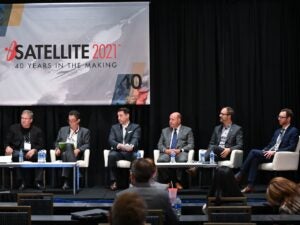
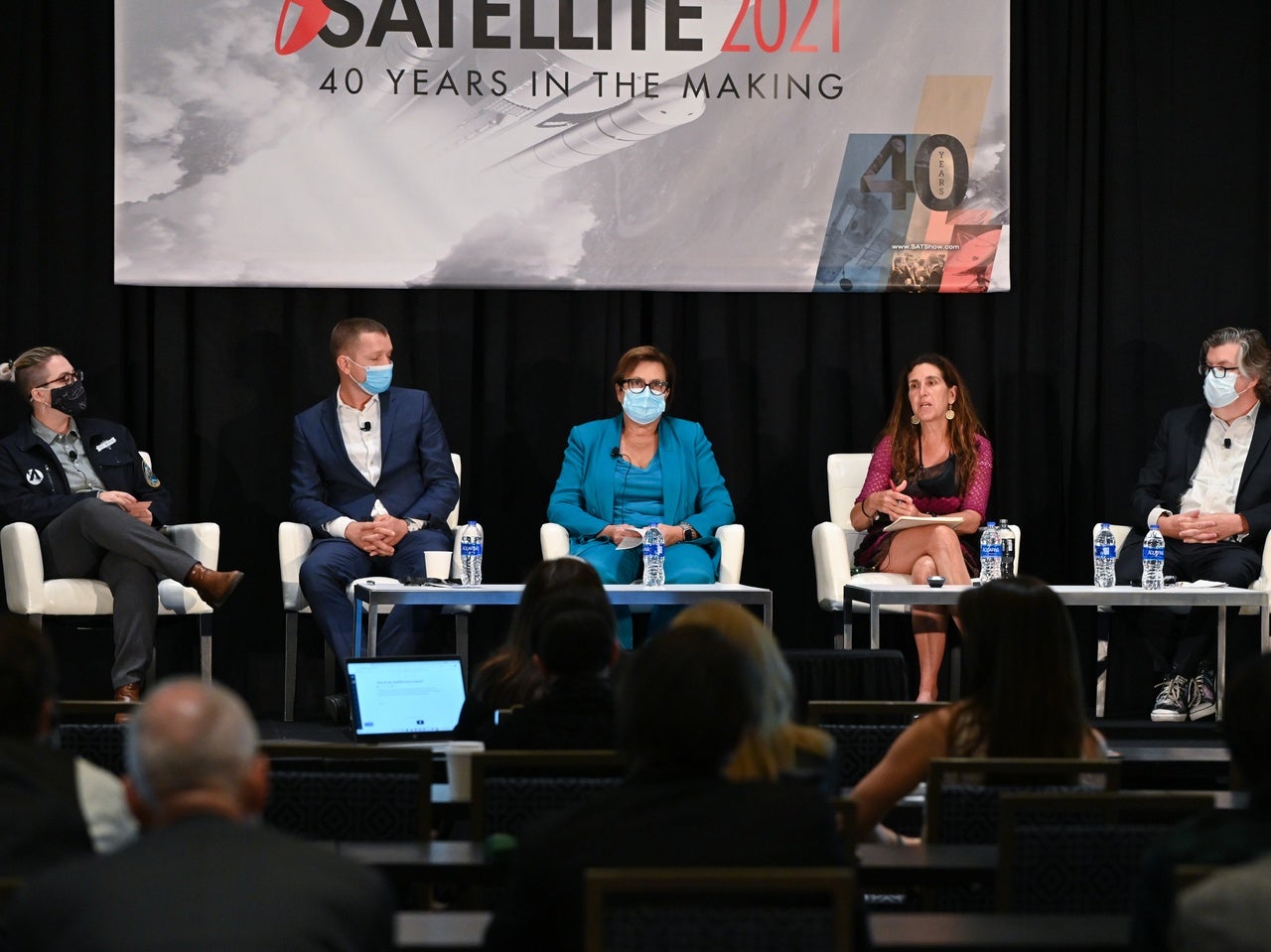
On Tuesday during the SATELLITE 2021 conference, a space policy panel of regulatory, legal, and commercial space experts argued that this lack of leadership and direction around space policy could get costly for countries, especially as space gets more crowded and more contested.

Explore the Show Daily 2021 Day 3 Issue
Check out more from this issue and find your next story to read.
Examining the question, “How do you create laws in space?” the panel explored what needs to happen to move the needle forward.
Simonetta Di Pippo, director of the United Nations Office for Outer Space Affairs (UNOOSA), acknowledged that advancing global space policy through her office isn’t easy, given that everything must be approved by consensus. Yet her office still has enjoyed successes, especially when it comes to building space capabilities in emerging countries.
For instance, UNOOSA, along with its partner, Japanese Aerospace Exploration Agency (JAXA), are part of the Access to Space for All initiative. This program helped three developing countries – Kenya, Guatemala, and Mauritius — deploy satellites to space for the first time. Part of this work included providing each country with training on space public policy.
In addition, UNOOSA has continued to help preserve the space environment for future generations by getting buy-in from member nations for common guidelines for long-term sustainability of outer space activities. The guidelines were approved in 2019, and about 100 member states currently agree to the guidelines.
A Wake-Up Call for the Industry
But many panelists said more needs to be done.
“The space policy regime has fallen behind and I think it’s very unfortunate,” said Jennifer Manner, senior vice president of Regulatory Affairs at EchoStar Corporation, parent company of Hughes Network Systems.
While there has been good progress on rules for Geostationary Orbit (GEO) satellite coordination, countries still lack an adequate regulatory regime for Non-Geostationary Orbit (NGSO) satellites, Manner said.
The panel also addressed the need for policies that ensure space sustainability, especially laws focused on the growing space debris problem. Before the Low-Earth Orbit (LEO) revolution, there were about 6,000 satellites in orbit, 3,000 of them active. But mega-constellations like Starlink and OneWeb promise to increase the number of objects in space by more than eight-fold in the next few years.
Charles Mudd, principal and owner of a law firm that advises small satellite clients, said the companies he works with recognize the need to embrace sustainability and are incorporating it into their satellite development efforts, even without regulations requiring them to do so. The process, called “compliance by design,” can be used as a competitive advantage, he said.
Mudd emphasized that right now nations are liable for any damages that a country’s satellite activities in space do to other countries. That means if a U.S. LEO satellite operator collides with a satellite operated in Asia or Europe, the U.S. taxpayer would be liable.
That is why the FCC is looking at requiring insurance bonds for future satellite launches, Mudd said.
Manner added that because so much of space is commercial, the regulatory effort needs to have both government and private sector voices, and that the ultimate rules of the road need to be technology-neutral.
She considers NASA’s Artemis Accords, which establish a practical set of principles to guide space exploration cooperation among nations participation in NASA’s lunar exploration plans, a missed opportunity for the global community to take a stand on space sustainability.
Manner said the effort needs to be both global and done by expert agencies. “The FCC is not the best organization to develop orbital debris rules,” she added.
A Barrier to In-Space Innovation
Looking at legal issues facing the new space industry, Artiom Anisimov, space advocate with Noosphere Ventures, noted that space is a highly regulated area, especially in the U.S, and described the regulations and licensing processes under the U.S. State Department and U.S. Department of Defense “soul crushing.”
“For a lot of them it’s a deal breaker,” Anisimov said.
The regulatory hurdles for operating a space business can be daunting for small businesses, agreed Mudd, citing how Internet of Things (IoT) startup, Swarm (now owned by SpaceX) once tried to get a license and ended up going outside the United States to launch its satellite.
On a positive note, Mudd said the FCC recently streamlined licensing rules for a specific class of small satellites, reducing the cost from $400,000 to $30,000.
Moderator Luc Riesbeck, space policy research analyst with Astroscale U.S., urged participation and collaboration within industry groups to provide a feedback loop to regulators.
Riesbeck asked how panelists would advise the “Artemis Generation,” those up-and-coming space workers who have grown up in the climate crisis, on how to best sustain growth in space safely.
Mudd said he tells not just the Artemis generation, but everyone to focus on “collaboration and engagement.”
“We can’t wait for another treaty. We can’t wait for the United States or other national governments to implement regulations. We can’t wait for the industry to self-regulate. We don’t have that time,” he said, urging people to participate in workshops, conferences, and panels to ensure they have a voice in future policies. “Hopefully we will get there.” VS