
SATELLITE 2017 kicked off by taking a look at how ground systems will evolve to support the growing constellations in Low and Medium Earth Orbit (LEO, MEO) and Geosynchronous Earth Orbit (GEO). Moderated by Denis Curtin, principal at Communications Satellite Consultants, a panel of CTOs and other executives from major companies in the ground segment market gathered at Monday’s Opening General Session to discuss the coming challenges and opportunities they see in the near future.
Stuart Daughtridge, vice president of advanced technology at Kratos, noted that the satellite industry has reached an inflection point. “With High-Throughput Satellites (HTS) and LEO and MEO constellations, we’re seeing a massive growth in the capability and capacity in bandwidth that’s going up in orbit. Related to the ground system, it’s all about how you enable that extra bandwidth, power and flexibility that new satellites are beginning to offer,” he said. “I heard a satellite manufacturer say that satellite technology is changing so fast that the satellite you order today will be obsolete by the time it’s launched. So how do you develop a ground system that supports that level of flexibility?”

Explore the Show Daily 2017 Day 2 Issue
Check out more from this issue and find your next story to read.
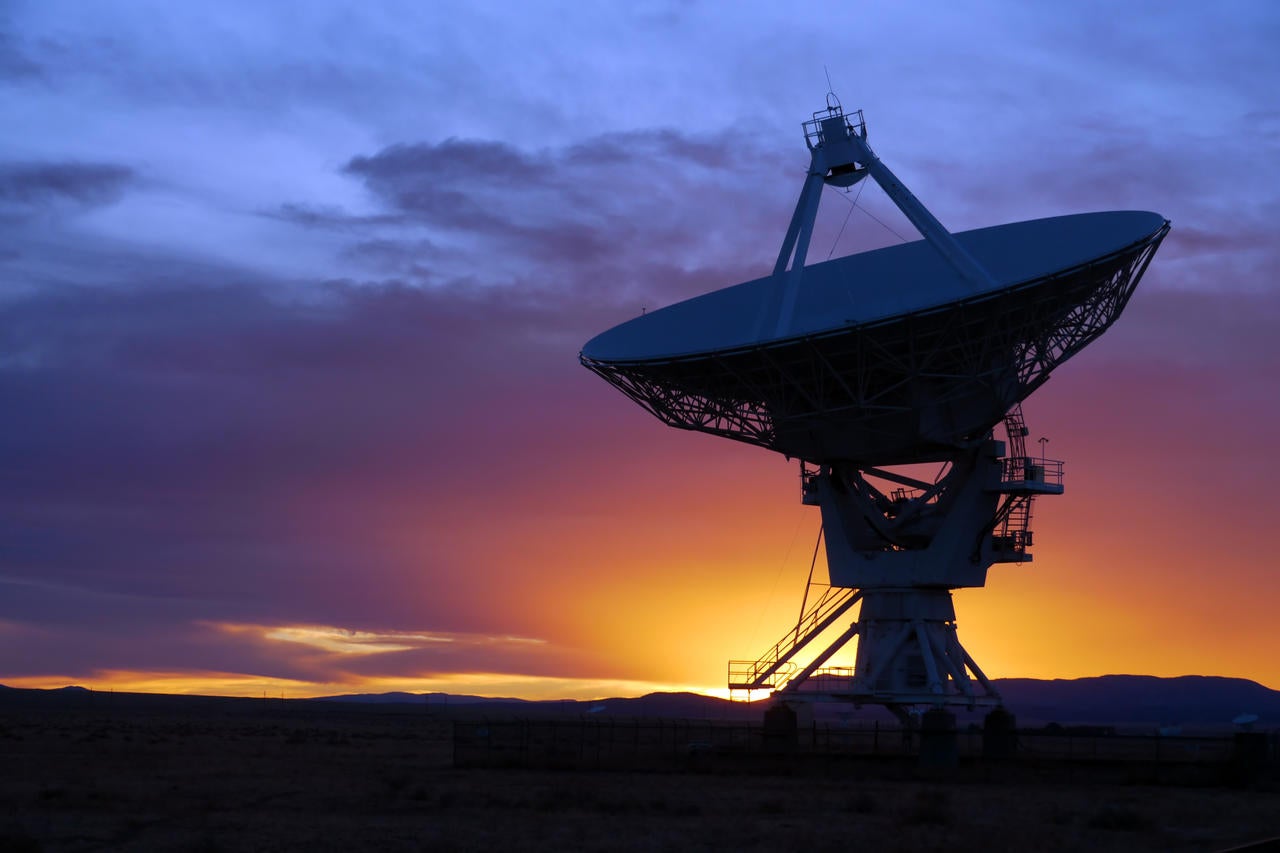
One area companies are looking at, he said, is to virtualize the ground systems so that you can deploy your ground assets where you need them, when you need them. “[Companies are] moving to more digital infrastructure technology so you can separate your antennas from your ground processing. The more you can virtualize your ground infrastructure, the better,” Daughtridge said. As such, the industry is seeing a push toward software modems so that companies can update their infrastructure quickly and easily.
Wayne Haubner, senior vice president of engineering and emerging technologies at iDirect, agreed that the transition to a focus on software is paramount. “We like modems to have flexibility without replacing them all of the time. We very much have to figure out how to reduce the capital cost and reduce the footprint. Virtualization is a key part of that, separating the digital from the analog pieces,” Haubner said.
With the influx of ultra HTS and other satellites, the industry will move from a handful of teleports around the world to dozens, if not hundreds, and they are going to have to share digital processing across them. “Software-designed radio, diversification of hub infrastructure, and leveraging remote compute capabilities and the cloud” are some key ways Haubner believes the industry will adapt to keep up.
Marco Brancati, CTO at Telespazio, also pointed out that the use of digital beams is a prime example of how hub infrastructure is evolving. “There is a new trend I see using digital beams able to track with one antenna several satellites on the same orbit plane … or on different orbital planes,” he said.
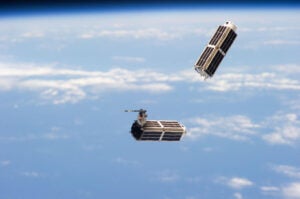
Daughtridge believes the explosion of the smallsat market is a fantastic opportunity to test some of these new solutions because of its economic models. “If you have a satellite that costs less than $1 million to make and plan to replace it in two years, you have a very different tolerance for risk,” he said. “As a result, as a ground systems provider we are able to introduce new technology that would take three to five years to get to the GEO market, and have it capable within months for smallsats. With smallsats, you can try that new technology … and once you’ve proven it out, you can bring that tech into the GEO communications market.”
A few audience members asked the panel to highlight what challenges ground system providers are preparing to face, particularly related cybersecurity, Big Data, the cloud and IoT. For Daughtridge, cybersecurity has become a matter of evaluating risk versus reward.
“There is no silver bullet. You have to apply the best practices at the product, service and infrastructure level. But how much security is enough? You can always spend more on cybersecurity,” he said, so ground system providers must ask what the true value of their efforts will be.
It’s a similar dilemma Adrian Morris, executive vice president and CTO at Hughes, sees with analytics. “The big challenge is not getting the data or doing the analytics,” he said, it’s figuring out what is the valuable question you want to answer “that makes it worth doing the analytics.”
Daughtridge also pointed out that there is a massive opportunity for interference due to LEO constellations and GEO satellites using the same frequencies. “One of the big challenges is interference changing into recurring transient events that are much harder to diagnose and resolve than legacy interference events. You need to be able to read enough information out of the signal so you can tell what the source is,” he said. “Us and other companies are working on tools to allow us to revolve and identify what terminals are causing interference. I think as more LEO constellations get launched we’re going to see more transient events, and new tools and capabilities will have to be developed to combat them.”
However, Marco Brancati, CTO at Telespazio, took a moment near the end of the discussion to underline the importance for continued conversation within the industry on spectrum. “We need to combine wireless terrestrial infrastructure with what the satellite industry wants in a smart way. The item of spectrum is key, and there is a strong need to find accommodation between the increasing needs of wireless and to protect to a certain extent what has already been achieved by satellite services,” he said. “The satellite industry needs a bigger voice in spectrum allocation over the next 10 years.” VS