Latest News
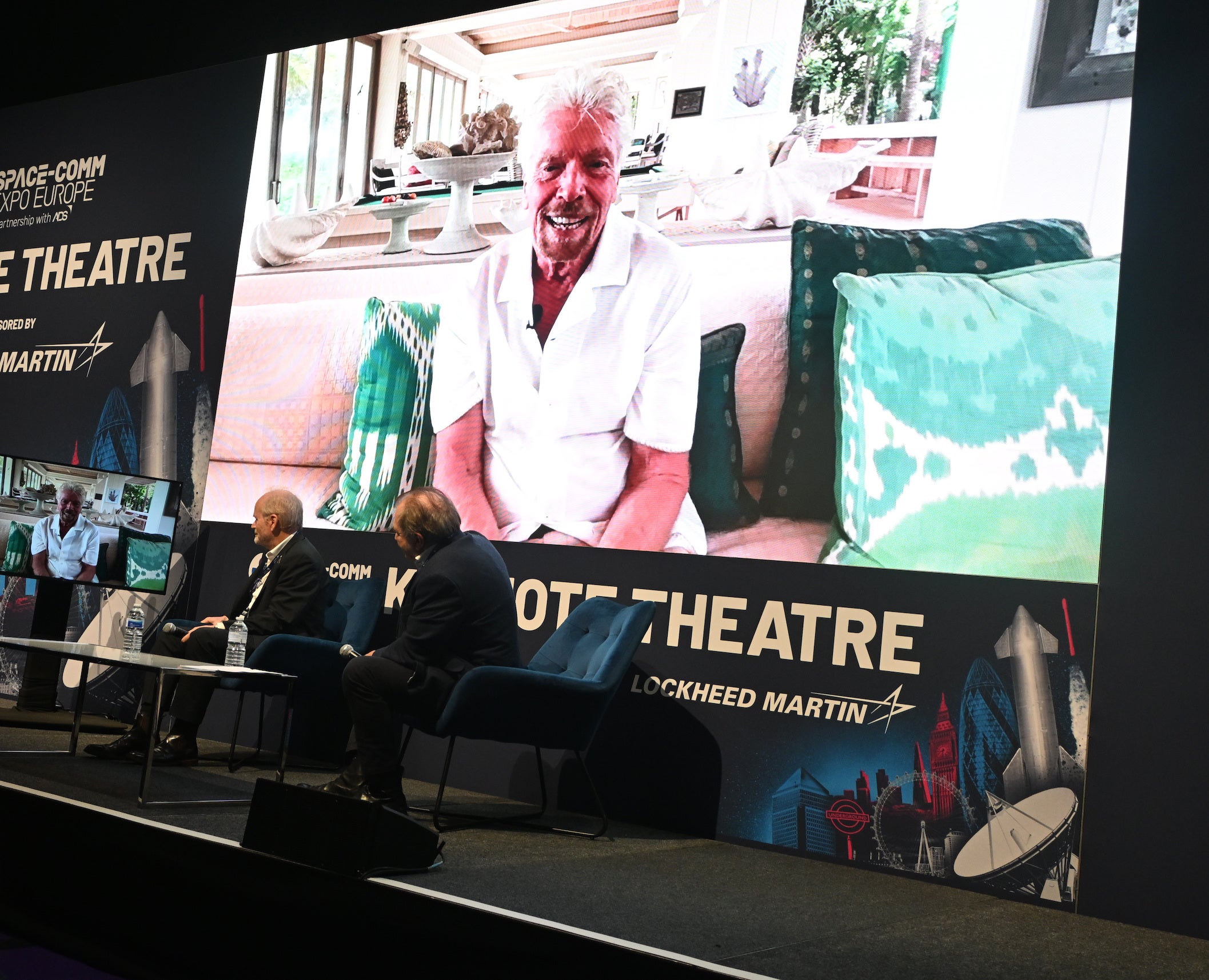
Sir Richard Branson spoke virtually at Space-Comm Europe. Photo: Via Satellite
LONDON — Virgin Galactic expects to start flying the next generation of its suborbital spaceship, the Delta Class, by the end of the year, Sir Richard Branson said this week during Space-Comm Europe in London.
Virgin Galactic’s most recent suborbital human spaceflight mission was in June 2024, the last flight of its VSS Unity spaceplane.
Branson, who spoke to attendees via video call from Necker Island, talked about the importance of returning to suborbital flights — particularly after Blue Origin’s recent announcement to suspend New Shepard flights for at least two years.
“I think now Virgin Galactic is really going to be the only way that in future years that people are going to be able to get that kind of experience,” Branson said. “Obviously the space launch later this year is going to be really important, particularly now that Blue Origin seemed to have bowed out of putting people into space. We need to fill that gap. There’s an awful lot of people who want to go to space, and we just need that hurry up with that.”
Virgin Galactic’s Delta Class spaceships are next-generation, six-passenger suborbital vehicles designed for high-frequency space tourism. Branson said one of the big advantages of the new Delta class of spaceships is that Virgin Galactic won’t have to have them on the ground for two to three months between flights — they are designed to fly at a much quicker cadence.
“We should be able to do a second flight every 48 hours or even less. And that is going to make the economics better, which means in time, we will be able to get the price down. This means, in time, more and more people potentially in this audience will have the chance to go to space.”
One of the big themes of Branson’s fireside chat was a call for governments to show more backing for space and encourage companies and competition in this area. He said companies were capable of doing great things, but “whether governments are willing to support their industries is another matter.”
“Elon [Musk] has got billions from the U.S. government, which has enabled him to become very dominant in the space world,” he said. “The European companies do not get a lot of financial support from their governments, and that makes the playing field very much tip towards American companies. I think if, if European companies come up with projects that are worth supporting, some kind financial help from governments, should be forthcoming, if Europe is going to be able to compete with America.”
Even for someone as successful as Branson, building successful businesses in space is far from easy. Virgin Orbit, the smallsat launcher that was part of Branson’s Virgin Group, shuttered in 2023 after a launch failure and fundraising troubles.
Branson said competition is what makes the world go round, and he believes this is one of the main reasons why governments exist. “They’ve got to encourage competition. That’s their principle. That’s their principal role, in my opinion, governments is to make sure that that competition survives and thrives. It would be wise for the government, particularly in this age of with wars coming back to invest in the in the right projects.”
Branson touched upon recent political events, and how they have highlighted a need for Europe “to stand on its own two feet” in order to thrive going forward.
“Ukraine needs Europe’s help. It is extraordinary how well Ukrainians are managing to do on their own. Europe has just got to give every single bit of help to Ukraine. We have got to try, in Europe to dominate. Maybe dominate is a bit too strong word, but I’m afraid we’re going to have to try to dominate particularly as far as future wars are concerned, and, hopefully work with the Americans.”
Stay connected and get ahead with the leading source of industry intel!
Subscribe Now