Latest News
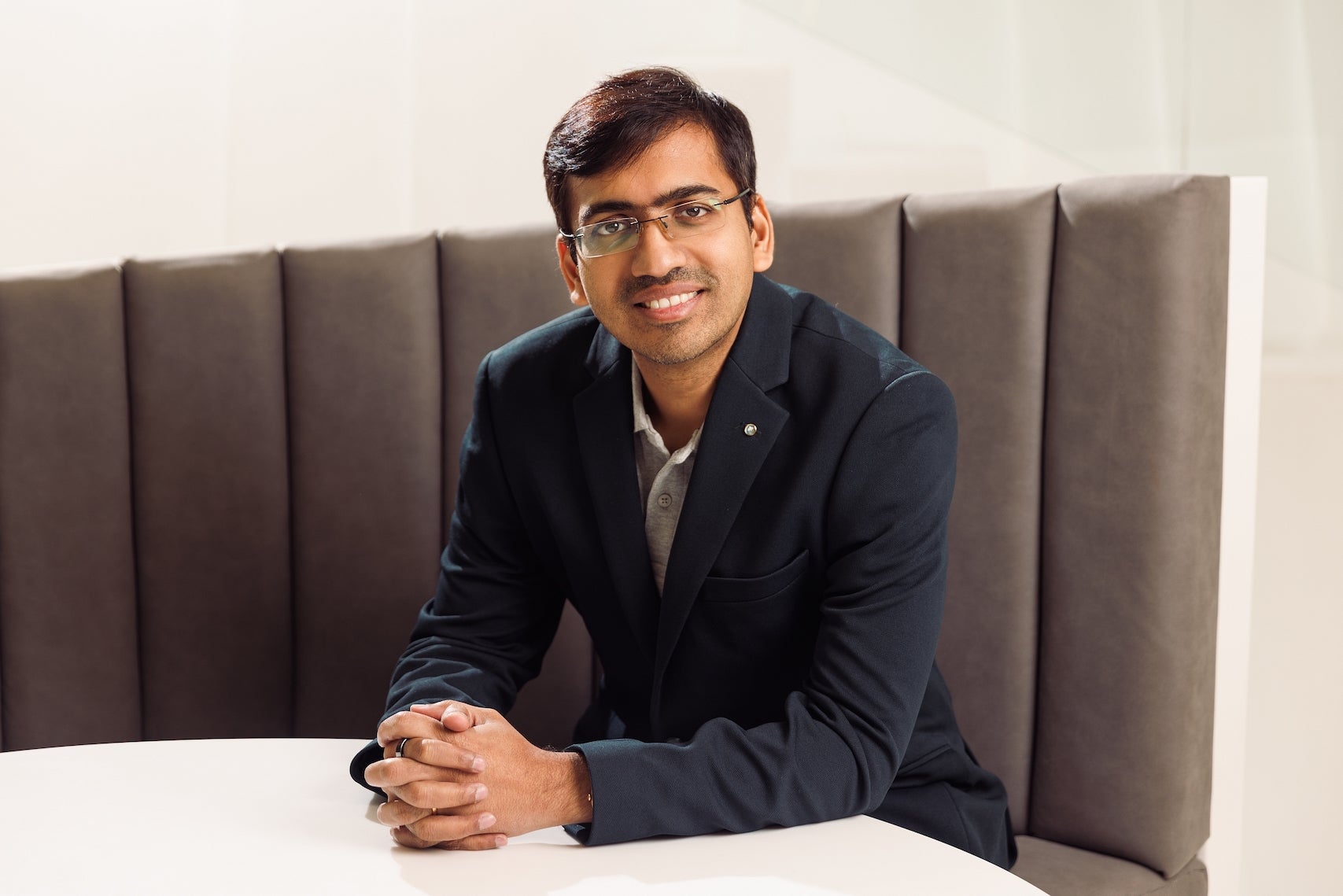
CEO and co-founder of Skyroot Aerospace Pawan Kumar Chandana. Photo: Skyroot
Skyroot Aerospace is set for a critical year as it counts down toward the debut launch of its Vikram-1 rocket, targeted for April of this year. The launch startup, founded in India in 2018, hopes to build on India’s space heritage and become a reliable provider of launch services to commercial and government customers worldwide. The company is working on two launch vehicles, Vikram-1 and Vikram-2, as it looks to target different customer subsets.
Via Satellite spoke to Pawan Kumar Chandana, CEO and co-founder of Skyroot Aerospace, about Skyroot’s technology roadmap, the services it will offer customers across the world, and why it could be the next big thing in the launch services arena.
VIA SATELLITE: As Skyroot Aerospace is approaching its first launch, how confident are you that the company is now ready for prime time, after some delays?
Chandana: Launching to orbit is one of the toughest engineering feats. We have always wanted to get there in quickest possible time, but rocket science is rocket science. It needs extensive testing of hundreds of systems on the ground to ensure they perform well in-flight. With around four years of dedicated development, we are still one the quickest commercial players globally to get from design to orbital launch. Now, the confidence is high as most of the development is complete and we are in the phase where the final few tests are being done. Over 70% of the hardware is already at the spaceport as we speak.
VIA SATELLITE: The launch market is crowded, with a number of established players and new players looking to make an impact. Can you tell us a little about the origins of Skyroot and why you think you will be successful in this market?
Chandana: Well, the reality is actually opposite. There are hardly any private/commercial players who are doing regular orbital launches other than SpaceX and Rocket Lab. Among the new players, very few have reached orbit or they are yet to launch at a reasonable cadence. For any satellite player planning to rollout their constellations, launch availability remains the biggest challenge. There is never enough launch capacity and wait times are very long. Winning in the launch segment is rocket science and very few companies will crack it.
Skyroot has very strong foundation leveraging India’s talent, infrastructure, manufacturing ecosystem and cost-effectiveness. Skyroot was started in 2018. At the time, there were several launch vehicle companies attempting to get to orbit. And if you look at the survival rate now, only a small number are close to the launch pad. For us, it was about finding a unique value proposition. India has a six-decade strong ecosystem built in launch vehicles with several hundred suppliers, launch pads close to the equator, and excellent talent.
We can leverage this. Small launches were certainly an opportunity — a market that only one player was addressing. We positioned Vikram-1, our first orbital launch vehicle, to address this segment, configuring it to provide small satellite operators with on-demand launches. Today, there isn’t a second player with a cadence that can be relied on. We are hoping to fill that spot.
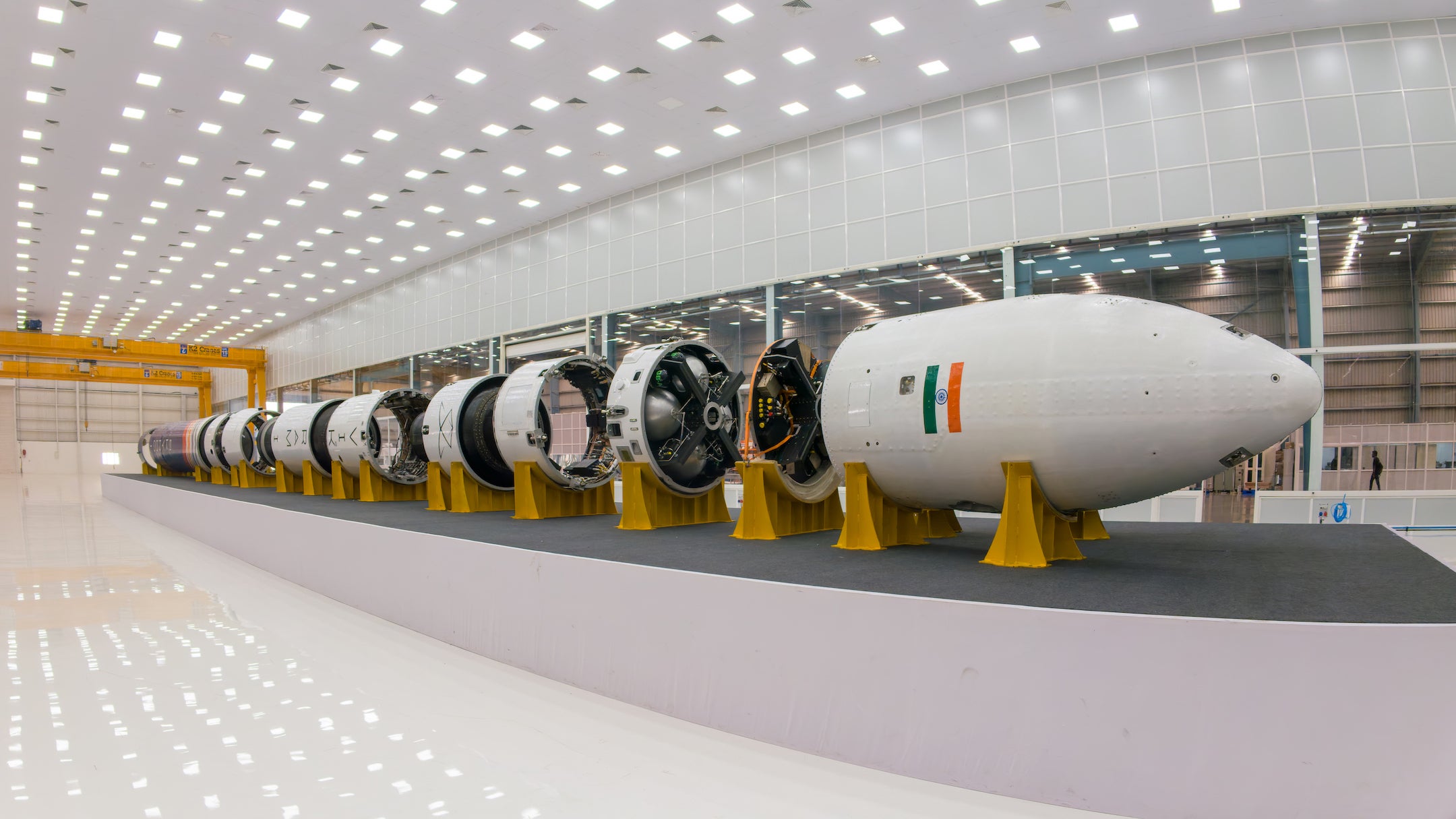
A flight-ready Vikram-1 launch vehicle at Skyroot’s Infinity Campus. Photo: Skyroot Aerospace
VIA SATELLITE: We have seen a lot of new launch companies emerge but very few successful launches. What is your view on this? What have been your key learnings as you get set to launch?
Chandana: India already has a space heritage. ISRO is known for its success rate and cost-effectiveness. Reliability is key here. The thoroughness of how we approach missions is something that we have inherited at Skyroot as well. Rocket launches are incredibly complex, and there are many variables that can disrupt a flight. So, it is important to ensure all of the steps leading to it — the systems we develop, the tests we conduct — are all very thorough. Whether it is our suborbital flight or the stage firings, or the numerous tests leading up to the launch, we have got it right the first time we tested it.
VIA SATELLITE: What would represent a good year for Skyroot in 2026?
Chandana: Vikram-1 is catered toward the dedicated launch market. For this market of potential customers, it is important that we establish reliability through success. We want to demonstrate launches that are consistently successful. From that point of view, we don’t just want to be the player who does their first launch and takes a lot of time before coming back for the second launch. We want to be able to do consecutive launches in a small timeframe, and then establish the reliability of the vehicle, and become a credible alternative in the small satellite launch market, and executing our customer commitments.
VIA SATELLITE: If you conduct the first Vikram-1 launch sometime in April, how many more do you think you might have this year?
Chandana: Subject to launch port availability and from manufacturing production ready point of view, we are aiming at four to six launches this financial year. Now, depending on the observations of the first flight, we may have to change that. But currently, we do plan to follow up quickly.
VIA SATELLITE: Let’s say you have four successful launches this year, which would be fantastic for you and the company. How many might you have in 2027?
Chandana: From a production point of view, most of the rocket is manufactured in-house. We have already identified which set of vendors to outsource what parts and what to do in-house. For whatever is going to be done in-house, we already have invested in a CapEx to be able to produce 12 rockets a year. That is the manufacturing capability, production capability, etc.
Once reliability is established, and given the visibility into the market that we have, it is just about reaching this target as quickly as possible. Ideally, we want to get to that kind of cadence at some point next year, but we will have to see. That is a significant shift in the how the organization functions, from being an R&D company to a production company.
VIA SATELLITE: What does your dealflow look like with customers? Are you focusing on customers in India and the Asia-Pacific region, or the rest of the world as well?
Chandana: We have interest from all over the world. We anticipate a third of the demand to be domestic, and the remaining to be international. In terms of international — Southeast Asia, Japan, U.S., and Europe will be good contributors.
VIA SATELLITE: What do you see as some of your competitive advantages over other launch providers? Why customers consider Skyroot?
Chandana: Customers want launch flexibility, vehicle reliability, and affordability. Reliability is paramount. Without that, no customer would sign up. Flexibility is also key. We want to provide that by ramping up our production and being able to accommodate that. Between the two launch pads that India is going to have, we believe the capabilities we have both from a production and launch pad point of view will provide a great deal of flexibility to customers.
And given that this is a solid-based propellant, we have the ability to store the rocket as well. If there are consecutive launches that are required, we should be able to produce them ahead of time, store them and then launch in succession to meet any specific requirements. Once we become operational, we are going to be the most cost-effective solution in this launch category.
VIA SATELLITE: Do you believe you can compete effectively on cost?
Chandana: We believe so, because our technology choices like solid propellant boosters, carbon composites, 3D printed engines, etc., adding to the well-established cost effectiveness of domestic talent, test facilities and manufacturing in India. We believe that overall, the cost of our launch services will be very competitive.
VIA SATELLITE: What is the technology roadmap for Vikram-2? What new markets are you hoping to address with Vikram-2, that you can’t with Vikram-1?
Chandana: Vikram-1 has about 350 kg payload to Low-Earth Orbit (LEO), and that is more catered towards the dedicated launch market. While we will be doing a few rideshare launches this year and at a particular cadence in the coming years, it is mostly to optimize and tap into that segment of the market.
Vikram-2 will be a more cost-effective solution for larger satellites, and also more competitive for the rideshare market. With Vikram-2, multiple satellites can be launched in one go for a constellation player. And at the same time, the pricing for rideshare on Vikram-2 is very competitive. With respect to technology, we are going to have a cryogenic upper stage that will provide a significant performance improvement, which in turn will boost the payload capacity from 350 kg to 1100 kg.
VIA SATELLITE: Could you tell us your plans when it comes to doing rideshare missions? Why is Skyroot going down this route?
Chandana: Establishing reliability is very important from a customer point of view, depending on how many successful launches we have. Our customers need to be able to access insurance. The premium for the insurance can vary. We also want to be able to tell the community that we are not going to be a one-time wonder, but that we will be able to come back to the launch pad quickly.
We want to be doing multiple launches in a short timeframe to ensure reliability. If we were to commercialize every single launch and use these launches only for dedicated launches, we may have to wait for the customer’s payload to be ready, but given that establishing the cadence and reliability is more important for us, we are going ahead with rideshare launches on the manifest.
VIA SATELLITE: How important is it for India, a huge market for satellite and space applications, to have more commercial launch options based in country, such as Skyroot?
Chandana: Thanks to the new space policy, ISRO is playing more the role of an R&D center. All of the satellite manufacturing and launch operational activities that ISRO used to be involved in are being transferred to the private sector in India.
India is also doing a huge push in its different government departments to adopt satellite data. There is a lot of satellite demand that we have internally from the Indian government. It is not just from the commercial sector. There are expected to be almost 100 Indian government 100 satellites over the next five to six years. All of these are in the small satellite category, which would require an SSLV or a Vikram-1 vehicle. Our vehicle is best suited to cater to this demand. As soon as we are operational, we expect to be able to cater to this domestic demand, while also serving international customers.
VIA SATELLITE: How do you view the startup ecosystem in India now for space companies?
Chandana: It is booming. We have more than 300 startups at last count. And we have a promotion agency, called InSPACe, that does regulatory and promotion of the space sector in India. And given that ISRO is also looking to rely on industry, whether it is on the on the payload manufacturing, bus manufacturing or the launch vehicle, there are a lot of companies that have come up and are proving on their capability.
There are a lot of other companies which have already launched satellites and are ready with their own constellation. There are also quite a few companies on the downstream side, where they are looking at utilizing satellite data in a very unique way for very Indian problems. The sector, as it stands now, is booming, and we certainly see it playing a huge role in the future.
VIA SATELLITE: Finally, where do you hope to place the company on the overall launch landscape over the next two to three years?
Chandana: As we look at the future, we want to establish ourselves as one of the most reliable commercial launch companies. While our prime solution is a dedicated launch service, as a company we also want to add value to other segments. We want to expand towards the rideshare missions as well as serve constellation players better with Vikram-2. Between Vikram-1 and Vikram-2 and the expected launch cadence, we want to be the amongst the top three rocket companies in the world by cadence.
We have a number of rideshare missions coming up this year, and at a fixed cadence every year from now on. Anybody who is looking for more flexible options or more immediate launch opportunities, they can approach us through our website, where we are running a market debut campaign, and take advantage of the cost-effective prices we are offering to the customers signing up now. VS
Stay connected and get ahead with the leading source of industry intel!
Subscribe Now