Latest News
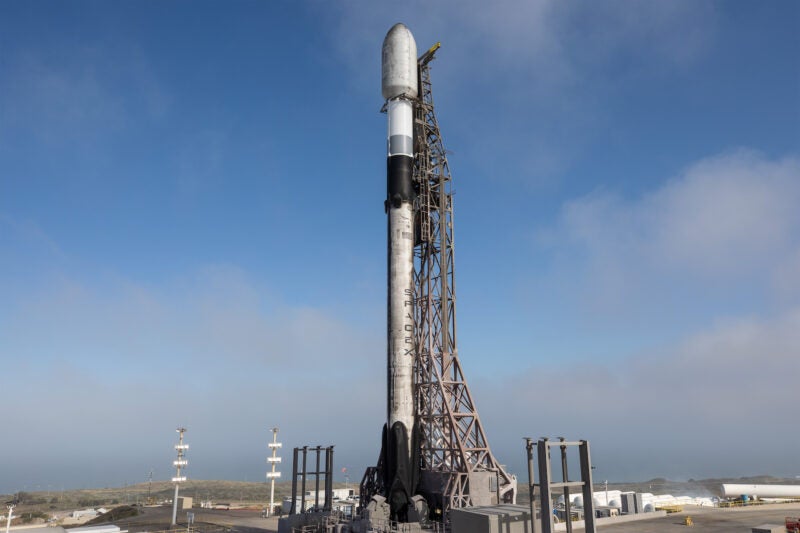
SpaceX launched the Transporter-14 rideshare mission on June 24. Photo: SpaceX
SpaceX launched the Transporter-14 rideshare mission on a Falcon 9 rocket on Monday, carrying 70 payloads for a number of smallsat customers. This comes a few days after the company’s Starship rocket, which is in development, exploded on a test stand at Starbase in Texas late Wednesday.
SpaceX said the Starship vehicle was in the process of loading cryogenic propellant for a static fire test on June 18 when it experienced a “major anomaly.” Videos shared online showed a large explosion on the test stand.
In an update, SpaceX said preliminary investigation showed there was a potential failure of a pressurized tank known as a COPV, or composite overwrapped pressure vessel, containing gaseous nitrogen in Starship’s nosecone area. SpaceX said all personnel are safe and there were no reported injuries. SpaceX is investigating the cause of the anomaly.
SpaceX also said in the statement there is “no commonality between the COPVs used on Starship and SpaceX’s Falcon rockets,” used in the company’s launch business.
This was another setback on the Starship program, which has had three flight test failures this year. The Starship rocket, which is in development, has NASA contracts to take astronauts to the Moon, and is part of SpaceX’s plans to reach Mars.
Smallsat Customers for Transporter-14 Mission
The Falcon 9 rideshare mission launched at 2:25 p.m PT from Vandenberg Space Force Base in California on Monday, June 23.
Transporter-14 is SpaceX’s third Transporter rideshare mission of this year, with previous missions in January and in March and SpaceX also launched a Bandwagon rideshare mission in April. Bandwagon is a separate rideshare mission that deploys to mid-inclination orbit.
Exolaunch deployed 45 microsatellites and cubesats on the mission including satellites for Unseenlabs, the Hydrosat VanZyl-2 satellite by Muon Space, Gilmour Space’s first satellite, ElaraSat, with a hyperspectral imagery to monitor water quality, and six satellites for Iceye.
Exolaunch also deployed ForgeStar-1 for U.K. startup Space Forge. It will be the company’s first satellite after its first satellite was lost on the failed Virgin Orbit U.K. mission in early 2023.
Spire Global had six satellites on the mission, including payloads for four of its space services customers. This includes direct-to-satellite Bluetooth startup Hubble Network, IoT startup Lacuna Space, South Korean Earth observation provider HANCOM InSpace, and Mission Control.
The mission included the SATMAR nanosatellite by Spanish company Alén Space for maritime communications.
NanoAvionics built a number of satellites on the mission including an in-orbit air traffic management demonstrator for Startical; SkyBee-2 for Germany’s Constellr; and ARVAKER II & III maritime surveillance satellites for Norway’s Kongsberg Defence & Aerospace.
NanoAvionics also built satellites for two universities — a quantum technology test satellite for Germany’s Friedrich Schiller University, and a software testbed satellite for New Zealand’s Te Pūnaha Ātea Space Institute at the University of Auckland.
Starfish Space launched Otter Pup 2, its second mission to attempt to dock with a spacecraft.
York Space Systems launched Dragoon, the first of a 12-satellite prototype constellation, to demonstrate secure connectivity to warfighter platforms for targeting, missile warning, and tracking of advanced missile threats.
Launch mission services provider SEOPS worked with Maverick Space Systems and Innovative Solutions In Space (ISISPACE) to prepare seven customer spacecraft for the mission.
SEOPS customers included TrustPoint‘s Time Flies PNT demonstration; experimental payload Good Ancestor Kilakila and Spain’s FOSSASAT2E21. ISISPACE brings RIDUSAT from Germany/Indonesia, PARUS-T2 from Taiwan, and TPA-1 from New Zealand, while Maverick adds Singapore’s Satoro-T3.
In addition, the mission included BIFROST — a Danish-Swedish surveillance satellite originally developed by Space Inventor. BIFROST will enable space-based surveillance, target identification, and real-time event reporting in the North Atlantic and Arctic regions.
EchoStar manifested Lyra-3, an S-band satellite for IoT connectivity.
The mission included two satellites for greenhouse gas monitoring company GHGSat. The two satellites — GHGSat-C12 and GHGSat-C13 — were built by SFL Missions.
Japanese startup ArkEdge Space launched the AE2a and AE3Va micro-satellites, based on the company’s 6U multi-purpose satellite bus system.
Space logistics provider D-Orbit deployed two ION satellite carriers on the mission, hosting payloads for customers including Constellation Technologies & Operations; a water ion thruster for Pale Blue; Rogue Thrusters by Magdrive; the ROQuET quantum computer by the University of Vienna; DNAV (Deep Space Navigation) by Telepix; and AIX-1: A project by Planetek.
D-Orbit also launched four IoT satellites from Plan-S Satellite and Space Technologies.
EarthDaily Analytics launched its first satellite out of a planned 10-satellite constellation to collect EO data across 22 spectral bands.
Weather app MyRadar launched the first two pathfinders satellites in its HORIS constellation, HORIS-1 and HORIS-2. The company plans for a constellation that will look for hazards on the ground like wildfires, and make the imagery, data, and alerts available in the MyRadar app.
This story has been updated after the launch
Stay connected and get ahead with the leading source of industry intel!
Subscribe Now