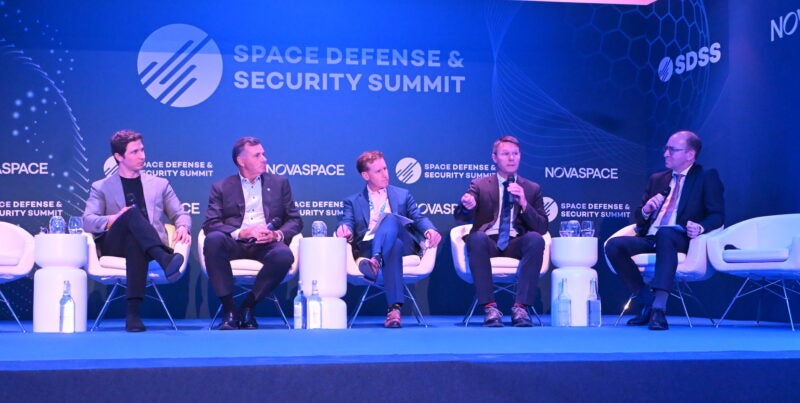

At the recent EO Summit in London, Earth Observation (EO) experts explained the industry must face the challenge of how to explain its solutions to customers in terms of the value created, rather than just the capability.
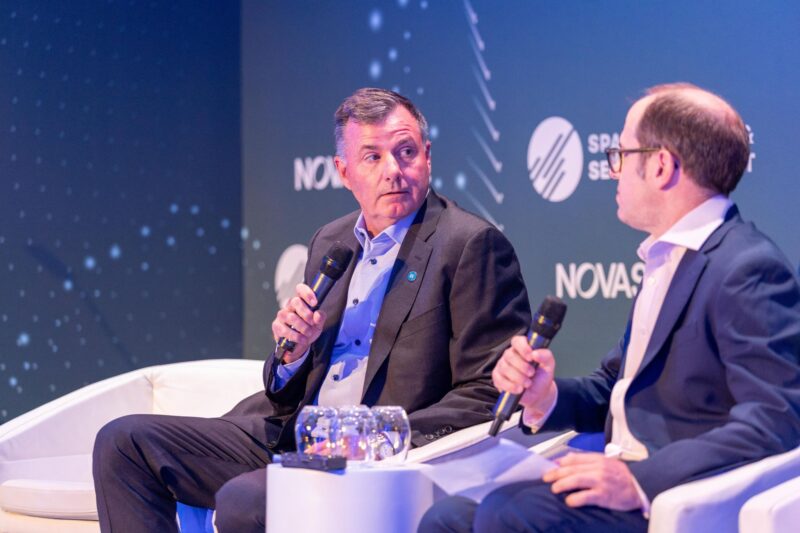
In a discussion on the future of Earth intelligence, Fani Kallianou de Jong, space economy lead and principal for the European Bank of Reconstruction and Development (EBRD), said the bank recognizes the importance of space and especially EO.
“Our clients need EO to make their operations more effective. It is not invisible. EO and geospatial data supports us. More and more stakeholders realize its potential. The data [being produced here] is a goldmine, we need to find a way to use it to solve problems,” de Jong said. “Right now, we need to shout it from the rooftops. Space is not just about going to the Moon and Mars. We need to know what these EO satellites can do for us, depending on the industry and the stakeholder.”
de Jong said that last year the EBRD invested 19 billion euros ($21.6 billion) in various projects. It focused a lot on private sector industries such as agriculture, mining, infrastructure — industries that could have direct benefits from satellite data.
“It is not just about saying space data is amazing. It is about showing the value of it. Institutions like us are looking at the space domain. We need to find ways in which EO supports our projects. We are starting through real projects where EO fits in. This is how you make things happen. I do believe the penny has dropped and colleagues are starting to realize the benefits of EO data,” she said.
Awais Ahmed, founder and CEO of Pixxel said the market has reached a point where things could be seen evolving, but at the same time not moving fast enough. He said the big thing was that the industry needs more satellites, more data, and more companies taking that data and converting that into real insights for the end users.
“We need to make it easy for users to use. We are at an inflection point right now with being able to do this,” Ahmed said.
Communicating the Value to End Users
One of key themes of the event was how end users in industries such as agriculture, mining, energy could benefit from using satellite data and working with EO players. Mark Nightingale, senior remote sensing consultant, business advisor to chief petroleum engineer, Shell called EO a “superb, strategic tool” capable of delivering quality insights to companies like Shell.
Nightingale said that EO is critical for a company like Shell when it comes to gaining initial insights into countries where there are difficulties putting people on the ground. It can help with things such as pipeline monitoring, for example. However, Nightingale says there are frustrations. This can be from everything from cross border regulations to end user license agreements.
“We see companies coming in and pitching us. It is better if you tell us what doesn’t work, as well as what does. I would advise EO players not to oversell the technology. End user license agreements might be seen as boring stuff, but they are important. Data pricing is still very much a dark art. It is about trust. We want to work with companies and we want to build trust with our partners. Don’t force us onto what you want us to drink. Better resolution doesn’t always mean better answers,” Nightingale said.
Tom van Bezooijen, asset manager for Waternet, gave an interesting perspective from a water utility, saying that with long stretches of pipeline, an organization like Waternet wants to know about the total system. It has critical assets where it needs to produce water today. “We need to make sure they keep functioning, especially when there is digging, building around pipelines,” he said.
EO offers a change in how to do things. Previously, an organization like Waternet would use helicopter visualizations when monitoring pipelines. However, EO now gives it a comparative dataset.
“We are always looking for ways to improve this monitoring. This is why we look to EO. We were already monitoring. So, now we are able to make some direct comparisons with these helicopter visualizations. EO is a very exciting technology. Interestingly, people in the field barely want to see the data. What they want is to know where to go. We are working with critical assets. I am excited about the normalization of usage of EO data,” he said.
Sven van Haver, CEO of Orbital Eye, gave an interesting perspective on how the EO industry needs a mindset change.
“This domain needs a mindset change. We ask too much about the latest satellite capability. I think we need to think more on using what we have better,” van Haver said. “We need to squeeze what we can out of what is already there. The EO industry is focusing too often on capability. We need to look at more at the value we can generate for customers.”