Latest News
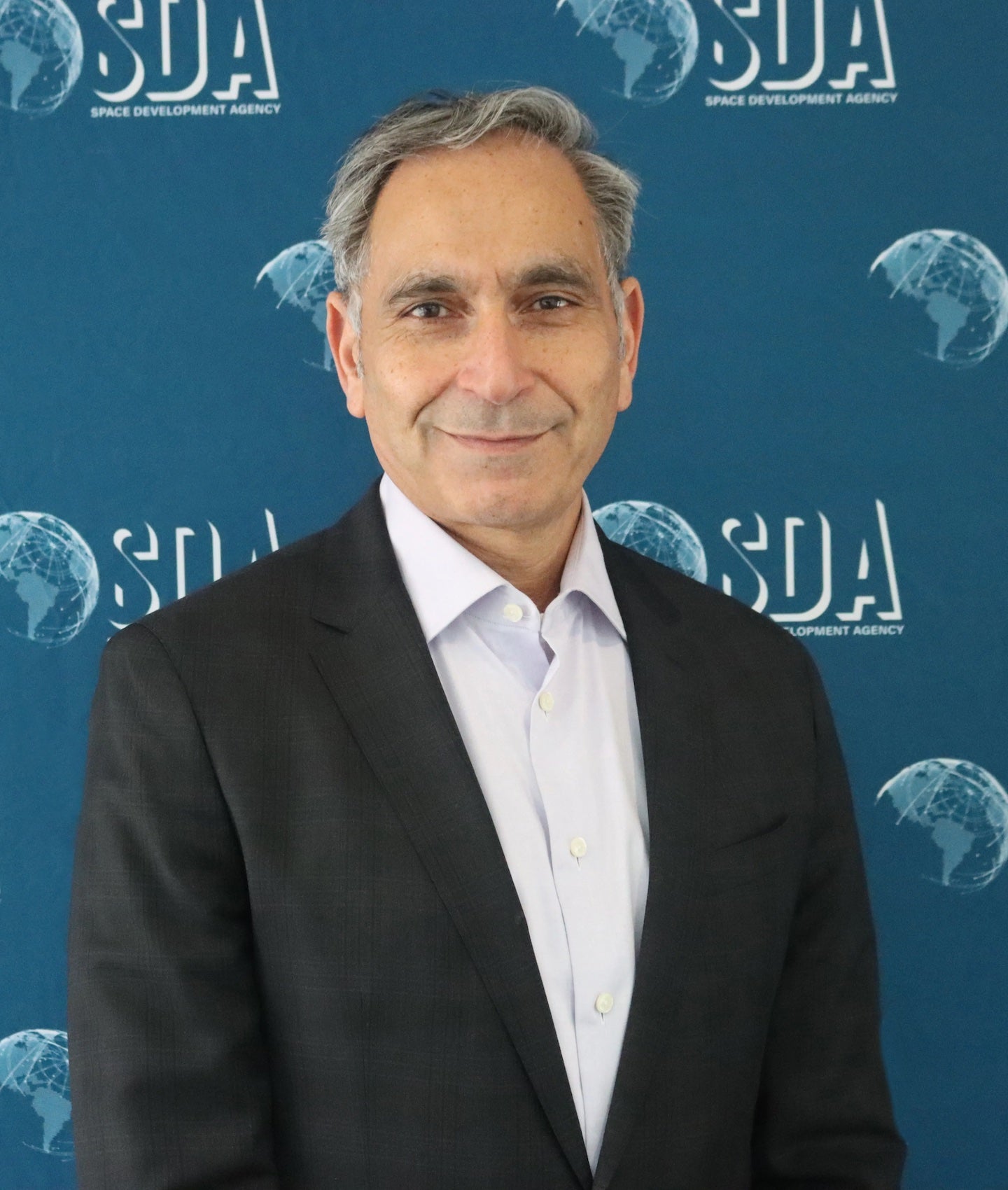
Space Development Agency Deputy Director Dr. Gurpartap “GP” Sandhoo. Photo: SDA
The Space Development Agency (SDA) was stood up to move fast and disrupt traditional space acquisition while leveraging commercial practices to enable a higher rate of satellite production. After launching its first set of operational satellites for the Tranche 1 constellation in September and October, 2025, the SDA is working through some of the challenges of establishing a new capability including decision trade-offs and supply chain pains.
SDA Acting Director Dr. Gurpartap Sandhoo said SDA is in a “strategic pause” mode right now for launches, but expects to be launching again in May and June. “We saw a handful of things that we kind of stopped and want to make sure we fix for the next set of launches,” Sandhoo said Monday during SATShow Week. “So we’re in the middle of that right now.”
The resulting constellation will create an initial warfighting capability for the Proliferated Warfighter Space Architecture (PWSA) and provide regional persistence for Link-16 and Ka-band military tactical communications, advanced missile tracking and missile warning, and beyond-line-of-sight targeting.
“We use the term warfighting immersion early adopters because this architecture is never, actually, ever done,” Sandhoo said. “It’s a constant evolution of capabilities. We always complain that we are behind, behind, behind because there’s really no end state. The demands will emerge, the threats will emerge. How do you stay on top of it? You’re never done. That goes for national security. There’s no end game here, other than to always be ahead.”
The SDA has also been looking at technologies underpinning their architecture, particularly the Transport Layer. One of those is the optical inter-satellite links — laser communications in a mesh network.
“We have not established a mesh network for launch yet,” Sandhoo said. “There was a list of technical challenges that had to be solved to make that mesh network a reality. The hard part is the optical cross links. So that’s the next step that we need to start working on.”
Since the SDA was created to move fast, it is working through issues of the trade-offs between speed and engineering rigor. Sandhoo said that the biggest impediment to speed actually tends to be in the decision-making process, something that was recently addressed by the U.S. Space Force in designating a second tranche of mission areas to be assigned portfolio acquisition executives to help speed up development, to include infrastructure, battle management, space intelligence and more.
“Speed does not alleviate you from the fact that you still have to do the diligence you need to do,” Sandhoo cautions. “You still have to make sure the satellites are working, and make sure you know you’ve done all the right things. There’s a piece of using speed when it matters, and then other times you take the time to understand, assess, and fix what can be fixed.”
Asked about the challenges the SDA has faced in bringing together all the aspects of their space architecture over the last two years, Sandhoo said top of his list would be the commercial supply chains.
“Being able to produce quality products. That’s not something you pick up and run with. It takes time for the commercial industry to get the capability needed to build the production out there and then, and to be able to do the appropriate testing and integration of these systems. The second challenge is when things change, you have to adjust and adapt,” he said.
It’s taken time for the SDA to learn to manage a full constellation.
“How do you actually do testing of multiple satellites, get them through your test processes, and your software testing? It’s simple to do one or two or three at a time, but when you have a whole constellation, try and do it. It takes time to learn how to do that,” he said.
Stay connected and get ahead with the leading source of industry intel!
Subscribe Now