Latest News
Booster Resurfaces as Vulcan Centaur Issue; Space Force Halts Use for NSSL Amid Investigation
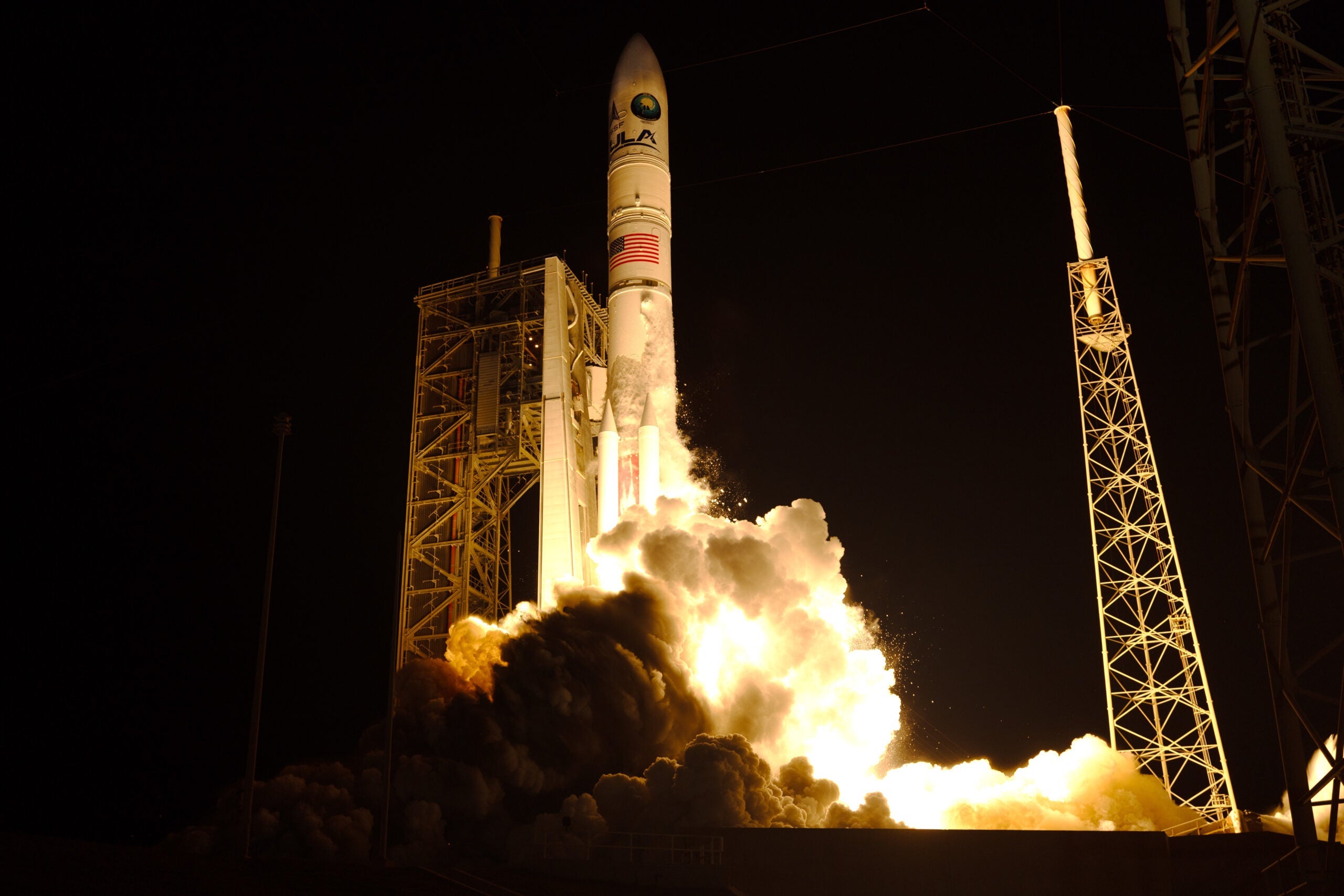
The Vulcan Centaur lifting off from Cape Canaveral Space Force Station, Fla. on Feb. 12 at the start of the USSF-87 mission. Photo: ULA
AURORA, Colo. – The U.S. Space Force has suspended launches of the United Launch Alliance‘s (ULA) Vulcan Centaur rocket under the National Security Space Launch (NSSL) program while the service investigates and fixes an “anomaly” related to the Northrop Grumman GEM-63XL solid rocket motor (SRM), a service official told reporters here on Wednesday at the Air & Space Forces Association’s warfare symposium.
ULA is a Boeing-Lockheed Martin joint venture.
That anomaly surfaced on Feb. 27 before Vulcan Centaur, in its second NSSL launch, foisted two Northrop Grumman-built Geosynchronous Space Situational Awareness Program satellites – GSSAP 7 and 8, also known as Hornet 7 and 8 – into orbit during the USSF-87 mission. On Feb. 12, Space Force noted the anomaly early in the flight when an irregular plume emerged from one of the rocket’s four SRMs.
“We are going to work through this anomaly until we launch again on Vulcan,” Space Force Col. Eric Zarybnisky, the service’s portfolio acquisition executive for assured access to space, told reporters. “Until this anomaly is solved we will not be launching Vulcan missions.”
In October 2024, in Vulcan’s second certification test flight, the rocket had a similar GEM-63XL anomaly which set back ULA’s plans to launch USSF-106 and USSF-87 before the end of that year.
The new investigation will likely mean that SpaceX will displace ULA as the launch provider for the imminent launch of the 10th and final Lockheed Martin-built GPS III satellite.
Stay connected and get ahead with the leading source of industry intel!
Subscribe Now