Latest News
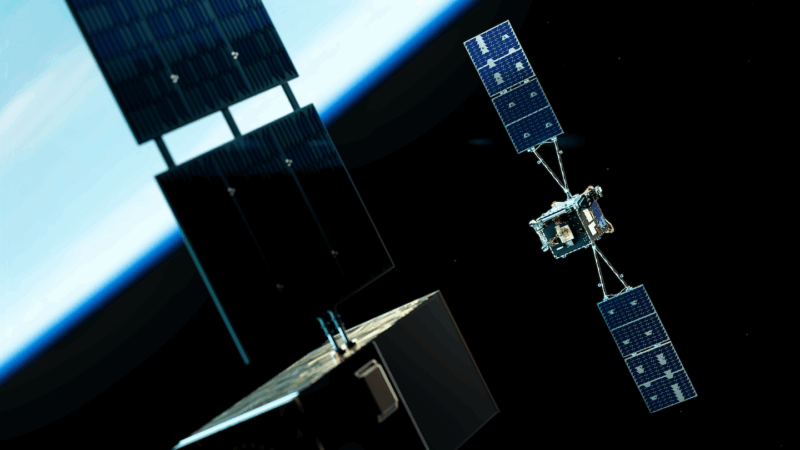
Photo: Starfish Space
The Space Development Agency (SDA) has awarded Starfish Space a contract to deorbit a satellite in the Proliferated Warfighter Space Architecture (PWSA), with the potential to perform multiple orbits. Starfish announced the $52.5 million contract on Wednesday, claiming it represents the first dedicated end-of-life disposal mission for a Low-Earth Orbit (LEO) constellation.
In the mission, Starfish Space will build an Otter spacecraft, targeted for launch in 2027. Otter is tasked with performing an initial deorbit for one satellite in the SDA’s PWSA constellation, with options for additional multiple deorbits. Starfish says its spacecraft is able to service multiple satellites in one mission.
“This contract and mission are proof that end-of-life satellite disposal provided by Otter can provide real value to LEO constellation operators,” said Austin Link, co-founder of Starfish Space. “With Otter, we’ve dramatically reduced the cost and complexity of satellite servicing across orbits. This contract reflects both the value of affordable servicing missions and the technical readiness of the Otter.”
Starfish Space builds the “Otter” spacecraft servicing vehicle. Its Otter Pup 2 launched in 2025 and is currently healthy in space, co-founder Trevor Bennett told Via Satellite in a recent conversation.
The SDA award is Starfish’s second contract with the U.S. Space Force. The startup received a contract in 2024 to dock with and augment maneuvers for a national security space asset. That mission to Geostationary Orbit (GEO) is set to launch this year.
Bennett confirmed Starfish has three publicly announced missions on deck for 2026 — the Space Force mission, another GEO servicing mission for Intelsat, now SES, and the Small Spacecraft Propulsion and Inspection Capability (SSPICY) mission for NASA.
The company also recently completed an autonomous rendezvous and proximity operations (RPO) demonstration in LEO with Impulse Space. During the mission, Starfish’s payload autonomously controlled the LEO Express 2 Mira, bringing the spacecraft within approximately 1,250 meters of the LEO Express 1 Mira.
Stay connected and get ahead with the leading source of industry intel!
Subscribe Now