Latest News
Key Geospatial Intel Lesson of Ukraine War Is Closing Kill Chain, NATO Official Says
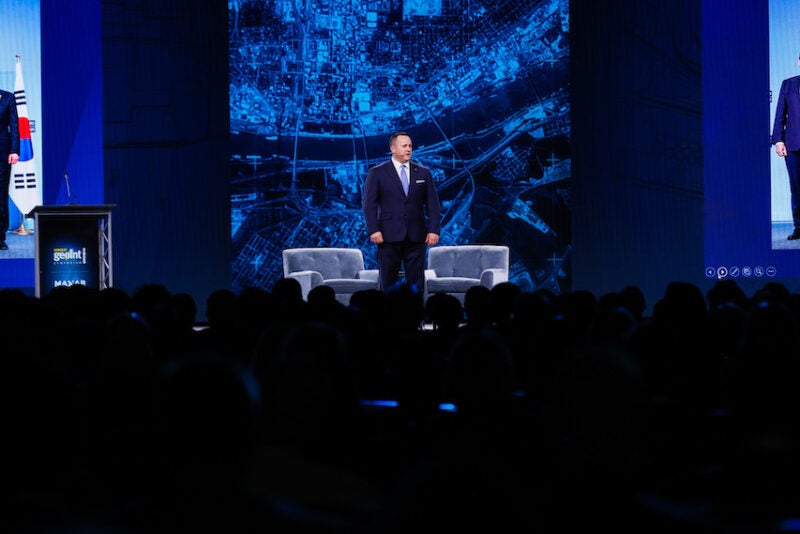
Major General Paul Lynch, Deputy Assistant Secretary General for Intelligence, NATO International Military Staff speaks at GEOINT 2025. Photo: USGIF
ST. LOUIS — The use of geospatial intelligence to accelerate decision making from the time a potential target has been detected until an effect is put against it has been an important lesson in the ongoing Russo-Ukraine War, a NATO official said on Monday.
Having situational awareness, and then taking advantage of this to impact targeting is critical, Maj. Gen. Paul Lynch, deputy assistant secretary general for intelligence on NATO’s International Military Staff, said at the annual GEOINT 2025 Symposium.
“I think the key role that this discipline plays in ensuring that decision makers are able now to make decisions on sensor-to-shooter in minutes rather than hours, or potentially even longer, that has been honed by meticulous and necessary practice by the Ukrainians over the last three or three tragic years,” Lynch, an officer in United Kingdom’s Royal Marines, told attendees.
Knowing what your adversary is doing, and “ideally what they’re about to do,” is the goal, he said. And then having the ability to put an effect on that adversary, he said.
Ukrainian forces have relied on Western supplied GEOINT and their drones to find Russian targets in their war against Russia’s illegal invasion of their country that began in February 2022.
Lynch said the top lesson from the war has been the need for a high quality intelligence architecture followed by “sufficient stocks and material,” and then the people and training that enable all of it.
Stay connected and get ahead with the leading source of industry intel!
Subscribe Now