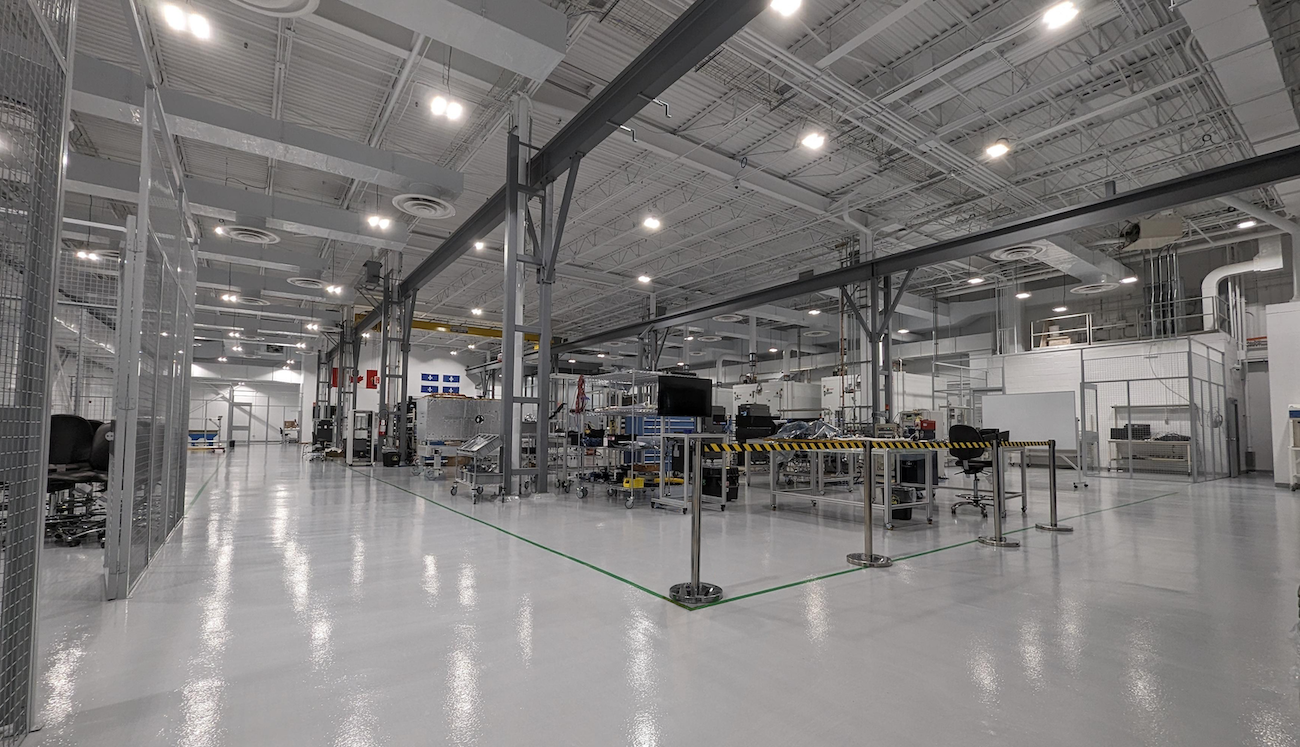
MDA Space posted 32% year-over-year revenue growth in the first quarter of 2026 and more than 40% growth for its satellite manufacturing business, driven by work for Telesat Lightspeed and Globalstar. CEO Mike Greenly told investors there is “no change” to the company’s ongoing work for Globalstar as a customer.
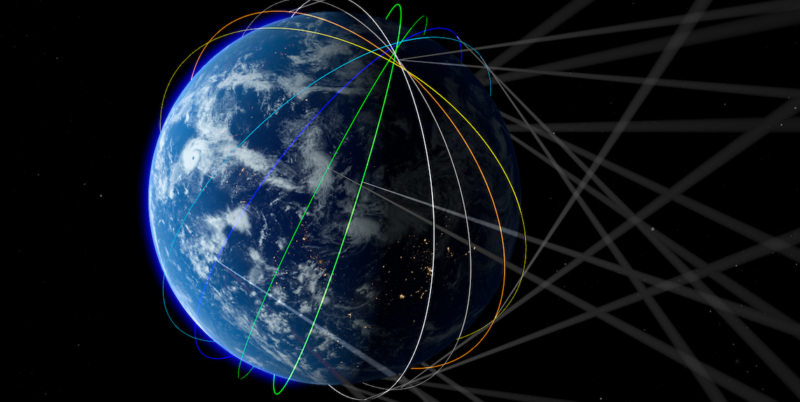
MDA Space is building two constellations for Globalstar — 17 satellites for a replacement constellation and what’s referred to as the C-3, next-generation constellation.
Greenley said it’s “early days” in terms of the acquisition, which is not expected to close until early next year. “It’s been nice to see that [there is] no change to our current business, which was as expected. We need to get our work done,” Greenley said.
MDA Space recently delivered the first batch of the replacement constellation and has completed the critical design review of the Globalstar next-generation LEO constellation.
“As we start getting these constellations launched then we can start talking about how things are going to work forward into the future and we’ll see if any opportunities emerge there. Certainly we have the skill sets and the capabilities and the technology roadmaps to be able to contribute, but we haven’t had an opportunity to have those conversations yet,” Greenley said in terms of the future outlook with Amazon.
On the Telesat Lightspeed front, Greenley said the company is now receiving production-ready space-grade chips from its subsidiary SatixFy. These chips are a key element in the MDA Aurora platform and have been a cause of delays for Telesat.
Q1 Results
Total revenues for the first quarter for were $464 million Canadian dollars ($340 million) — up 32% over the same time last year.
Satellite Systems is the largest portion of the business at more than 67% of revenue during the quarter. Satellite Systems revenue grew 41% year-over-year to CA$313 million ($229 million), due to increased work on Telesat Lightspeed and Globalstar next-generation constellation.
MDA Space saw growth across all three areas of its business. Robotics and Space Operations grew 18.5% year-over-year to $CA91.6 million ($67 million), with increased volume of work on the Canadarm3 program.
Revenues in Geointelligence increased nearly 15% year-over-year to CA$59 million ($43 million), due to higher volume of work on various programs.
Adjusted net income for the first quarter of 2026 was CA$50.7 million ($37 million), an increase of 32% year-over-year due to higher operating income.
Outlook for Space Control Platform, MDA Midnight
Greenley also spoke about the outlook for MDA Midnight, a new on orbit-servicing platform for space control that the company announced during Space Symposium last month. Greenley cited market research that found that 13 countries are strongly looking into this type of capability, also referred to as guard satellites.
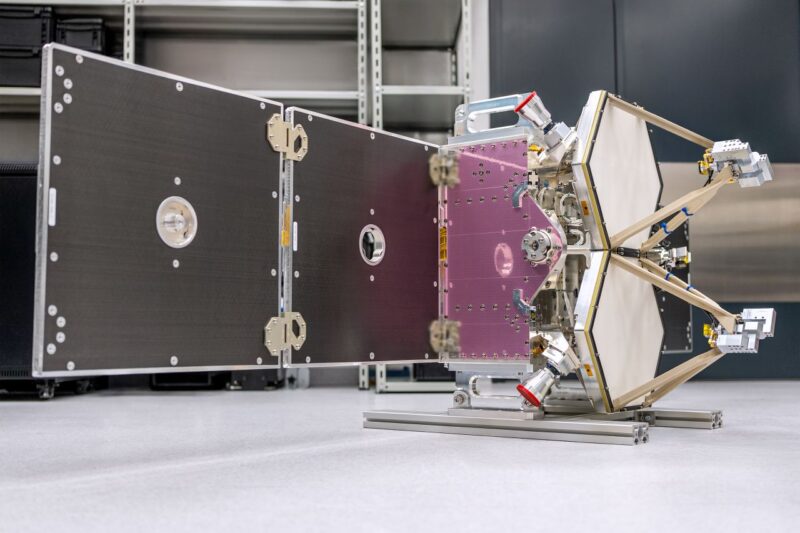
He described MDA Midnight as a space control platform for defense agencies. It combines the company’s experience in advanced robotics and proximity operations and spacecraft bus design. “This new platform is equipped with a suite of hosted payloads to detect, identify, counter and deter threats to critical space assets and orbits in the increasingly contested domain,” Greenley said.
Greenley said the offering is a fit for defense customers and payload providers that may be building sensors or electronic warfare capability that would be flown on a space control spacecraft.
He gave some insight into potential dealflow for this product, noting the cycle will take time because its aimed at defense customers.
“The important thing from a pipeline-building perspective was to … first indicate clearly we have a product … and start engaging in conversations with both the defense customer and the potential payload partners. Both of those areas have been steady, picked up since the announcement,” he said. “We’re strongly encouraged in terms of when that might convert into an additional order. They will take some time because we’re in government procurement, trying to sell protective spacecraft to militaries.”