
Telesat’s GEO business declined 25% year-over-year in the first quarter of 2026, as the operator works toward the launch of its Lightspeed constellation.
CEO Dan Goldberg said this decline in the Geostationary Orbit (GEO) business was “largely as expected,” due to non-renewals and lower renewal rates.
Telesat reiterated its 2026 guidance of GEO revenue between $300 million Canadian dollars and $320 million Canadian dollars ($220 million to $235 million) — which will be a nearly 26% decline at the midpoint.
The operator is also working to refinance debt for its GEO operating subsidiary, which begins to mature later this year.
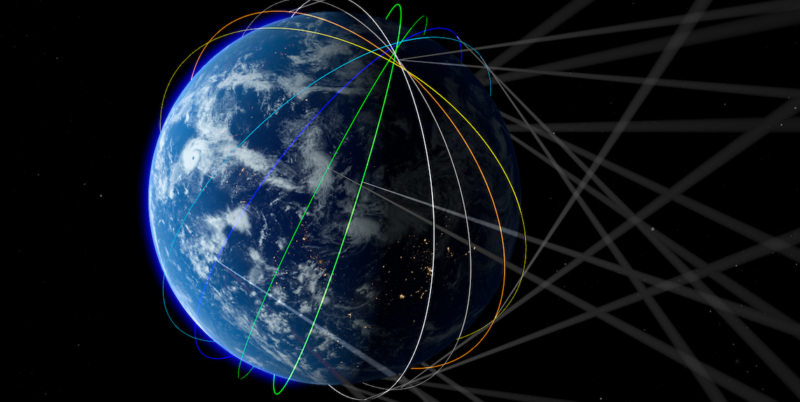
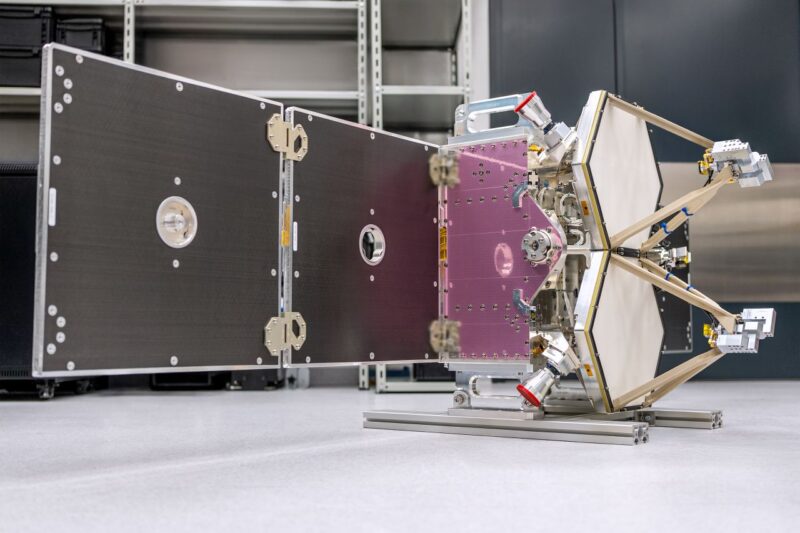
Goldberg confirmed Lightspeed is tracking to enter service around the end of the first quarter of 2028. He noted that during the quarter, Telesat held further design reviews with satellite and launch vehicle dispenser manufacturers and made progress on user terminals, network and satellite operations software development, and ground station deployments.
In the first quarter, Telesat reported CA$87 million in revenue ($64 million), down 25% year-over-year.
Net loss for the quarter was CA$151 million ($111 million) compared to a CA$51 million ($37 million) loss in the prior year, which was due to lower revenue and a non-cash goodwill impairment loss in the GEO segment.
In December, Telesat was named to a strategic partnership with the government of Canada and MDA Space for the Enhanced Satellite Communications Project – Polar (ESCP-P) or ESCAPE, for ultra-high frequency (UHF) narrowband and wideband satellite communications for beyond line of sight communications in the Arctic.
Goldberg said Telesat is working through contractual arrangements with the government but it would be “meaningfully accretive” for Lightspeed if and when the contract is concluded.
Goldberg referenced that previous Telesat projections had defense revenue for Lightspeed around 15% of future revenue, but the company now expects that to be much higher, with the recent addition of military Ka-band to the constellation.
“My expectation is that when we update it, given what we’re seeing in the market [and] the change to military Ka-band for Lightspeed, that those government/defense revenues will be a much more meaningful portion of our projected Lightspeed revenues,” he said.