Latest News
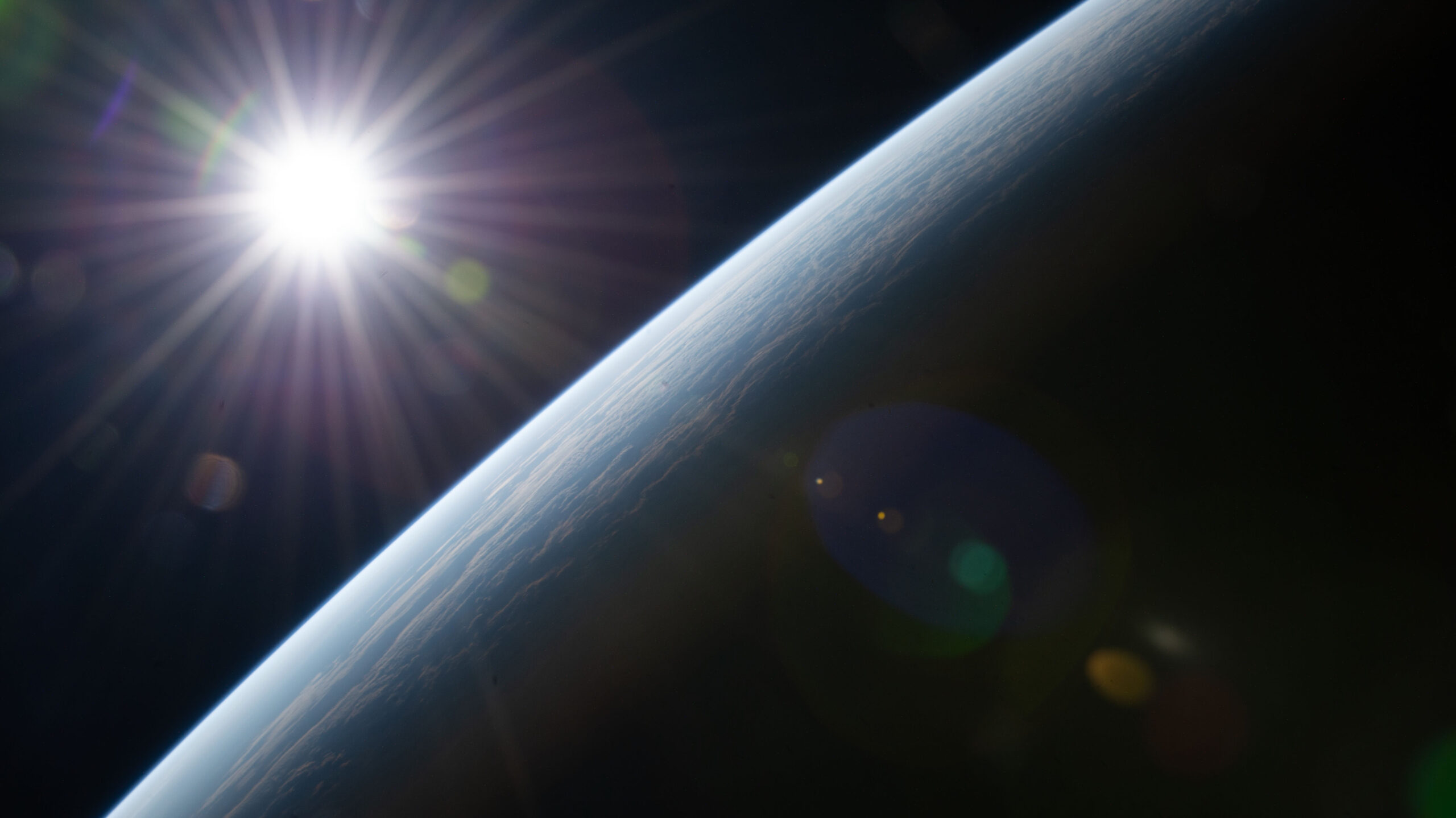
Earth’s horizon captured from the International Space Station above Western Australia on the coast of Shark Bay. Photo: NASA
At the start of this month, SpaceX acquired Elon Musk’s AI venture xAI, amid the run-up to an expected SpaceX IPO. SpaceX cited plans for an orbital data center satellite constellation in the rationale for the acquisition, which came just after SpaceX filed plans for the constellation with the FCC.
There’s been a lot of news from SpaceX in the lead-up to the IPO — plans for a massive orbital data center, xAI acquisition, and a shift away from its Mars goals to focus on the Moon. Orbital data centers as a future space application have generated a lot of attention in recent months, but analysts note the concept comes with many engineering and economic challenges.
Via Satellite surveyed some leading analysts about the xAI acquisition, what it means for SpaceX, as well as the broader question about the relationship between space and AI. Taking part in this roundtable are: Mark Boggett, CEO of Seraphim Space; Juan Cacace, director of Space & Connectivity for Access Partnership; Andrew Cavalier, principal research analyst, ABI Research; Tim Farrar, president of TMF Associates; and Maxime Puteaux, principal, Novaspace.
VIA SATELLITE: In another big news story to start the year, SpaceX is acquiring xAI with plans to launch an orbital data center constellation. Is this an example of SpaceX being ahead of the curve or do you have doubts about this latest move?
Boggett: It’s another example of SpaceX positioning itself ahead of the curve. AI demand is scaling faster than terrestrial infrastructure can easily support, and the constraints on Earth, power, cooling, land, and grid capacity, are becoming increasingly visible. SpaceX is effectively betting that orbital infrastructure becomes part of the next-generation compute stack. That said, there are real execution challenges. Orbital data centers are not a near-term commercial product, but SpaceX is one of the few companies with the launch scale and cadence to credibly attempt it.
Cacace: In principle, 1 million satellites sounds unrealistic. The high number of satellites included in the application signals technological innovation — a marketing angle — but also works as an element to request several waivers to current U.S. regulations.
Farrar: Musk always needs to be telling potential investors about the next big thing, in order to support a high valuation for his companies. It is increasingly clear that while Starlink has been an amazing success in the context of a relatively small and slow growing satellite communications industry, it won’t support the expected $1.5 trillion valuation of SpaceX in the planned IPO. Starlink also won’t require the daily or even hourly Starship launch tempo that Musk aspires to. In fact, Starlink is unlikely to require more than one or two Starship launches per week, even if Starlink was to gain hundreds of millions of subscribers. That’s why we now see a plan to launch 1 million AI satellites into space.
Puteaux: This move is consistent with SpaceX’s long-term industrial logic: vertical integration, scale, and control of critical infrastructure layers. If orbital computing were to become viable, SpaceX is one of the few actors controlling both launch economics and satellite mass production. However, orbital data centers remain economically unproven. The key issue is not technological feasibility, but total cost of ownership versus terrestrial alternatives. At this stage, the move looks more like a strategic option on a future infrastructure layer than an immediate revenue shift.
VIA SATELLITE: There’s a lot of skepticism around the idea of orbital data centers. Are you optimistic about the future of orbital data centers, what challenges do you see with the concept?
Boggett: The skepticism is understandable because there are major technical and commercial hurdles. Today’s AI hardware isn’t built for the radiation environment in orbit, so compute architectures will need to evolve. Thermal management is also one of the hardest challenges, and cybersecurity and resilience requirements will be high. Don’t forget that maintenance and upgrading compute will be challenging in space.
But the direction of travel is clear. As demand grows and space infrastructure becomes more routine, the supporting supply chain, radiation-tolerant chips, modular compute, in-orbit servicing, will develop. The feasibility question is shifting from “if” to “when and where it makes sense first.
Cacace: We must recognize that it is an innovative idea, since we are now all discussing whether this is possible or not. But it is also true that there are many challenges of having data centers in space, from geopolitics and the occupation of space, to the technological capabilities that you need to have data centers 1,000 km away from the planet moving at 28,000 km per hour, to the management of hundreds of thousands of satellites that you would need – according to SpaceX – to make this work.
Cavalier: These ambitions should be viewed as long term objectives, with a fully operational Starship being the prerequisite to unlock this segment at scale. Beyond just launch capacity, the space environment actively attacks hardware. UV radiation degrades thermal coatings, cosmic rays degrade silicon, and the vacuum of space eliminates convective cooling. This makes operating terrestrial GPUs in orbit a physics nightmare. Because the vacuum of space is a perfect insulator, a radiator surface area must scale exponentially to keep chips from melting. Furthermore, the energy requirements to run AI clusters are immense, necessitating solar arrays that dwarf anything currently in orbit.
Finally, until we have autonomous orbital servicing, operators must accept a ‘consumable infrastructure’ model and be comfortable with the total loss of expensive hardware once a component fails. All in all, if it were just SpaceX making the announcements then I would be skeptical. But with major players across industries making announcements, I think this is more than a temporary hype cycle.
Farrar: It is clear that there will be some applications that are well suited to processing in space, for example, analyzing space-based imagery, and that could be really important for some defense applications, like the Golden Dome project. But it is much less clear that orbital data centers could become the cheaper than data centers on the ground on any reasonable timescales, let alone the two to three years that Musk claims.
VIA SATELLITE: How do you think the xAI merger will impact SpaceX’s plans for an IPO this year? Does it really raise the value of SpaceX, or does it expose the company to more risk?
Cavalier: This is a high-risk, high reward acquisition. It raises the theoretical value of SpaceX but significantly increases the risk profile by exposing SpaceX’s profitability to xAI’s massive capital expenditure. It’s a financial engineering gamble.
Farrar: xAI is reportedly burning $1 billion of cash per month. SpaceX’s cashflows were reportedly $1 billion-$2 billion last year, so it is clear SpaceX can’t fund xAI itself. That means an IPO to raise tens of billions of dollars is even more important than before.
Puteaux: The merger potentially expands SpaceX’s strategic narrative, but it also increases complexity. From a valuation perspective, aligning with AI infrastructure broadens the addressable story beyond launch and connectivity into a higher-growth sector that capital markets currently reward. It allows SpaceX to position itself as part of the AI infrastructure backbone rather than solely as a transportation and broadband provider.
However, it also introduces additional capital intensity, governance complexity, and exposure to AI market volatility. There is also precedent to consider: when Tesla acquired SolarCity in 2016, the transaction was framed as vertical integration but was also interpreted by some investors as a way to stabilize SolarCity by absorbing it into Tesla’s balance sheet. Whether the SpaceX and xAI transaction is viewed purely as strategic alignment or partially as financial engineering may influence how equity markets respond.
VIA SATELLITE: Do you think acquiring xAI was a good move for SpaceX’s investors?
Boggett: Strategically, it makes sense. AI is becoming one of the primary drivers of demand for compute, bandwidth, and energy infrastructure, areas where SpaceX already has significant leverage through Starlink and launch. Bringing xAI into the ecosystem tightens the integration between the demand side (AI) and the delivery layer (space infrastructure). The key for investors will be whether SpaceX can execute with discipline, particularly around timelines and capital allocation, while protecting the core momentum of Starlink and launch. Space and AI are two complex businesses so finding useful development and commercial synergies while avoiding lack of focus will be critical.
Cacace: No. But it was probably a good move for xAI’s investors.
Cavalier: Raising the valuation of the company is certainly a good thing for investors. However, it is asking investors to put a lot of faith in the SpaceX team and potential fusion of AI and Space industries. It will be critical in the coming months for Elon to convince investors of the value and market potential of orbital data centers, and that space, not Earth is the next frontier for AI build-out. I don’t think the verdict is out on this yet.
Farrar: Acquiring xAI was a good move for Musk. And he’s the largest SpaceX investor, and the one who gets to decide what SpaceX does.
VIA SATELLITE: There is often a feeling that what SpaceX does, others will follow, whether reusability, vertical integration, etc. Do you think this is the beginning of the orbital computing/data center era?
Boggett: It may be. SpaceX has a history of making previously theoretical concepts commercially credible, and its scale tends to pull the rest of the ecosystem forward. Even if orbital data centers take time to mature, this announcement accelerates investment, R&D, and strategic planning across the sector — similar to how reusability and mega-constellations shifted from skepticism to inevitability once SpaceX proved the model.
Cacace: I don’t believe this is the start of a new era, but it will probably trigger some new research from competitors – if they weren’t doing it already.
Cavalier: Absolutely. I believe we are witnessing a fundamental shift in space architectures here. China has vowed to launch “gigawatt-class” systems of their own, and U.S. giants from Google to Nvidia are actively positioning to capture the hardware layer. The concept may sound like science fiction, but so is the amount of the capital being prepared to brute force it into reality. We are no longer asking if AI is going to space, but who will own the orbital utility that powers it.
Puteaux: It may represent a narrative inflection point rather than an immediate economic shift. When a company of SpaceX’s scale integrates compute ambitions into its space roadmap, it lends credibility to the concept and forces the market to assess its feasibility more seriously. However, industrial transformation depends on cost curves and sustained demand, not narrative momentum.
VIA SATELLITE: Do you think space companies will be able to continue operating new and complex systems without integrating AI?
Cavalier: Autonomy is non-negotiable. Humans cannot manage a constellation of 40,000 or millions of satellites. Starlink already relies on autonomous collision avoidance systems; without AI, the LEO environment would be unusable (and increasingly uninsurable). Additionally, by moving compute functions to the satellite, intelligence networks stop paying to transport useless data and start paying for data insights.
Farrar: There is a need to analyze the large quantities of data being generated by space-based observation and monitoring constellations. AI can help with that, but it remains to be seen how much processing will actually be done in space.
Puteaux: AI is increasingly embedded across the entire space value chain. The strategic differentiator will be integration. Companies that control data access, compute infrastructure, and customer distribution channels are better positioned to capture margin expansion. AI is likely to reshape service layers and operational efficiency before it fundamentally reshapes orbital architectures.
VIA SATELLITE: We have Space42 and now SpaceX and xAI. Will we see more link-ups between space and AI companies?
Boggett: Yes, we expect more. Space and AI are converging into the same strategic domain, and we’re seeing both sovereign-driven models and commercial models emerging. As AI becomes more dependent on connectivity, compute access, and energy, partnerships between space infrastructure providers and AI companies become increasingly logical.
Cacace: No, for now I don’t think we will see many more AI companies partnering with space companies for data centers in space projects. The future of data centers in space in not yet clear.
Farrar: Space42 was effectively created to be a national champion for the UAE in space. The SpaceX/xAI merger is to meet Musk’s financial needs. It’s unclear if there are other companies for which a similar rationale is applicable.
Stay connected and get ahead with the leading source of industry intel!
Subscribe Now