Latest News
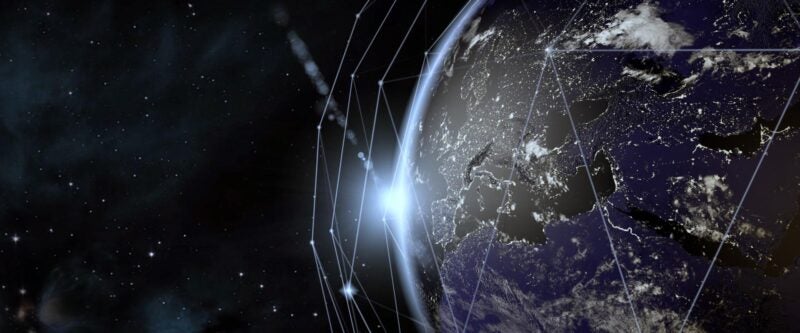
Photo: SES
SES has been making some interesting moves in the quantum arena. Earlier this year, SES teamed up with Singapore-based SpeQtral to develop an interoperable optical ground station (OGS) to establish long-distance satellite-based quantum key distribution (QKD) between Asia and Europe.
Thierry Draus, vice president of Business Development, Product & Innovation for SES, spoke to Space Security Sentinel (S3) about the importance of quantum for SES. He said that secure data transmission in the context of quantum technologies is an important element of the future of global secure communications. QKD is a key area of innovation for SES, which has delivered on a number of projects over the past decade like the European Space Agency’s (ESA) QUARTZ program. LuxQCI (Luxembourg Quantum Communications Infrastructure) is another good example of it work here.
“Satellite-enabled QKD is essential for serving a global market where quantum-secured keys must be shared over long distances. This service requires an operational satellite constellation and relevant expertise that SES brings to the table,” he adds.
SES has been gradually been ramping up its work in this area over the last few years. In 2022, SES, leading a consortium of 20 other European companies, signed a contract with ESA for the EAGLE-1 satellite, enabling the in-orbit validation of QKD from space. SES is leading the development of the EAGLE-1 project to enable early access to long-distance QKD for ultra-secure data transmissions. This includes both satellite and ground infrastructure, through co-funding by ESA national contributions and the European Commission. The project is seen as crucial for reinforcing Europe’s commitment to developing quantum-secure communications.
“The Optical Ground Station to be developed with SpeQtral is the first common infrastructure, and will be able to serve both EAGLE-1 and SpeQtral-1 missions in a networked way. It is a key step in implementing and testing a real long-distance QKD — hence the importance of this collaboration,” says Draus.
The partnership with SpeQtral could be a precursor to more partnerships in this area. “On top of performing end-to-end demonstration of Satellite QKD technology, EAGLE-1 will allow SES to engage with early adopters of long distance QKD, from European Commission stakeholders as part of EuroQCI, governments, but also private organizations within financial, telecom, cloud and health sectors, for Europe and worldwide,” Draus says.
SES and its partners are already working already on the next steps: specifically, on shaping EAGLE-neXt program aimed at designing, building and operating a fully commercial long-distance QKD service, leveraging a scalable satellite network. Draus believes this is a unique opportunity to engage with technology partners to develop further the next level of quantum and ultimately quantum-safe technologies.
The collaboration with SpeQtral to build an an interoperable OGS to establish long-distance satellite-based QKD between Asia and Europe is an interesting one for a number reasons. Draus admits that the number of satellite-based QKD missions and availability of optical ground stations is limited, therefore, it is both valuable and strategic to leverage a shared infrastructure to access satellite missions, thereby improving opportunities for long-distance QKD demonstration experiments.
Draus says the threat posed by quantum computers’ ability to break current cryptographic systems based on asymmetric keys is well understood by most stakeholders.
“Deploying terrestrial QKD networks would require complex interconnection between them, making satellite-enabled long-distance QKD a key differentiator for a secure network. This is fundamental for next-generation cybersecurity,” he says. “The era of quantum computing is imminent and its wide adoption is the matter of a fairly short period of time. QKD and satellite-enabled service are absolutely critical to ensure the secure delivery of quantum computing.”
For SES, cybersecurity is of the “utmost importance” it looks to protect its systems and customers. It has established and is continuously improving its Information Security Management System (ISMS), implementing information security control mechanisms and practices. SES’s ISMS are also independently audited, and certified in accordance with ISO/IEC 27001.
“Today, via a centralized, state-of-the-art security monitoring platform, supported by a team of experienced personnel we are monitoring and logging reviews, and performing analysis of security alerts, incident handling and reporting. These activities follow our established information security incident management process, which is aligned with the ISO/IEC 27035 standard,” Draus added.
The future of quantum technologies is likely to be a key talking point at CyberSat this year in November.
“QKD will play a vital role in delivering quantum-safe solutions to help our customers secure their infrastructure. Long-distance QKD relies on satellite infrastructure, an area where SES plays a pivotal role. Such partnerships are instrumental in moving QKD toward commercial deployment,” Draus says.
Stay connected and get ahead with the leading source of industry intel!
Subscribe Now