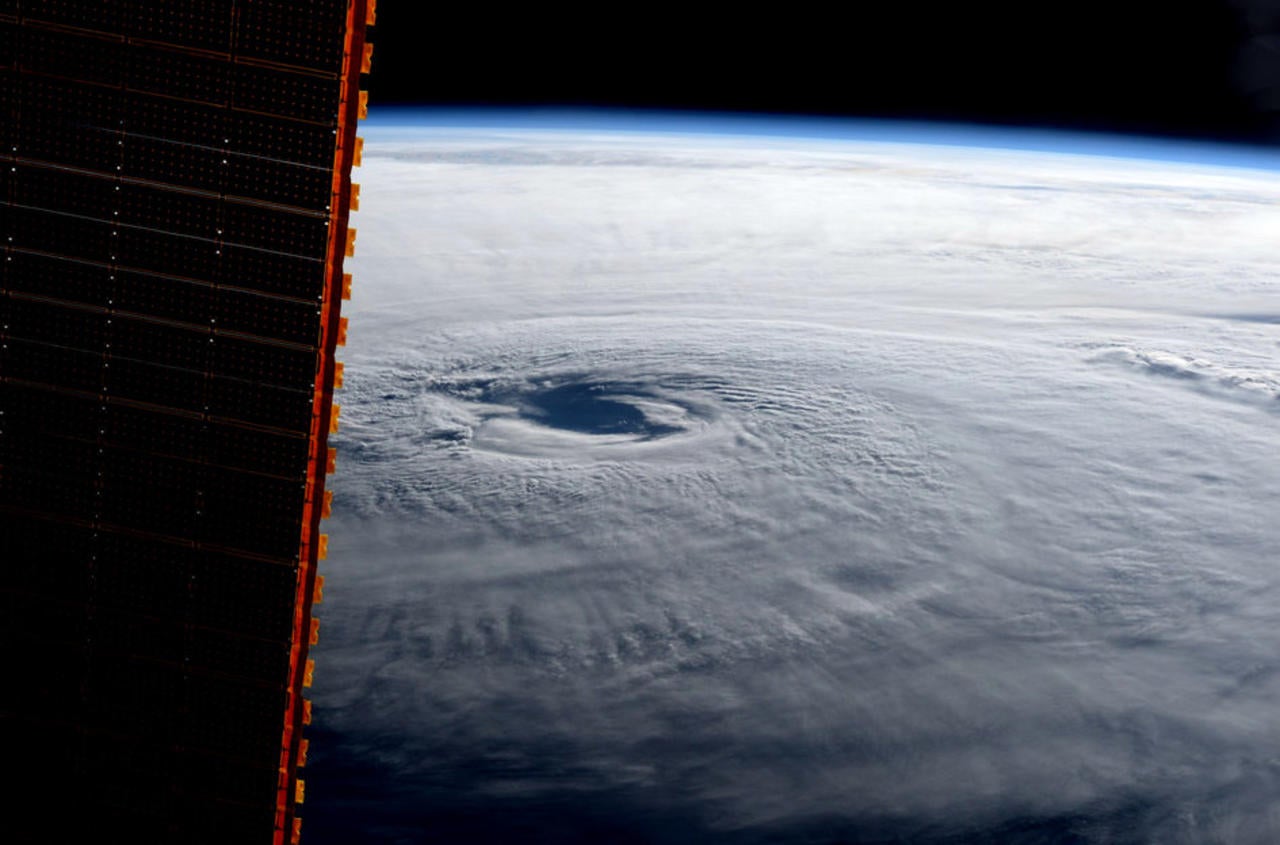

Satellite technology played a critical role in the preparation, duration and aftermath of the 2017 hurricane season. In a session at SATELLITE 2018 titled “Severe Weather and Natural Disasters — How Satellites Support Warning, Response and Recovery,” five panelists shared their experiences and lessons learned.
Tony Bardo, assistant vice president of government solutions at Hughes, recalled the marathon response to Hurricanes Irma and Maria in Puerto Rico: “We were there six months. You can imagine all the challenges we dealt with, with an island, getting people there, having people there.” Hughes installed about 50 sites for FEMA and transmitted about 30,000 calls. Bardo’s top takeaway: assume future hurricanes are inevitable.
Explore the Show Daily 2018 Day 4 Issue
Check out more from this issue and find your next story to read.
Joseph Pica, director of the office of observations at the National Weather Service, showed how GEO satellite systems create granular images that drive decisions. “Satellites play a huge role in this, we’ve actually invested a lot in our infrastructure.” This technology allowed Florida’s governor to declare a state of emergency much sooner before hurricanes made landfall.
Chris Tuttle, Region II coordinator for the office of emergency communications at DHS, said: “After Irma, Puerto Rico lost roughly 80 percent of power, and were already behind the 8 Ball.” He noted daily monsoon rains disrupted all wireless connectivity.
Ken Flowers, vice president of government at Iridium Communications, said more training is needed. “We can put a sat phone in the hands of people who don’t know how to use it and it won’t make a hell of a bean’s difference.”
Simon Gray, vice president of humanitarian affairs at Eutelsat, emphasized user-friendly equipment. “You’ve got to have sustainable systems that work after the disaster is over … they should be easy and quick and not require a ton of training.” VS